
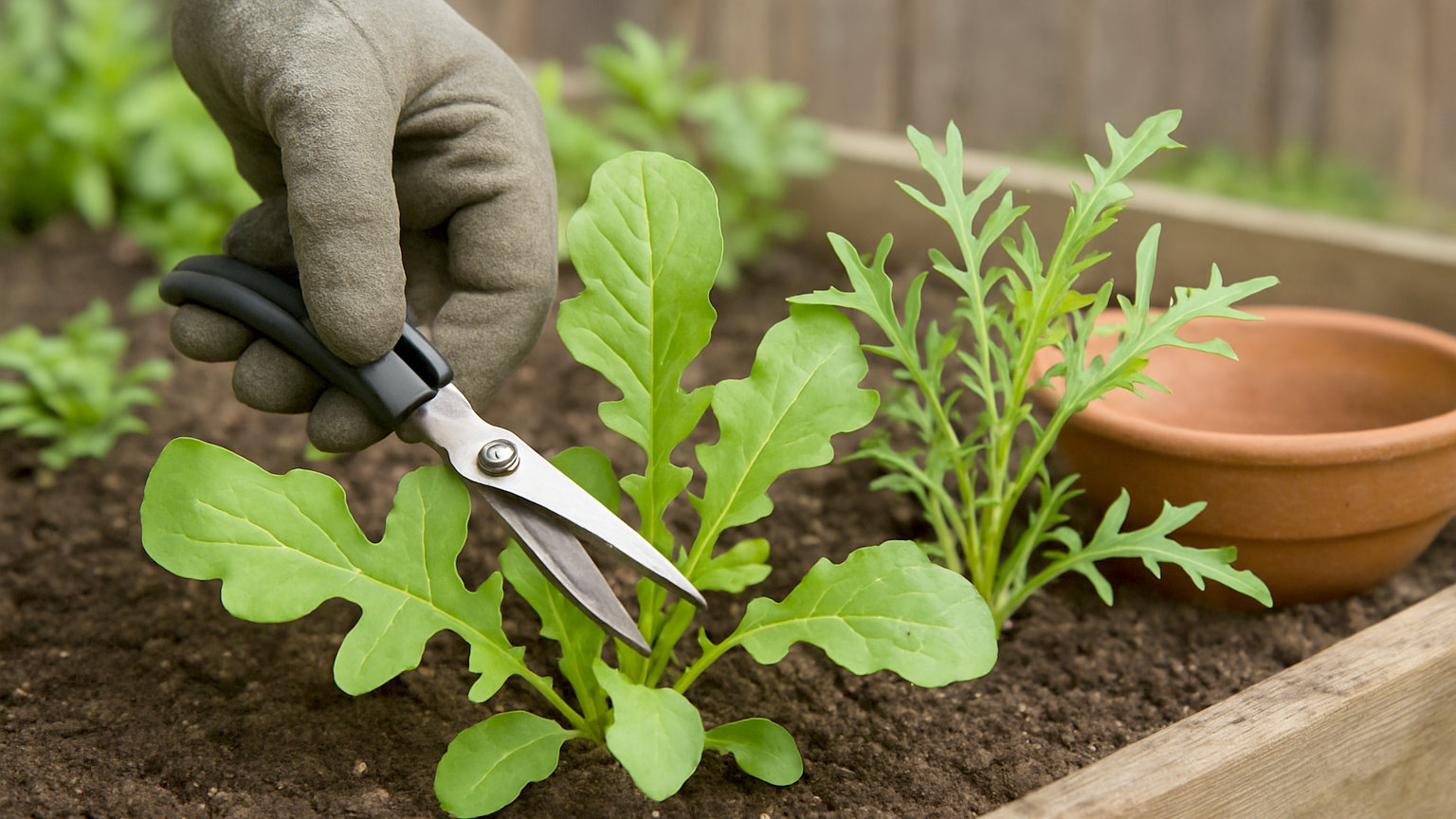
Rocket is about the fastest thing you can grow, giving usable leaves four weeks after sowing. It is also among the quickest to run to seed, which means the trick is not growing it but growing it repeatedly.
Two different plants
Salad rocket, sometimes called arugula, has broad rounded lobed leaves, grows fast and has a mild peppery flavour. It bolts readily in warm weather and is treated as a quick annual crop.
Wild rocket has narrower, more deeply cut leaves, a much stronger and more peppery flavour, and grows more slowly. It is perennial or short-lived perennial, stands longer before bolting, and will often survive a mild winter and reshoot in spring.
Salad rocket is the better choice for quick bulk; wild rocket for flavour and for a plant that keeps going.
When to sow
Rocket does best in the cooler parts of the year. Sow from March to May and again from August to September for the best crops.
Midsummer sowings will grow but bolt within days of being ready, and the leaves turn unpleasantly hot. If you sow in June or July, put it somewhere with afternoon shade and keep it very well watered.
Sow a short row or a container every two or three weeks through the season for a continuous supply.
Sowing
Sow direct where it is to grow, thinly, at about one centimetre deep in rows fifteen centimetres apart. Rocket dislikes transplanting and bolts if checked, so module sowing is less successful than with lettuce.
For cut-and-come-again leaves, sow thickly across a patch or a container and cut young. For larger individual plants, thin to about fifteen centimetres.
Germination is quick, usually within a week.
Bolting
Rocket bolts in response to heat, long days and dry roots. Once it sends up a flower stem the leaves become intensely hot and tough.
Keep the soil consistently moist, which is the single most effective measure. Grow it in light shade in summer. Pick regularly and young rather than leaving plants standing, since a plant repeatedly cut is slower to run up.
The flowers are edible, white and mildly peppery, so a bolted plant is not entirely wasted. Leaving one to seed will usually give you self-sown seedlings the following year.
Flea beetle
The characteristic problem, showing as a scatter of small round holes across the leaves, as though someone has fired a shotgun at them. The tiny beetles jump when disturbed.
Damage is cosmetic on established plants and can kill seedlings. It is worst in warm dry weather and on stressed plants.
Keeping the soil moist reduces it noticeably. Covering the crop with fine insect mesh from sowing prevents it entirely, which is the reliable answer. Sowing in the cooler parts of the season largely avoids the beetle's active period.
Harvesting
Cut leaves when they are around eight to ten centimetres, usually three to four weeks after sowing.
Cut about three centimetres above soil level with scissors, leaving the growing point intact so the plant regrows. Expect three or four cuts before it tires or bolts, then resow.
Pick in the morning. Younger leaves are milder, and if you find the flavour too strong, harvest earlier rather than growing something else.
Containers
Rocket is well suited to pots and windowboxes, needing only fifteen centimetres of depth. A container also makes it easy to move into shade in summer and under cover in autumn.
Use fresh peat-free compost, keep it evenly moist, and give a dilute feed after the second cut.
Letting it seed
Rocket sets seed freely and comes true, so leaving one plant to run up and ripen gives you a packet's worth for nothing. Collect the pods when dry and brittle, shell them into an envelope and label it.
Left to its own devices it will self-seed around the bed, and the volunteers that appear in autumn are often the best crop of the year, since they germinate exactly when conditions suit them.
Through winter
An August or September sowing under a cloche or in an unheated greenhouse produces leaves through much of the winter, growing slowly. Wild rocket in particular is hardy enough to stand outside in most of the country and picks up strongly in February.


