
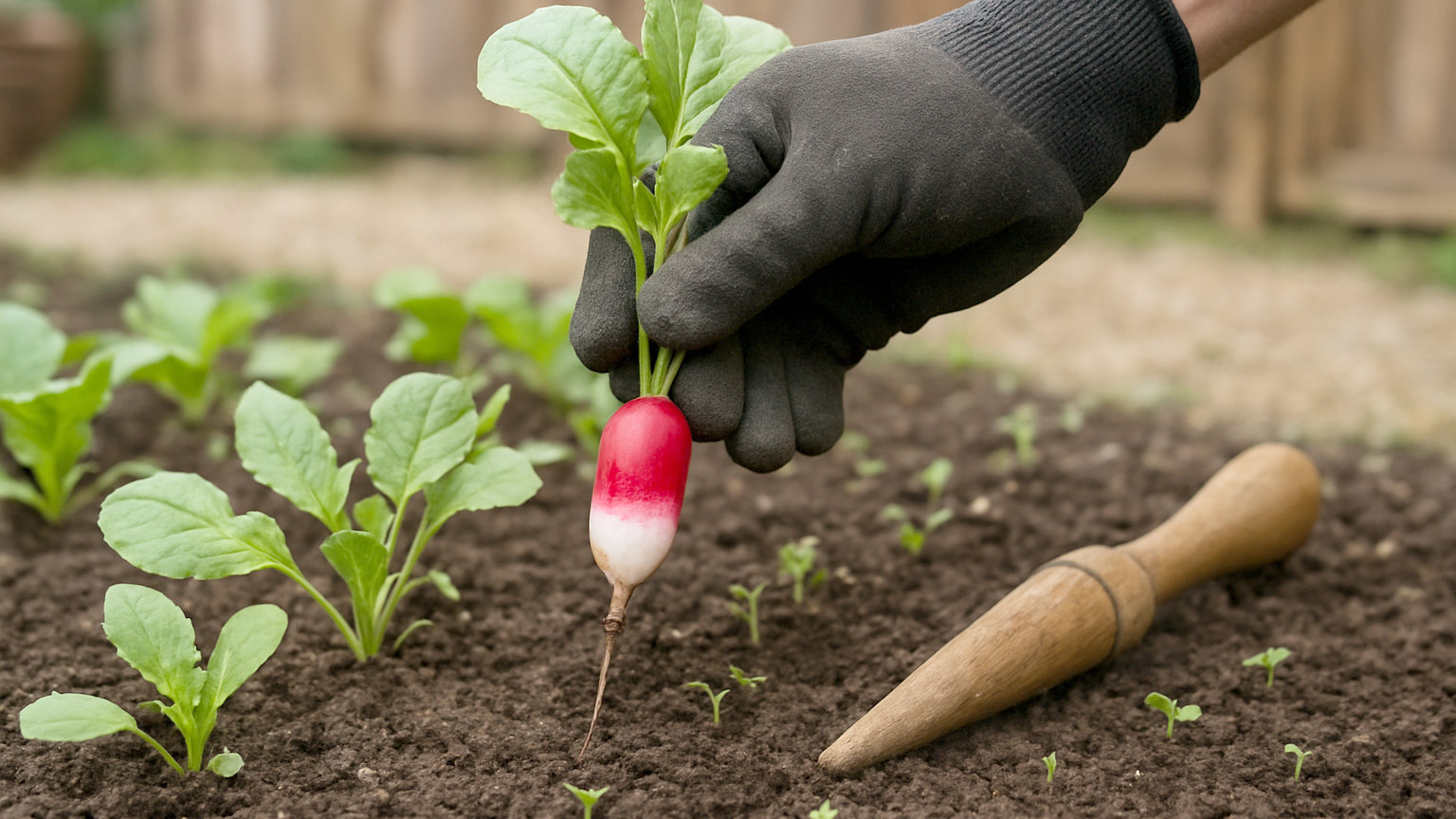
Radishes are the fastest crop in the garden, usable four weeks after sowing, and the one most often spoiled by being left alone. Three days too long in dry ground and they turn woody, hollow and unpleasantly hot.
Sow little and often
A packet of radish seed sown at once produces a glut nobody can eat followed by nothing. Sow a very short row, a metre at most, every two weeks from March through to September.
They are ideal for filling gaps: between slower crops, along the edge of a bed, or sown down the same drill as parsnips to mark the row while the parsnips germinate.
Very early and very late sowings benefit from a cloche, and midsummer sowings are best given afternoon shade.
Sowing and spacing
Sow direct where they are to grow, at about one centimetre deep in rows fifteen centimetres apart.
Sow thinly, aiming for two to three centimetres between seeds. This is the point people skip, and crowded radishes produce foliage and no root at all.
Thin promptly if they come up too thick. Radishes will not size up if they are competing.
Why they go all leaf
Too much shade, too much nitrogen or too little space produce leaves instead of roots.
Radishes want an open position with several hours of sun. Ground recently fed with a nitrogen-rich fertiliser pushes the plant into leaf. And overcrowding does the same, since each plant is competing for light.
They need no feeding at all on reasonable soil.
Why they go woody or hot
Both are usually water. Radishes need consistent moisture and rapid, uninterrupted growth. Dry roots produce woody, pithy, intensely hot radishes and encourage bolting.
Water regularly, mulch lightly in warm weather, and never let the row dry out. Fast growth is what gives a crisp mild radish.
The other cause is simply leaving them too long. Summer radishes go over quickly and are best pulled promptly.
Flea beetle
Small round holes peppering the leaves are flea beetle damage. It rarely stops a crop but can check seedlings badly in warm dry weather.
Keeping the soil moist reduces it considerably. Covering the row with fine insect mesh from sowing prevents it entirely and is worth doing for early and midsummer sowings.
Harvesting
Pull summer radishes when they are about two to three centimetres across, which is usually three to five weeks after sowing.
Check regularly, since the window is short. Pull the whole row over a few days rather than leaving stragglers, and sow again.
The leaves are edible and good in soup or wilted, so the tops need not be wasted. The seed pods of a bolted plant are also edible, crisp and peppery, and worth trying rather than pulling a plant that has run up.
Winter radish
A different proposition worth knowing about. Winter radishes, including mooli or daikon and the round black and Chinese types, are sown in July and August and grow much larger over a longer period.
Sow at about one centimetre deep, thinning to fifteen to twenty centimetres apart, since they need considerably more room. They are ready from October and can be left in the ground into winter in mild areas or lifted and stored in damp sand.
The flavour is milder and less peppery than summer radish, and they are useful cooked as well as raw.
Varieties worth knowing
French Breakfast is the long red and white type, mild and quick. Cherry Belle and Scarlet Globe are the round red ones. Sparkler and Icicle offer different shapes and colours, and mixed packets give a range of appearances from one sowing.
For hot weather, look for varieties described as slow to bolt or as summer types, which stand a few days longer before going woody.
Preparing them
Radishes are best used within a few days of pulling. Remove the leaves before storing, since they draw moisture from the root, and keep them in the fridge in a bag rather than loose.
A radish that has gone slightly limp can be revived by standing it in cold water for an hour, which is worth knowing before discarding a bunch that has sat too long.
Containers
Radishes suit containers well, needing only fifteen centimetres of depth. A window box sown every fortnight keeps a household supplied, and growing off the ground reduces both flea beetle and slug damage.


