
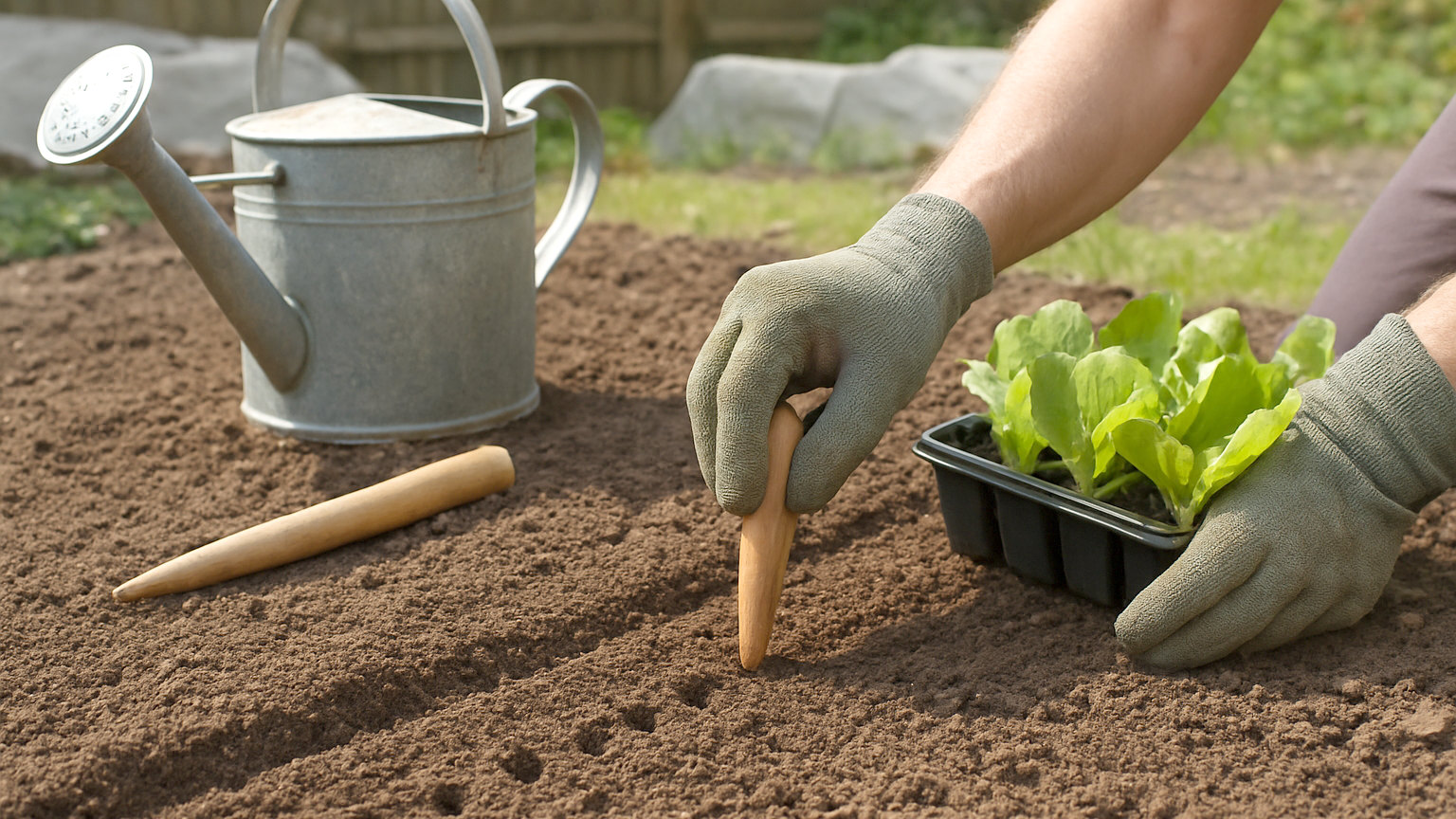
Lettuce is quick, undemanding and grown badly more often than almost anything else, usually because of one quirk: the seed will not germinate when the soil is warm. Sowing in July at midday is the reason so many summer rows never appear.
The four types
Butterhead forms a soft loose heart with tender leaves. Quick, reliable and good in cooler conditions.
Cos or romaine grows upright with crisp ribbed leaves. Slower, more tolerant of heat, and the best flavour of the hearting types.
Crisphead, including iceberg, forms a dense crunchy head. It takes longest and is the fussiest about consistent water.
Loose-leaf, such as Salad Bowl and Lollo Rossa, forms no heart and is picked leaf by leaf. It is the most forgiving, gives the longest picking period and is what most gardens should grow most of.
The germination problem
Lettuce seed goes dormant above about twenty-five degrees. This is thermodormancy, and it is why a June or July sowing into warm soil frequently produces nothing at all.
The fix is simple. Sow in the evening, so germination happens overnight while the soil is coolest. Water the drill thoroughly before sowing to cool it. Shade the row with a board or fleece for the first few days. Or start the seed in modules somewhere cool and transplant.
Some varieties are bred to tolerate higher temperatures and are worth choosing for midsummer.
Sowing and succession
Sow from March to August outdoors, and from February under cover. Sow a short row or one module tray every two to three weeks rather than a long row at once, since lettuce does not stand for long once mature.
Sow thinly at about one centimetre deep in drills thirty centimetres apart. Loose-leaf types for cutting can be sown far more thickly, since you are harvesting leaves rather than growing plants to maturity.
Modules give better control and let you plant out at a spacing you choose, which avoids thinning.
Spacing
Hearting types need room: about twenty-five to thirty centimetres each way for butterhead and cos, thirty-five for crisphead. Crowded plants fail to heart up properly and none of them performs.
Thin in stages, using the thinnings in a salad, and firm the soil back around the remaining plants after each thinning.
Bolting
A lettuce sending up a central flower stem has bolted, and the leaves turn bitter and milky. It is triggered by heat, dry roots, crowding and any check to growth.
Keep the soil evenly moist, which matters more than anything else. Sow summer crops in light shade rather than full sun, choose slow-to-bolt varieties, and pick promptly once mature rather than leaving plants standing.
A bolted lettuce will not recover. Pull it and sow again.
Watering
Lettuce is shallow rooted and mostly water, so it needs consistent moisture. Water in the morning at the base rather than over the leaves, which reduces both mildew and the slug population.
Mulching between rows helps considerably in summer.
Slugs
Young lettuce is close to the ideal slug meal and can disappear overnight. The vulnerable period is the first two or three weeks after sowing or planting out.
Growing plants on to a decent size in modules before setting them out reduces losses dramatically. Planting on a dry morning rather than a damp evening helps. Containers on a hard surface largely solve it.
Harvesting
Cut hearting types at the base with a knife when firm. Take loose-leaf types by picking outer leaves or cutting the whole plant about three centimetres above soil level, leaving the crown to regrow.
Harvest in the morning while the leaves are turgid, and they keep far better than leaves picked in afternoon heat.
Common problems
Downy mildew shows as pale yellow patches on the upper leaf with a greyish growth beneath, and is worst in crowded damp conditions. Improve spacing and airflow, and water at the base rather than over the foliage.
Aphids gather in the hearts of hearting types where they are hard to wash out, which is another argument for growing loose-leaf varieties. Root aphids cause sudden wilting despite adequate water, and the only response is to pull the plants and grow lettuce elsewhere next season.
Extending the season
Sow hardy winter varieties such as Winter Density or Arctic King in late August and September, and grow them under a cloche or in an unheated greenhouse for leaves through the coldest months when nothing else is available.


