
Coriander runs to seed faster than almost any herb, and no amount of care entirely prevents it. The practical response is to stop treating it as a plant to keep and start treating it as a quick crop to resow, in the same way as radish or salad leaves.
Why it bolts
Coriander is programmed to flower quickly in response to heat, long days, dry roots and root disturbance. A summer sowing frequently runs up within six weeks.
Transplanting is the trigger people most often supply themselves. Coriander has a taproot and resents being moved, and a plant that has been pricked out or potted on will often bolt within a fortnight of being planted.
Sow direct, and often
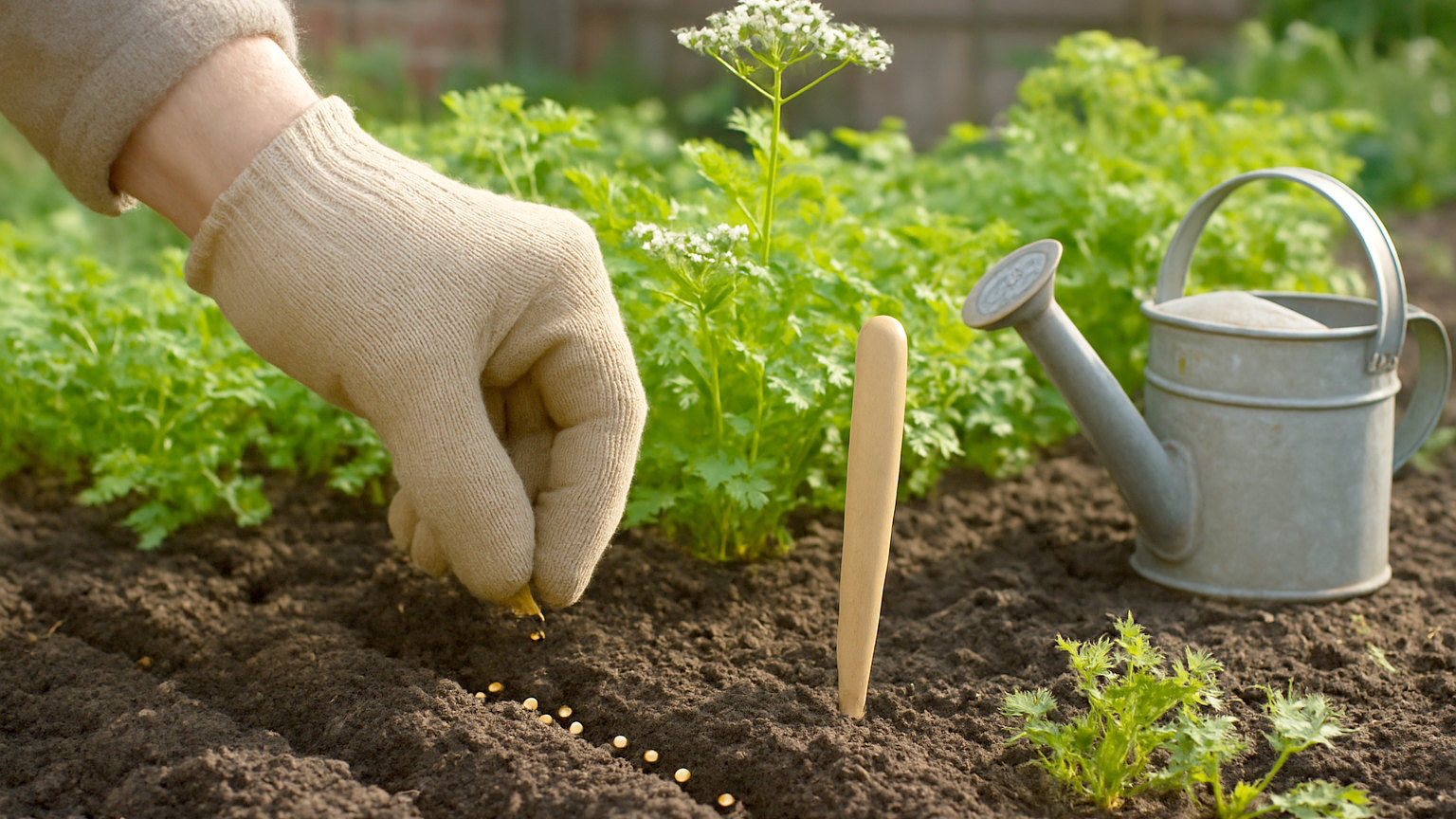
Sow where it is to grow, and sow every three weeks. That single change does more than anything else.
Sow thinly at about one and a half centimetres deep in rows twenty-five centimetres apart, or scatter across a container. Thin to about ten to fifteen centimetres for full plants, or leave crowded and cut as leaves.
If you must start under cover, use deep modules or root trainers so the taproot is undisturbed, and plant out while still small.
March to September is the sowing window outdoors, with the best crops in spring and early autumn. Midsummer sowings need light shade and constant moisture.
Choose the right variety
Varieties sold for leaf production, sometimes described as slow bolting or as cilantro types, stand noticeably longer before flowering. Varieties sold for seed run up quickly by design.
Buying the right one is worth doing, since a seed variety grown for leaf will disappoint however well you treat it.
Watering and position
Keep the soil consistently moist, since dry roots trigger bolting immediately. Mulch lightly in warm weather.
Full sun suits spring and autumn sowings. For summer, light shade for part of the day extends the useful life of a sowing considerably.
Coriander does not need rich soil and a nitrogen feed produces soft growth that bolts sooner.
Harvesting leaves
Cut the outer leaves from the base, or cut the whole plant about three centimetres above soil level, leaving the crown to regrow. Expect two or three cuts before it runs up.
Pick young. Older leaves become thin, feathery and much less flavoured as the plant prepares to flower, and the change in leaf shape is a reliable early warning that bolting has begun.
Growing it for seed
A bolted plant is not a failure if you let it finish. The white flowers attract hoverflies and other useful insects, and the seed that follows is coriander seed, which is a different spice from the leaf and worth having.
Cut the whole plant when the seed heads have turned pale brown but before they shatter, hang it upside down in a paper bag somewhere dry, and the seed falls into the bag as it finishes drying.
Store in a jar. Home-grown coriander seed is far better than shop-bought, and it can also be sown the following year.
Winter coriander
A sowing in September, grown under a cloche or in an unheated greenhouse, produces leaves slowly through the winter without any tendency to bolt, since the days are short and cool.
Growth is slow, so pick sparingly, but it is often the most useful coriander of the year and it fills the months when summer sowings are impossible.
Containers
Problems
Coriander is largely trouble free. Slugs take seedlings, and greenfly occasionally gather on the flower stems, where they attract the hoverflies that then deal with aphids elsewhere in the garden. Powdery mildew appears late on stressed plants and is a signal to pull them and resow.
Containers
Coriander grows well in a deep pot, twenty centimetres or more, which suits the taproot. A container also lets you move it into shade in summer and under cover in autumn.
Sow direct into the pot rather than transplanting, keep it evenly moist, and resow the same pot every few weeks rather than trying to nurse one sowing along.
Two pots rotated works well: sow one, and when it is a fortnight from being ready, sow the second. That way there is always a crop coming and never a gap while a pot recovers from being cut.


