
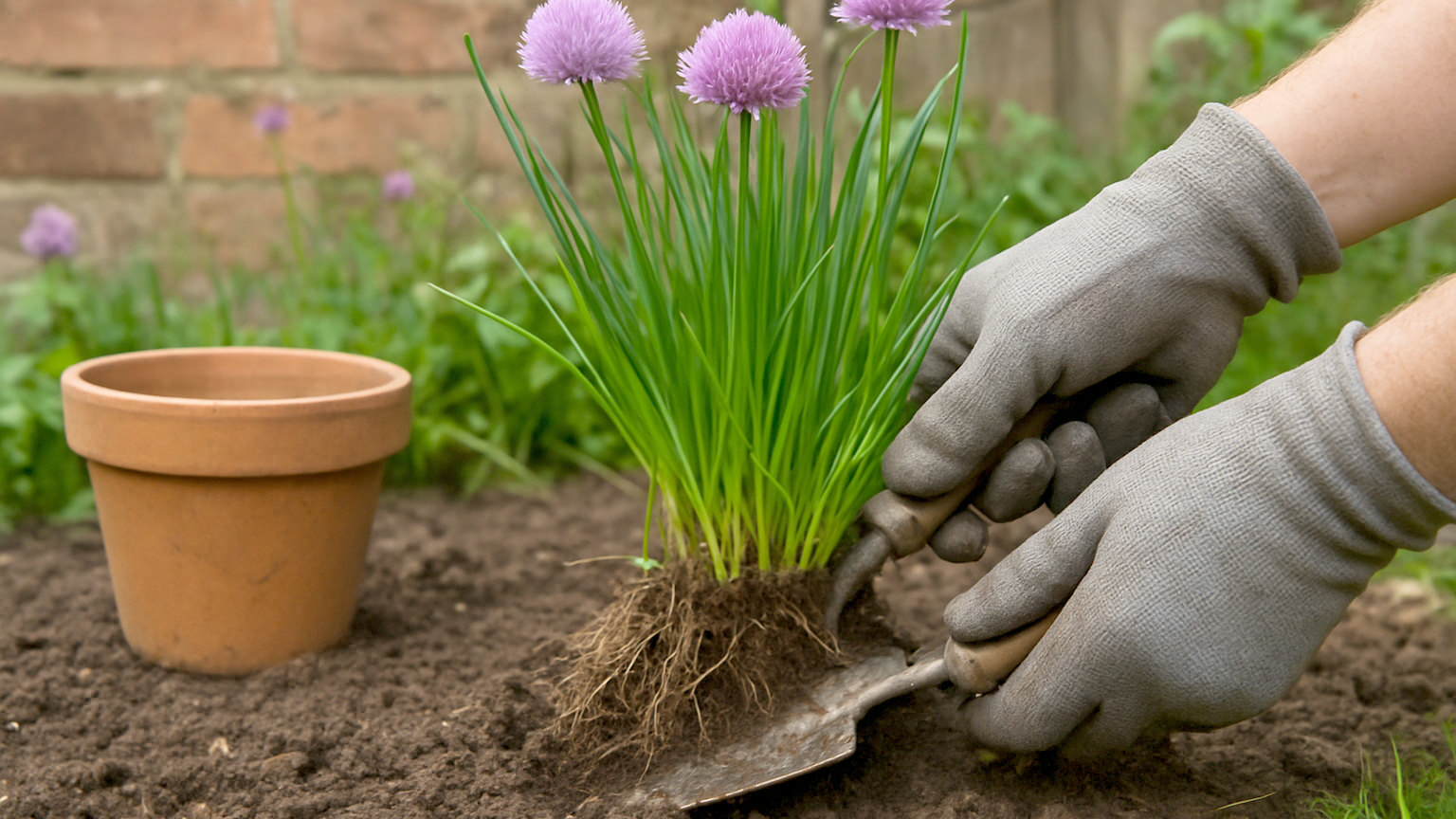
Chives are among the least demanding things in a herb garden. They are hardy perennials, come back every year without attention, tolerate a range of conditions, and reward the small amount of work you do give them with several harvests a season.
Starting them
Sow from March to June, either in modules or direct, at about one centimetre deep. Sow several seeds together, since chives grow as clumps rather than single plants and a lone seedling looks thin for a long time.
Germination takes two to three weeks. Thin or plant out clumps about twenty to thirty centimetres apart.
Buying a single pot and dividing it into three or four is quicker and often cheaper than raising from seed, and gives usable plants in the first season.
Position and soil
Chives are unusual among herbs in preferring moisture-retentive soil rather than sharp drainage, which puts them closer to mint than to rosemary.
They do best in full sun or light shade, on soil enriched with compost. In dry ground in full sun they will grow but the leaves go thin and tough more quickly.
Water in dry spells, and mulch to hold moisture in.
Cutting back for regrowth
Harvest by cutting whole leaves at the base with scissors rather than snipping the tips, which leaves blunt brown ends and looks poor.
When a clump begins to look tired or after flowering, cut the entire plant back to about five centimetres. It regrows completely within two or three weeks with fresh tender leaves.
Doing this two or three times through the season keeps a clump productive from March until the frosts, and it is the single most useful thing you can do with chives.
The flowers
The purple pompom flowers in early summer are edible, mildly oniony and among the more attractive things you can put in a salad. Break them into individual florets rather than using the whole head.
They are also excellent for bees, which visit them heavily.
The trade-off is that leaf production slows while the plant flowers, and the leaves toughen. Either enjoy the flowers and cut the whole clump back afterwards, or remove the buds as they form to keep leaves coming.
Left to set seed, chives self-sow enthusiastically and you will find seedlings across the bed, which is either useful or a nuisance depending on your plans.
Dividing
Clumps become congested after three or four years, producing many thin leaves rather than fewer thick ones.
Divide in spring or autumn. Lift the clump, pull or cut it into three or four sections each with a good number of bulbs and roots, discard any woody centre and replant into refreshed soil.
This is the whole maintenance regime, and doing it every few years keeps chives going indefinitely.
Through winter
Chives die back completely in winter and reshoot in early spring, which is normal and not a sign that the plant has died.
A clump lifted in autumn, potted up and brought into a cool greenhouse or onto a windowsill will produce leaves through part of the winter, which is worth doing for one plant.
Garlic chives
Worth growing alongside. Garlic chives, sometimes called Chinese chives, have flat rather than tubular leaves, a mild garlic flavour and white starry flowers in late summer, well after ordinary chives have finished.
They are grown identically and extend the season at both the flower and the leaf end. They self-seed vigorously, so deadhead if you do not want them spreading.
Containers and problems
Using them
Chives lose their flavour almost entirely when cooked for any length of time, so add them at the very end or use them raw. They do not dry well either, and freezing chopped chives in ice cube trays preserves far more of the character than a jar of dried ones ever will.
Containers and problems
Chives grow well in pots at least twenty centimetres deep, needing regular watering and a feed every few weeks.
Problems are few. Allium rust can appear as orange pustules in damp summers, and the response is to cut the clump to the ground, bin the material and let it regrow. Avoid growing chives in ground affected by allium white rot.


