
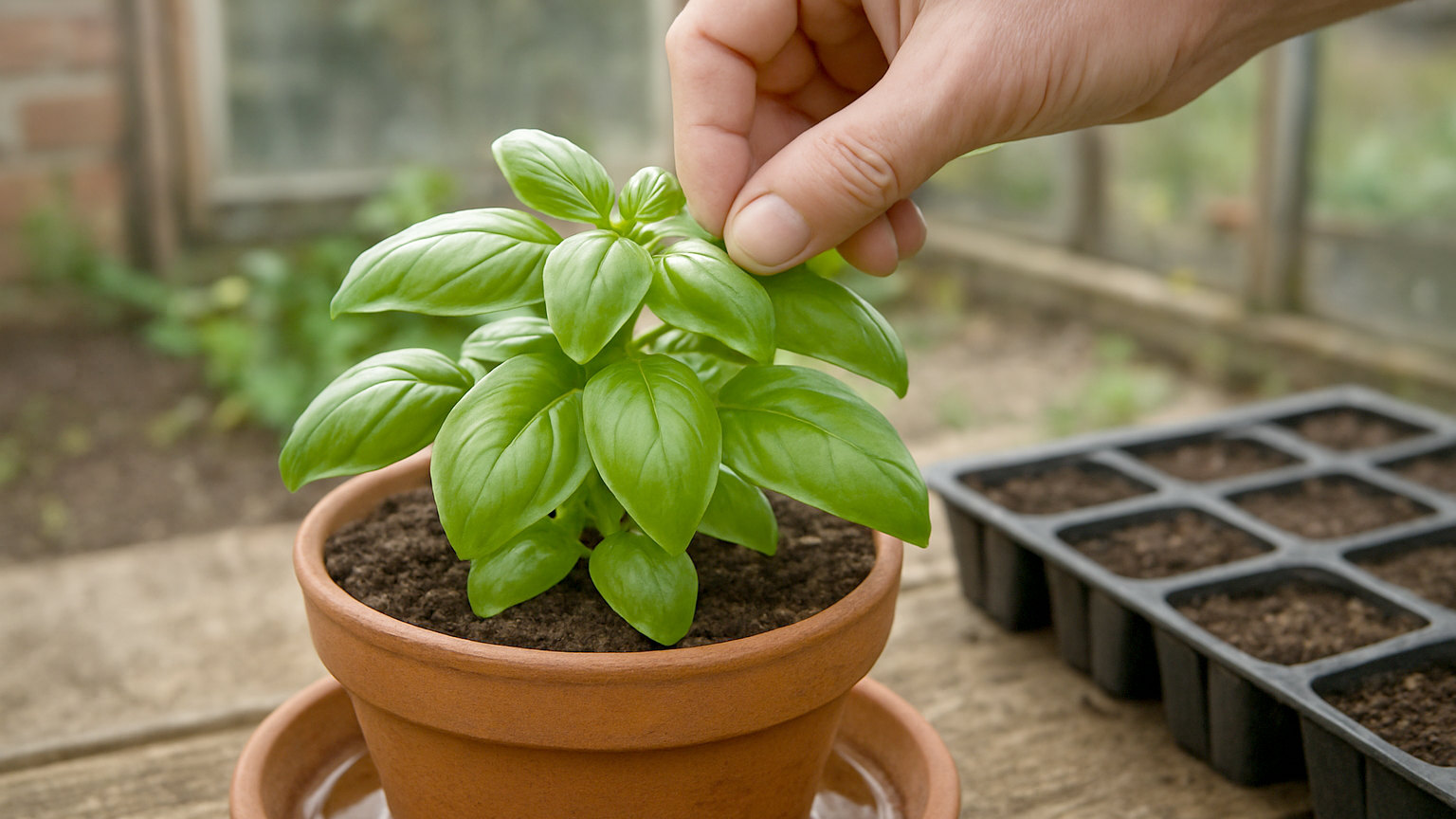
Basil is a tender tropical plant being grown in a country it is not suited to, which explains most of what goes wrong with it. It wants warmth, sun and a compost that is moist but never wet, and it will not survive outside in Britain for most of the year.
Where to grow it
A greenhouse, a conservatory or a warm sunny windowsill are the realistic options. Basil sulks below about twelve degrees and is killed outright by frost.
Outdoors it will grow in a sheltered sunny spot from June to early September, and often does less well than the same plant kept under glass. A pot that can be moved in and out is the practical compromise.
Sowing
Sow from March to June, indoors, at about half a centimetre deep in peat-free compost. It needs warmth to germinate, around twenty degrees, and a propagator or a warm windowsill suits.
Sow thinly. Basil is prone to damping off, where seedlings collapse at soil level, and crowding is the main cause along with overwatering and stagnant air.
Prick out into individual pots once the first true leaves appear, or sow several seeds per pot and grow them as a clump, which many people find easier.
Watering, which is where it goes wrong
More basil is killed by overwatering than by anything else. Wet compost, especially in a cool room, rots the roots and the plant wilts, which looks like thirst and prompts more water.
Water in the morning, at the base, and let the surface dry slightly between waterings. Watering from below, standing the pot in a saucer for twenty minutes and then draining it, keeps the foliage dry and is the more reliable method.
Never leave a pot standing in water, and never water in the evening, since cool wet compost overnight is what causes collapse.
Pinching out
Pinch out the growing tip above a pair of leaves once the plant has four or five pairs. It then branches from below rather than growing as a single stem.
Repeat as it grows. A regularly pinched plant becomes bushy and productive; an unpinched one becomes a tall bare stem with a tuft on top.
Remove flower buds as they appear. Once basil flowers, leaf production slows sharply and the flavour changes. If you want seed, leave one plant to flower and keep pinching the rest.
Harvesting
Pick from the top of the plant, taking the growing tip above a pair of leaves, which doubles as pinching out. Do not strip the lower leaves and leave the top, which is the instinctive thing to do and produces a leggy plant.
Take no more than about a third of the plant at once and let it recover.
Supermarket pots
A supermarket basil pot contains dozens of seedlings crammed into a small volume of compost, forced under glass and intended to be used within a fortnight. Treated as a plant it will collapse.
To keep one going, tip it out and divide the clump into three or four sections, pot each into fresh compost in a slightly larger pot, water in and keep somewhere warm and bright. Each section then has room and will grow on for months.
Varieties
Companion effects
Basil is traditionally grown alongside tomatoes, and in a greenhouse the pairing works practically as well as culinarily, since both want the same warmth and the basil occupies the space at the base of the plants. Claims that it repels whitefly are not well supported, but it costs nothing and uses ground that would otherwise be bare.
Varieties
Sweet Genovese is the standard large-leaved Italian basil. Greek or bush basil has tiny leaves, is more compact and noticeably tougher. Thai basil has an aniseed note and stands warmth well. Purple varieties look striking and are milder.
Greek basil is the one to choose if you have struggled, since it is considerably more tolerant of imperfect conditions.
Preserving a glut
Basil loses most of its character when dried. Freeze it instead, either chopped into ice cube trays with a little water or oil, or blitzed into a rough pesto and frozen in portions.
Cuttings root readily in a glass of water within a fortnight, so a plant can be multiplied at no cost before it goes over.


