
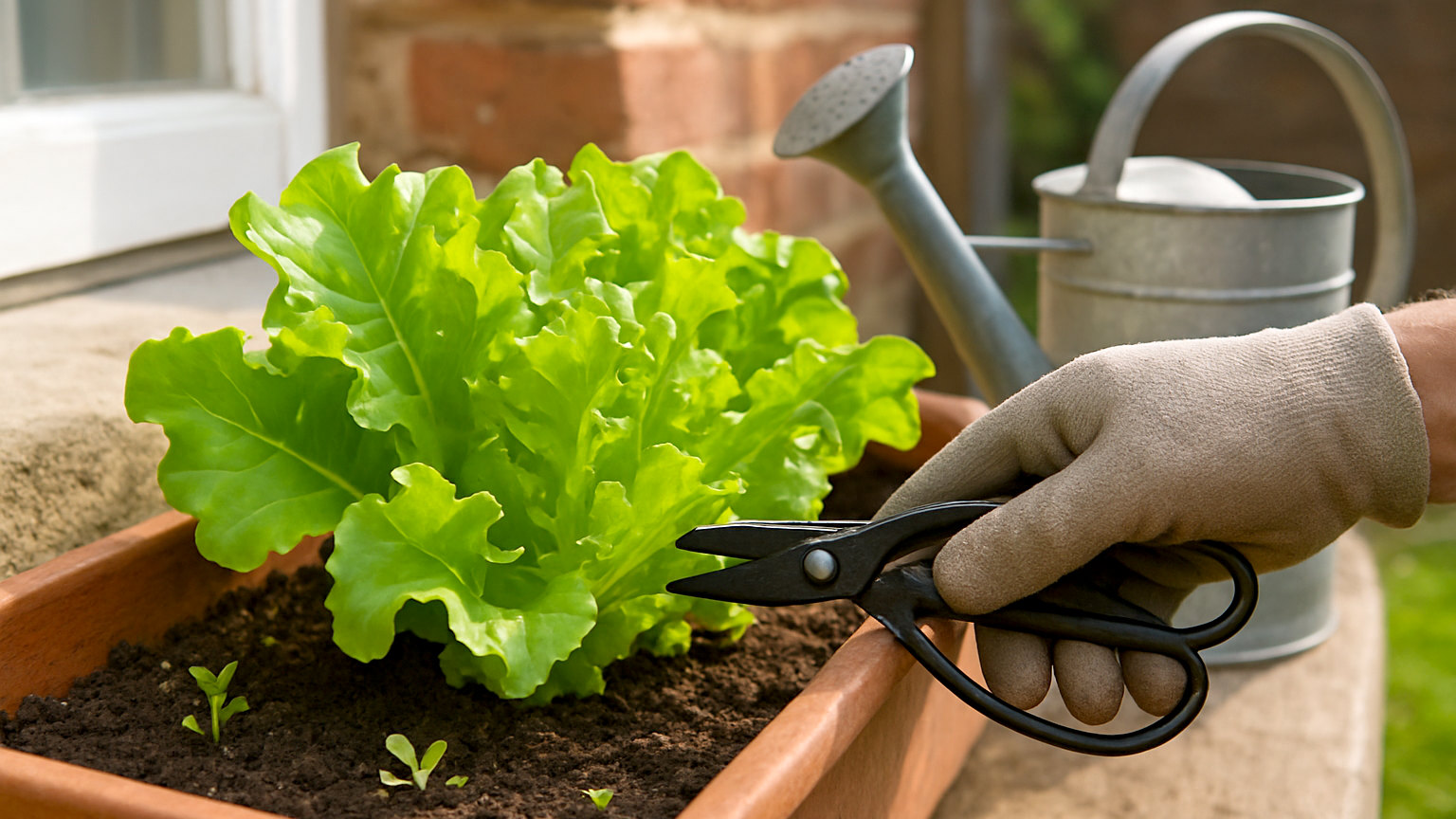
Salad leaves are the quickest return in the garden. Sown thickly and cut young, a shallow container gives you three or four harvests from one sowing, and a metre of row keeps a household in leaves for weeks. It is also the crop where the technique matters more than the growing.
Sow little and often
The single habit that makes salad work is successional sowing. A short row or one container every two to three weeks from March to September produces a steady supply. One large sowing produces a glut, then a gap, then nothing.
Sow thinly along a shallow drill about one centimetre deep, or scatter across the surface of a container and cover lightly. Cut-and-come-again leaves are sown far more thickly than hearting lettuce because you are harvesting leaves rather than growing plants to maturity.
Germination takes a few days in warm soil. Keep the surface damp until seedlings appear, which is the point at which most sowings fail.
What to grow
Loose-leaf lettuces such as Salad Bowl and Lollo Rossa are the backbone, since they regrow reliably after cutting. Around them, rocket is fast and peppery, mizuna and mustards add heat, and spinach and chard can both be cut small as leaves.
Lamb's lettuce, land cress and winter purslane are worth knowing because they are hardy enough to crop through the cold months. Ready-made mixes are a reasonable starting point, though sowing two or three types in separate patches gives you more control, since they mature at different rates.
How to cut
Cut above the growing point, not through it. Take the leaves with scissors about three centimetres above soil level, leaving the small central leaves and the crown intact. Cut lower and the plant cannot regrow.
Harvest when leaves are around ten centimetres, which is usually three to four weeks after sowing. Most types give three or four cuts before they tire, and after that it is quicker to resow than to nurse them.
Cut in the morning while the leaves are turgid, and they will keep far better than leaves picked in afternoon heat.
Bolting, and how to delay it
Bolting is when a plant runs to seed, sending up a flower stem and turning the leaves bitter. Heat, dry roots and long days all trigger it, which is why midsummer salad is the hardest to keep going.
Sow summer salad in light shade rather than full sun, keep the soil consistently moist, and choose varieties described as slow to bolt. Sowing in the evening so germination happens overnight helps in hot spells, since lettuce seed germinates poorly above about twenty-five degrees.
Once a plant has bolted it will not come back. Pull it and sow again.
Containers and windowsills
Salad has shallow roots and does not need depth, so a container fifteen centimetres deep is ample. Any wide, shallow container with drainage holes works, and a window box on a kitchen sill will produce leaves for months.
Use fresh peat-free compost, keep it evenly moist rather than alternately soaked and dry, and give a dilute liquid feed after the second cut, since container compost runs out of nutrients quickly.
Growing in pots on a hard surface also reduces slug damage considerably, and slugs are the main enemy of young salad in open ground.
Extending the season
Sow hardy types in late August and September for autumn and winter cropping. Under a cloche, in a cold frame or in an unheated greenhouse, lamb's lettuce, land cress, winter purslane and hardy oriental leaves will crop through much of the winter, growing slowly and providing leaves when nothing else is available.
Growth almost stops in the darkest weeks and picks up again in February, so cut sparingly through midwinter and let the plants recover.
Thinning, or not
Cut-and-come-again salad is deliberately grown crowded, so no thinning is needed. Hearting lettuce is different and must be thinned to about twenty-five centimetres, or the plants compete and none of them hearts up properly. Thinnings from a hearting sowing are perfectly good in a salad, so nothing is wasted.
Herbs alongside
Coriander, dill, parsley and chervil can be sown and cut in exactly the same way, and coriander in particular is better treated as a cut-and-come-again crop sown every few weeks, since it bolts quickly in warm weather whatever you do.


