
Most herbs that die in British gardens die of wet rather than cold. Rosemary, thyme, sage and oregano come from hot dry hillsides with sharp drainage, and they will survive a hard frost far more readily than they will survive sitting in heavy soil through a wet January. Fix the drainage and most of the difficulty disappears.
The three groups
Herbs divide usefully by how long they last, and treating them accordingly saves a good deal of disappointment.
- Perennial and woody: rosemary, thyme, sage, oregano, marjoram, bay, lavender. Plant once and they last years.
- Perennial and herbaceous: chives, mint, tarragon, lemon balm, sorrel. They die back in winter and return in spring.
- Annual or biennial: basil, coriander, dill, parsley, chervil. These need resowing, and expecting them to persist is the commonest mistake.
Getting the drainage right
Mediterranean herbs need grit, not compost. If you plant rosemary or thyme into rich, moisture-retentive soil they grow soft, sappy growth that rots at the base over winter. Add plenty of horticultural grit to the planting hole, plant slightly proud of the surrounding soil, and mulch with gravel rather than bark so the crown stays dry.
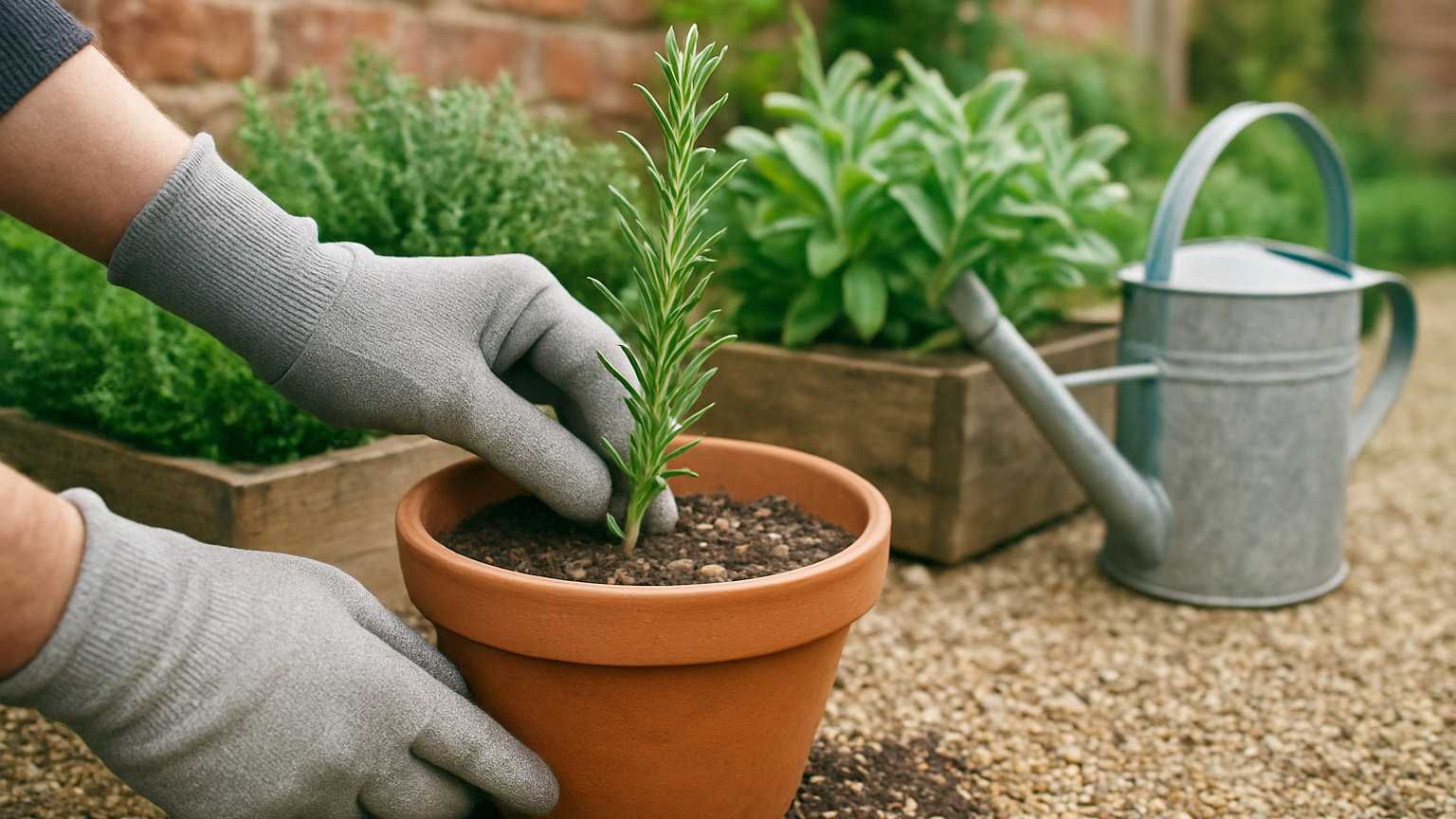
On clay, growing them in pots or a raised bed is far more reliable than fighting the soil. A terracotta pot with a generous drainage hole, filled with a gritty peat-free mix, suits them well, and terracotta dries faster than plastic, which in this case is an advantage.
Do not feed them. Poor soil produces the concentrated oils that give these herbs their flavour, and rich soil produces bulk with less taste.
Sun, and how much
The woody herbs want the sunniest, most sheltered spot you have, ideally against a south-facing wall which radiates warmth overnight. Six hours of direct sun is a reasonable minimum.
The herbaceous group is more forgiving. Mint, chives, parsley, sorrel and lemon balm all tolerate part shade and in fact prefer it in high summer, since they run to seed quickly in heat.
Mint, and the container rule
Mint spreads by underground runners and will colonise a bed within two seasons. Grow it in a pot, either standing free or sunk into the ground with the rim proud of the surface so runners cannot escape over the edge.
Divide it every couple of years, because a congested pot of mint loses vigour. It is one of the few herbs that genuinely wants moist soil and a feed.
Getting them through winter
Cut back lavender and sage after flowering, but never into the old bare wood, because neither will reshoot from it. A plant cut too hard usually dies, and that single error accounts for a great many lost lavenders.
Move pots of tender or borderline herbs against a wall or into an unheated greenhouse for winter, and lift them onto pot feet so they are not standing in water. Basil will not survive outside at all and is best treated as a summer crop on a windowsill.
Rosemary, thyme and sage are hardy in most of the country if drainage is good. In a very wet garden, taking a few cuttings in late summer as insurance costs nothing and roots readily.
Harvesting for flavour
Pick regularly, because it keeps plants bushy and productive. Take from the top and above a pair of leaves so the plant branches rather than becoming leggy.
Flavour is strongest just before flowering, and in the morning after the dew has dried. Once a herb flowers, leaf production slows and the taste changes, so pinch out flower buds on basil and oregano if you want leaves rather than blooms, though leaving some to flower is worth doing for the bees.
Buying versus sowing
Supermarket herb pots are dozens of seedlings crammed into a small volume of compost, forced under glass and sold to be used within a fortnight. They rarely survive being treated as plants. If you want one to last, split the clump into three or four portions as soon as you get it home, pot each into fresh compost, and grow them on separately.
Woody herbs are better bought as a single established plant from a nursery. Annual herbs are cheaper and better from seed, sown in succession.
Storing a glut
Woody herbs dry well: tie small bunches and hang them somewhere warm and airy out of direct sun. Soft herbs such as basil, parsley and coriander lose most of their character when dried, and freeze far better, either chopped into ice cube trays with a little water or blitzed into oil.


