
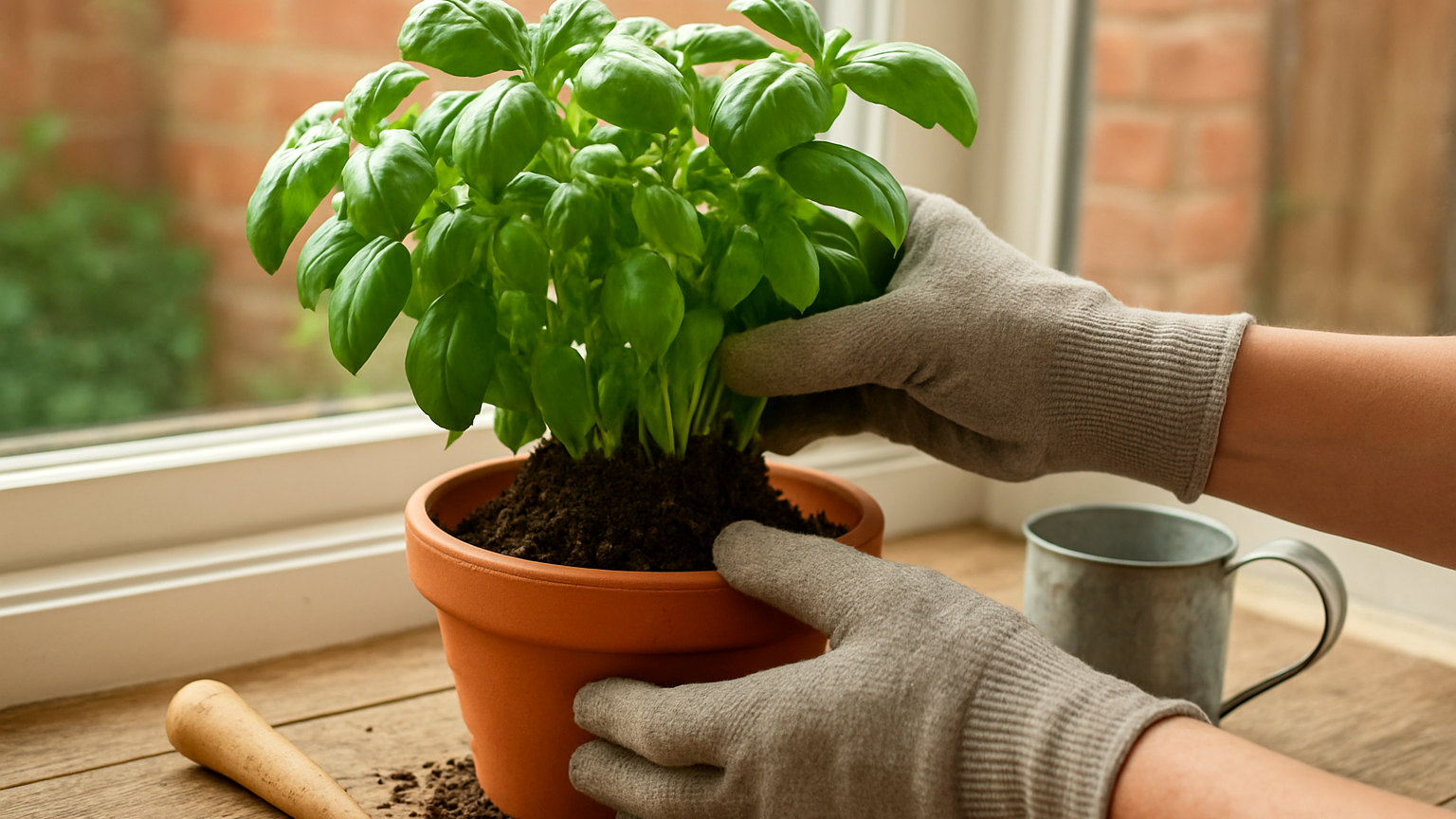
Growing herbs on a kitchen windowsill is more limited than the pictures suggest, and the constraint is light rather than warmth. A room that feels bright to us delivers a fraction of the light a plant gets outdoors, which is why so many indoor herbs stretch, pale and give up.
Light is the limit
A south or west-facing windowsill is the minimum for most herbs, giving several hours of direct sun. North-facing sills will not support Mediterranean herbs at all.
Turn pots every few days, since plants lean hard towards the glass and grow lopsided. Keep the glass clean, which makes more difference in winter than people expect.
From October to February, light in Britain is too weak for much real growth. Expect plants to tick over rather than produce, and pick sparingly. A simple LED grow light transforms winter results if you want herbs year round.
Which herbs actually work
Basil is the best candidate, since it genuinely prefers the warmth and shelter of indoors to a British garden.
Chives do well in a pot on a sill, particularly a clump lifted from the garden in autumn.
Parsley grows steadily indoors given a deep pot for its taproot and consistent moisture.
Mint tolerates lower light than most and is happy in a pot, though it gets leggy without decent light.
Coriander works if sown direct into its final pot and treated as a quick crop to resow, rather than a plant to keep.
Which will disappoint
Rosemary, thyme, sage and oregano all want full sun, sharp drainage and moving air. Indoors they become leggy, go grey, attract mildew and slowly decline.
They can be kept on a bright sill for a few months, but they belong outside and will do far better in a pot by the back door that you nip out to.
Pots and compost
Use pots with drainage holes and saucers, at least fifteen centimetres across and deeper for parsley and coriander. Small pots dry out within hours on a warm sill.
Peat-free multipurpose compost suits most, with added grit for anything Mediterranean. Do not use garden soil, which compacts and brings pests indoors.
Watering
Overwatering kills more indoor herbs than drought. Indoor pots dry more slowly than outdoor ones and there is no wind or sun to help.
Check by pushing a finger into the compost rather than judging by the surface. Water thoroughly when the top two centimetres are dry, let it drain, and empty the saucer. Never leave a pot standing in water.
Water in the morning rather than the evening, particularly for basil.
Feeding and airflow
Compost is exhausted within about six weeks. Feed fortnightly with a dilute general liquid feed through spring and summer, and stop through winter when the plant is not growing.
Open a window occasionally. Still humid air encourages mildew and fungus gnats, and a little air movement strengthens stems.
Rescuing a supermarket pot
Those pots contain dozens of seedlings crowded into a small volume of compost, forced under glass and intended to be used within a fortnight. Treated as a plant, one will collapse.
To keep it, tip it out and divide the rootball into three or four sections. Pot each into fresh compost in a slightly larger pot, water in and keep somewhere bright. Each section then has room and will grow on for months rather than weeks.
This works particularly well with basil, parsley and coriander.
Picking
Pests indoors
Fungus gnats, the small flies that appear around damp compost, are the commonest indoor nuisance and are a sign of overwatering. Let the surface dry between waterings and they usually disappear. Aphids and red spider mite arrive on new plants, so check anything you bring in before it joins the others.
Picking
Pick little and often, taking no more than a third of a plant at once and always from the growing tips rather than stripping the lower leaves. Indoors, plants recover more slowly than outdoors, so harvest with that in mind.
Keep pots out of the way of radiators and cooker hobs, since dry heat and fluctuating temperatures do more harm than a cool sill.
Avoid the gap behind a closed curtain on a winter night, which can be several degrees colder than the room and cold enough to check a tender herb badly.


