
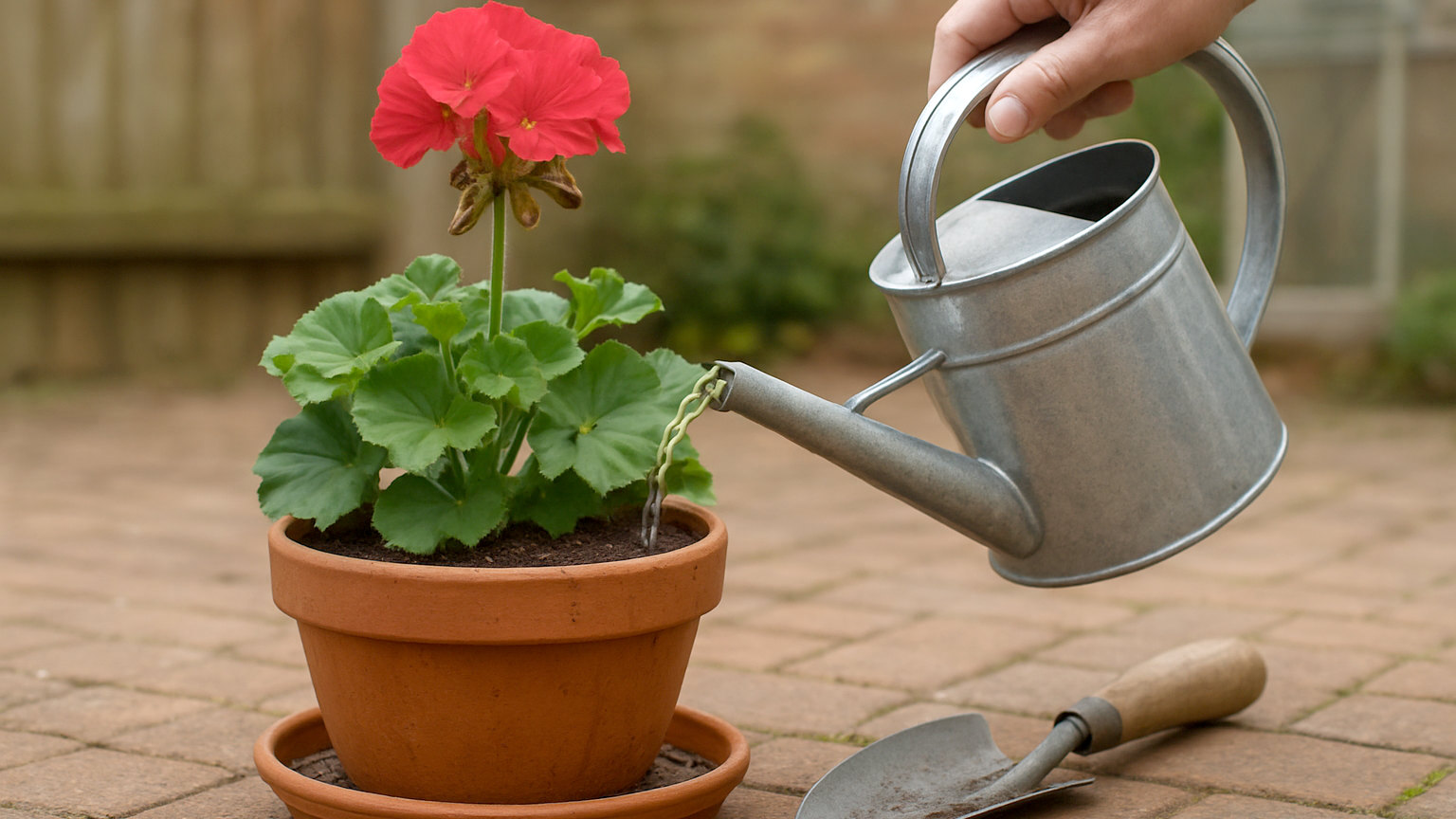
A plant in the ground can send roots outwards and downwards in search of moisture. A plant in a pot cannot, and depends entirely on what you give it. Watering is therefore the single skill that decides whether container growing succeeds.
Checking rather than guessing
The surface of a pot dries first and tells you very little. Push a finger two or three centimetres into the compost: if it is dry at that depth, water.
Weight is the other reliable test. Lift a pot when freshly watered and again when dry, and the difference is obvious. After a few weeks you can judge by tipping a pot slightly with a foot.
Wilting is a late signal, not a routine one. A plant that wilts regularly is being managed badly rather than watered on demand.
How much
Water thoroughly until it runs from the drainage holes, then stop. That ensures the whole rootball is wetted rather than just the top.
A light daily sprinkle is worse than a proper soak every second day, because it wets only the surface and draws roots upwards into the layer that dries first.
In hot weather a large container may need water daily and a hanging basket twice daily. In winter most pots need very little, and overwatering then kills more plants than drought does.
Dried-out compost
Peat-free compost that has dried out completely repels water. Poured water runs down the gap between compost and pot and straight out of the base, and the rootball stays dry.
The fix is to stand the pot in a bucket or a tray of water for half an hour until the compost has taken up moisture from below, then drain it. For a large pot, water little and often over an hour rather than in one go.
Prevention is easier: water before the compost dries out completely.
Reducing how often you need to
Several things make a real difference without any equipment.
- Use larger pots, which dry far more slowly than small ones
- Choose plastic or glazed over unglazed terracotta, which is porous
- Mulch the compost surface with gravel, bark or slate
- Group pots together so they shade one another
- Move pots into afternoon shade in high summer
- Use a soil-based compost, which holds water better than multipurpose
Water-retaining granules mixed into the compost at planting help in baskets and small containers. Follow the dose exactly, since too much turns the compost to jelly.
Saucers, and when not to
A saucer holds a small reserve and is useful in summer for thirsty plants such as tomatoes and mint.
In winter it is the opposite. A pot standing in water freezes and the roots rot, so remove saucers in autumn and stand pots on feet so water drains freely.
Self-watering and irrigation
Self-watering containers have a reservoir below the compost with a wick drawing water up. They are genuinely useful for anyone out all day, and for balconies.
A drip system on a tap timer is the most effective solution for a collection of pots. It delivers slowly at the base, wastes far less than hand watering, and removes the daily obligation entirely. Check emitters periodically for blockages.
Going away
For a week or more, move pots into shade, group them together, water thoroughly before leaving, and mulch the surfaces.
Capillary matting with one end in a reservoir keeps small pots going. Plastic bottles inverted into the compost work for a few days. Beyond a fortnight, a timer system or a willing neighbour is the only reliable answer. Leave written instructions if someone else is doing it, since most plants lost while their owners are away are overwatered rather than neglected.
Water quality
Rainwater from a butt is better for most plants and essential for blueberries and other lime-haters. Use mains water for seedlings and cuttings, since stored water can carry the organisms that cause damping off.
Winter watering
Pots outside in winter still need occasional checking, particularly those under an overhang or against a wall where rain never reaches them. Evergreens in containers are frequently lost to drought in February rather than to cold, because nobody thinks to water in winter.
Water sparingly, on a mild day, in the morning so the compost is not saturated overnight.


