
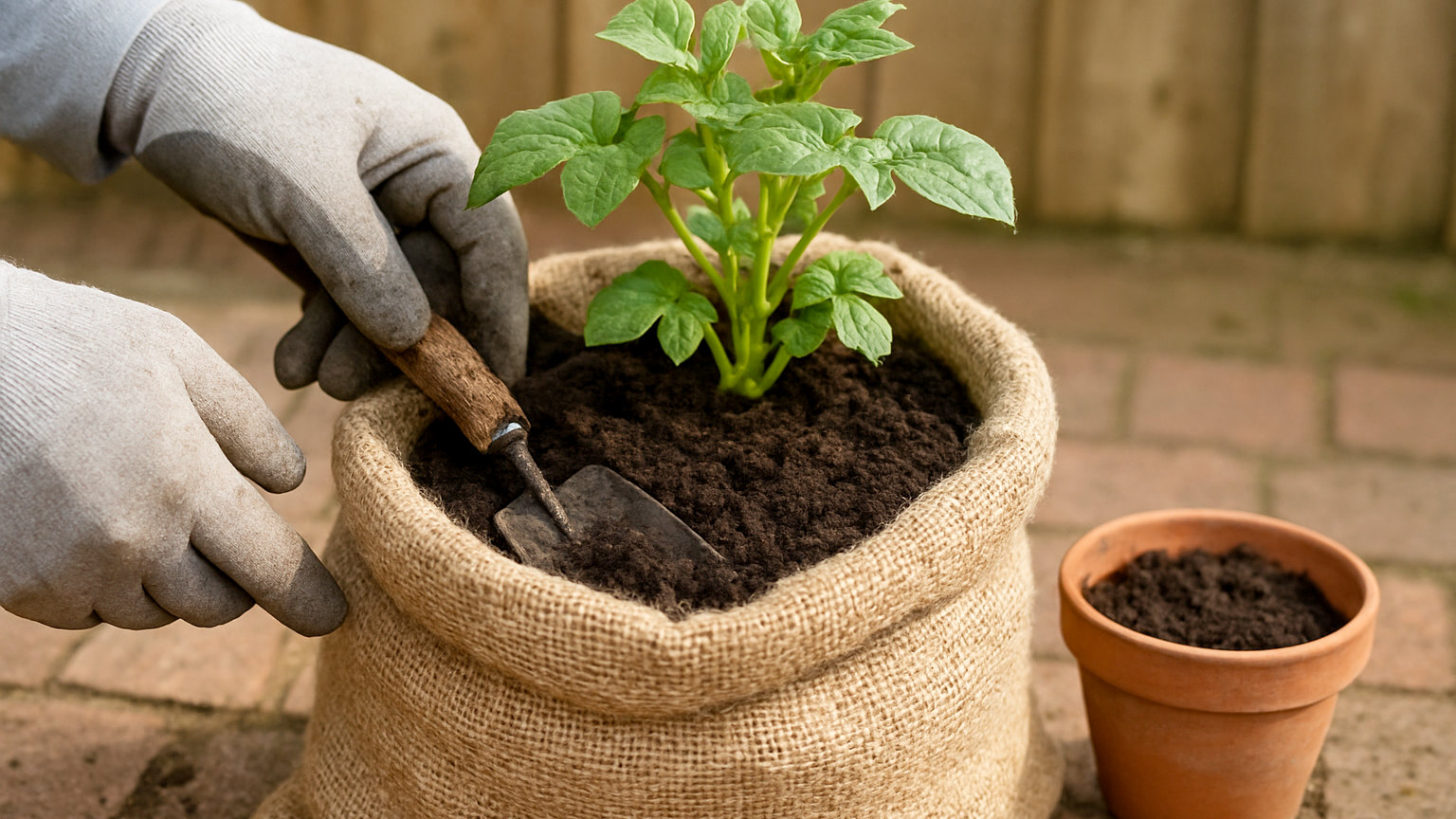
Potatoes in bags suit a patio, a yard or a garden with impossible soil, and they are among the most satisfying container crops because harvesting means tipping the whole thing out and picking through it.
Grow earlies
First and second earlies are the ones worth growing this way. They occupy the bag for around ten to thirteen weeks, produce small waxy potatoes that taste nothing like anything bought, and are lifted before blight season.
Maincrop potatoes occupy the bag for five months to produce something available cheaply all year, and in a container the yield rarely justifies it. If you have one bag, grow a first early.
The bag
Use a container of at least forty litres, and larger is better. Purpose-made potato bags, builders' bags, large plastic pots, old compost bags with holes punched in, and fabric grow sacks all work.
Drainage holes are essential. A bag without them becomes a bucket of wet compost and the tubers rot.
Bags with a side flap for checking the crop are sold and are largely a gimmick, since disturbing the plant to look does more harm than waiting.
Chitting
Stand seed potatoes in a cool, light, frost-free place for four to six weeks before planting, in an egg box or a tray, so they produce short green shoots.
This gives earlies a genuine head start. The shoots should be short, stubby and green rather than the long pale sprouts that develop in a dark cupboard.
Use certified seed potatoes rather than supermarket ones, which may carry disease and are often treated to suppress sprouting.
Planting
Roll the bag down to about a third of its height, which makes it easier to work with and lets light and warmth reach the compost.
Put fifteen centimetres of compost in the base, place the seed potatoes on top with the shoots upwards, and cover with another ten to fifteen centimetres.
Three tubers to a forty-litre bag, or five to a large builders' bag. Crowding produces a great many very small potatoes.
Plant from March for earlies, or in February in a frost-free greenhouse for a very early crop.
Adding compost as they grow
When the shoots are about fifteen to twenty centimetres tall, add more compost so only the top few centimetres of foliage show. Unroll the bag as you go.
Repeat two or three times until the bag is nearly full. This is the container equivalent of earthing up, and it does the same two jobs: it increases the length of stem that can produce tubers, and it keeps developing potatoes covered.
Potatoes exposed to light turn green, and green potatoes are toxic. Keeping them covered is not optional.
Watering and feeding
This is where bag-grown potatoes fail. A bag in summer dries out fast and potatoes are thirsty, particularly once the tubers begin to swell.
Water generously and consistently, checking daily in warm weather. Irregular watering produces small, misshapen or hollow tubers.
Feed weekly with a high-potassium tomato feed once the plants are growing strongly.
Frost
Emerging shoots are damaged by late frost. Move the bag under cover, or cover it with fleece overnight if frost is forecast after the shoots are up.
Harvesting
Earlies are ready when the flowers open, usually ten to thirteen weeks after planting. Have a careful feel down the side of the bag to check the size if you want to.
To harvest, tip the whole bag out onto a sheet or a tarpaulin and pick through it. It is the most enjoyable ten minutes in the container-growing year.
Earlies do not store and are best eaten within days of lifting, which is no hardship at all since that is exactly when they are at their best.
Afterwards
Blight
Earlies are usually lifted before blight arrives, which is one of their advantages. If dark patches appear on the foliage of a later crop, cut all the top growth off at compost level immediately, remove it, and leave the tubers a fortnight before tipping the bag out.
Afterwards
Do not reuse the compost for potatoes or tomatoes, since both share diseases. Spread it on a border, use it for a different crop, or add it to a compost heap.


