
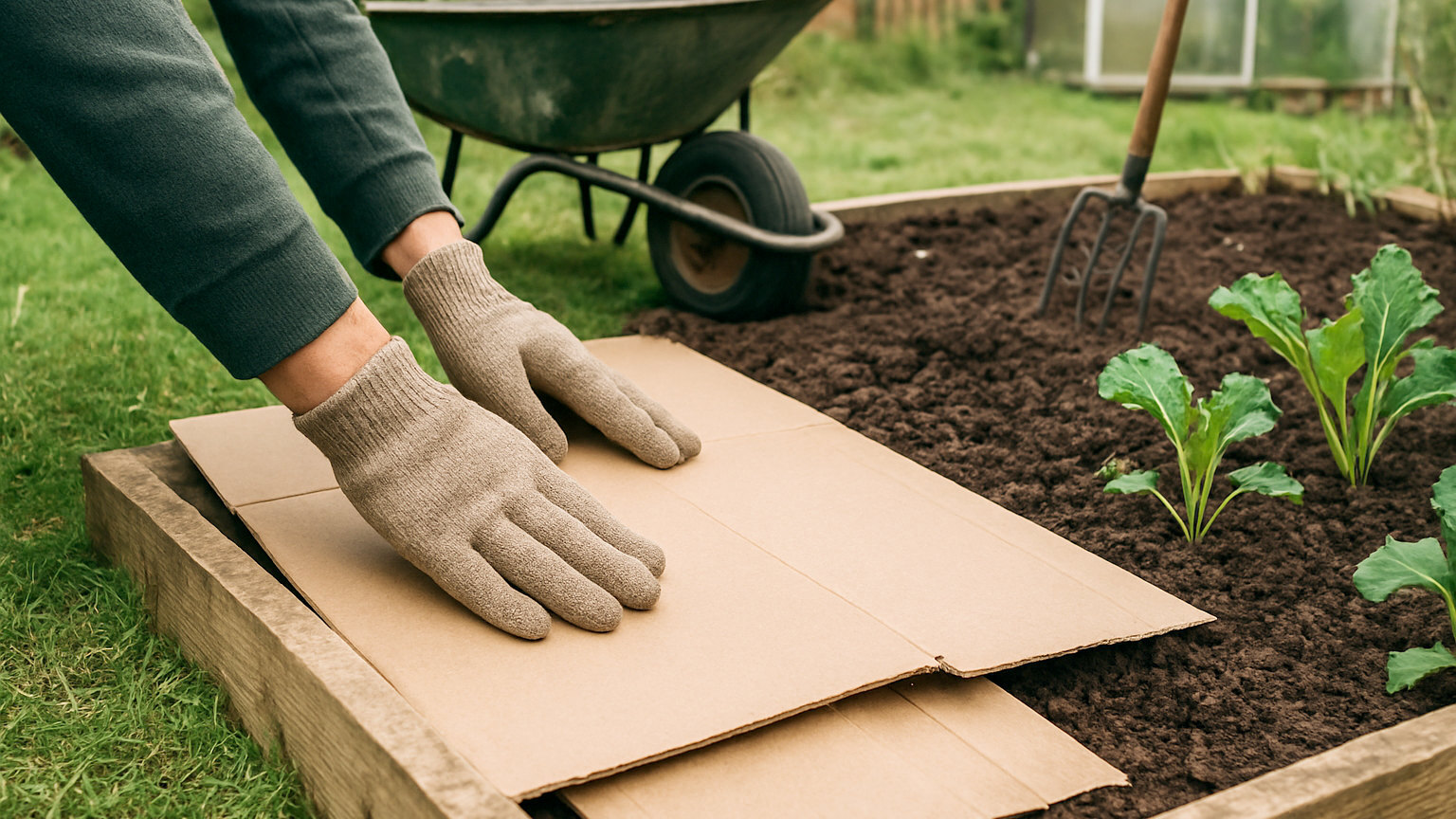
No-dig means exactly what it says: the soil is never turned over. Compost is spread on the surface and the worms take it down, which is how soil is built everywhere except in cultivated gardens. It works particularly well in raised beds.
Why not digging works
Soil has a structure of channels, fungal networks and worm burrows built up over years. Digging destroys that structure, breaks up the fungal networks and brings buried weed seed to the surface where it germinates.
Left undisturbed, the structure persists. Water drains through it, roots follow the channels, worms carry organic matter down, and the surface layer of compost suppresses the weed seed already in the soil rather than turning it up.
The practical results reported by no-dig growers are fewer weeds, better moisture retention and less work, which is an unusual combination.
Starting a bed over grass
The appeal of this method is that you do not have to remove the turf.
Cut the grass short, then lay thick plain cardboard over the whole area, overlapping the sheets generously by fifteen centimetres or so with no gaps. Remove any plastic tape and glossy printed sections.
Wet the cardboard thoroughly, then spread ten to fifteen centimetres of good compost on top. Build the bed sides around it, or simply mound the compost if you are not using timber.
You can plant into that compost immediately. The grass beneath dies from lack of light, and the cardboard rots away within a season, by which time the roots have grown down into the soil beneath.
What to use
Well-rotted garden compost, council green waste compost, mushroom compost or well-rotted manure all work. It needs to be genuinely rotted, since fresh material scorches roots and robs nitrogen.
The initial quantity is substantial and it is the main cost of the method. After the first year the annual requirement is much smaller.
Perennial weeds
Cardboard and compost will not deal with bindweed, ground elder, couch grass or horsetail. These push through everything, and a bed started over them becomes a permanent battle.
Clear perennial weeds first by digging them out thoroughly, or by excluding light with heavy sheeting for a full growing season, before starting the bed. This is the one situation where some digging is worth doing.
Annual weeds and grass are dealt with entirely by the cardboard.
The annual routine
Each autumn or late winter, spread about five centimetres of compost over the surface of the bed. That is the whole maintenance.
Do not fork it in. Leave it and the worms will incorporate it over the following months, which they do more effectively than a spade does.
Between crops, clear the spent plants by cutting them off at ground level rather than pulling, leaving the roots to rot in place and feed the soil. Then plant or sow directly into the surface.
Sowing and planting into it
Sow into a shallow drill drawn in the compost surface exactly as you would in a conventional bed. Transplants go in with a trowel, disturbing as little as possible.
The surface compost is generally loose and easy to work, which makes both jobs quicker than on a dug bed.
Weeding
Weeds still appear, from wind-blown seed and from the compost itself, and they are far easier to remove because the surface is loose and they have not rooted deeply.
Hoe very shallowly or pull by hand, and do it while they are small. Never dig, since disturbing the surface brings up buried seed and undoes the main advantage.
Where it suits
It works on almost any soil and is particularly transformative on heavy clay, where digging is hard work and damages structure badly.
Root crops grow well in it, contrary to the assumption that they need deeply dug ground, since the loose compost layer suits them.
The one genuine requirement is a reliable supply of compost, which for a large plot means either making a great deal or buying it in.
Slugs
A thick compost mulch gives slugs cover, and no-dig beds can be worse for them in the first year or two while the ecosystem settles. Going out at dusk with a torch during the vulnerable weeks in May does more than anything applied to the surface, and the population usually falls once ground beetles and frogs establish.


