
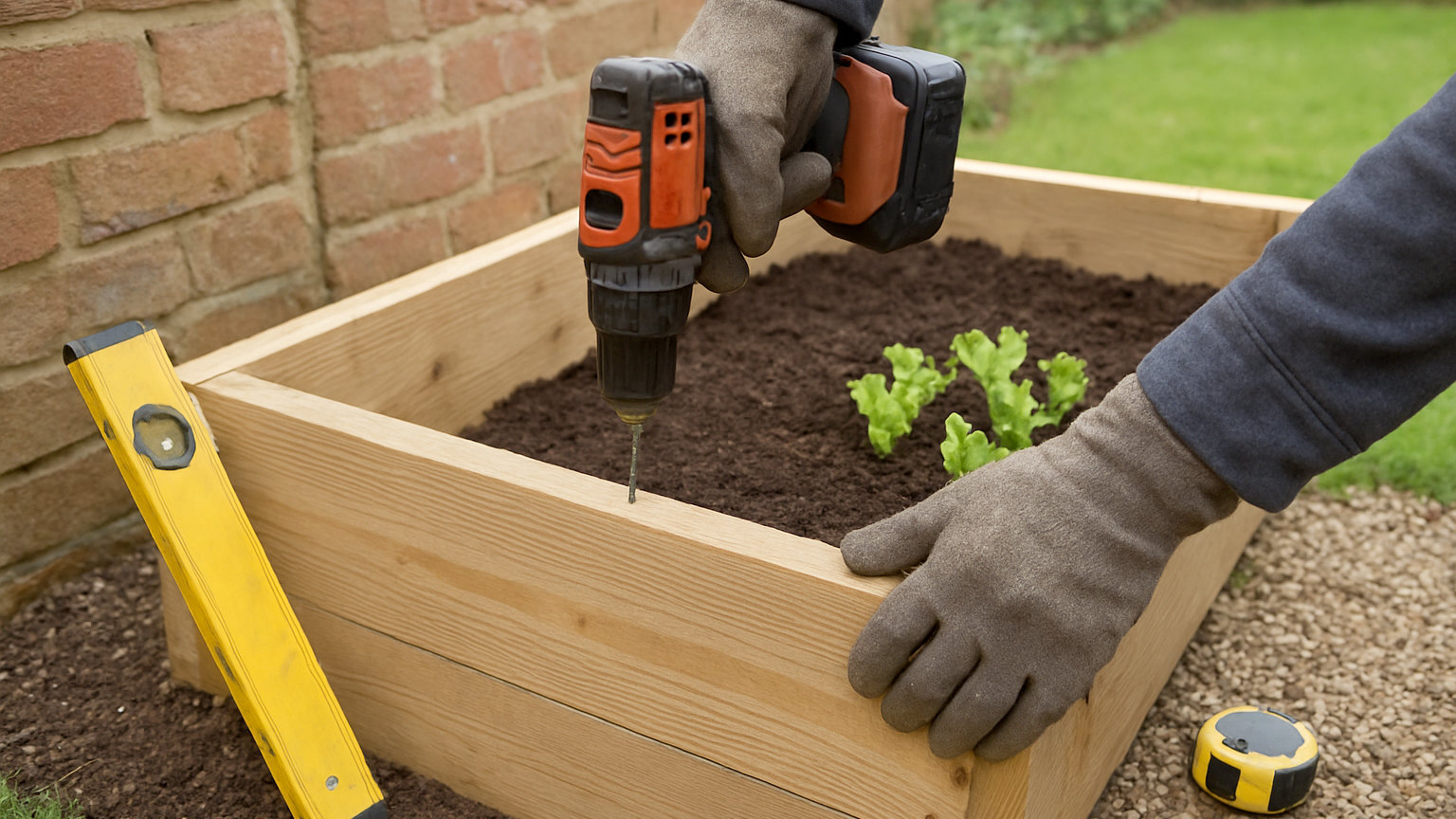
A raised bed solves several problems at once: it lifts crops above heavy or contaminated soil, it drains better, it warms up earlier in spring, and it puts the growing surface at a height that saves your back. It is also one of the few garden projects that is genuinely straightforward to build in an afternoon.
Getting the size right
Width is the measurement that matters, and 1.2 metres is the maximum. You need to reach the centre from both sides without standing on the soil, since walking on a bed compacts it and undoes the main advantage. If the bed will only be accessible from one side, against a wall or fence, make it no more than 60 to 70 centimetres wide.
Length is up to you and the timber available, though anything over about three metres invites people to walk across it rather than round. Leave paths of at least 45 centimetres between beds, and 60 to 75 if you need to get a wheelbarrow through.
Depth depends on what is underneath. Over decent soil, 15 to 20 centimetres is plenty, since roots go down into the ground below. Over concrete, paving or badly contaminated ground, you need 30 centimetres for most crops and 45 for deep roots such as parsnips. For a bed you can work standing up, build to about 75 centimetres.
Choosing timber
Scaffold boards are the usual choice, being cheap, thick and long lasting. New or reclaimed both work, though reclaimed boards should be checked for splits and heavy contamination.
Pressure-treated softwood lasts around ten to fifteen years. Modern treatments used in the UK are considered safe for growing food, having replaced the older arsenic-based products. If you would rather avoid treated timber entirely, untreated larch or oak lasts well without chemicals, and sweet chestnut is durable too.
Avoid old railway sleepers, which are often treated with creosote and should not be used around food crops. Alternatives to timber include recycled plastic boards, corrugated steel, brick and concrete blocks, all of which last longer and cost more.
Building it
Choose a level, sunny spot and clear the ground. There is no need to dig it over.
Cut your boards to length and join the corners with a stout stake driven inside each corner, or with metal corner brackets. Screws rather than nails, and long ones, since the pressure of wet soil on a full bed is considerable. For beds over about 25 centimetres deep, add a stake halfway along each long side to stop the boards bowing outwards.
Check the frame is level with a spirit level before filling, packing soil under any low corner. A bed that is out of level drains unevenly and looks worse than it needs to.
Lining and the base
Line the inside of timber sides with heavy polythene or pond liner to slow rot, stapling it in place, but leave the base open so worms and drainage can work.
Lay a sheet of thick cardboard directly on the ground before filling. It smothers grass and weeds, and rots away within a season once the bed is in use. Only use a permeable membrane if you are building over paving or where perennial weeds such as bindweed are established.
What to fill it with
Topsoil and compost in a rough ratio of two parts to one is the standard mix, and it is cheaper by a considerable margin to buy in bulk than in bags.
For a deep bed, filling the bottom third with woody material, cardboard, turf laid upside down and garden waste reduces the volume of soil needed and rots down into good growing medium over a few years. Expect the level to drop noticeably in the first season, and top it up each autumn with compost.
Do not use fresh manure or unrotted material in the top layer, as it robs nitrogen while it decomposes.
Where to put it
Six hours of sun or more for vegetables, and away from the drip line and root run of large trees, which will find a raised bed and colonise it within a couple of seasons. Orient long beds north to south if you have the choice, so plants shade each other less through the day.
Afterwards
Because you never stand on it, a raised bed needs no digging. Add five centimetres of compost to the surface each autumn and let the worms take it down. That is the whole maintenance regime.


