
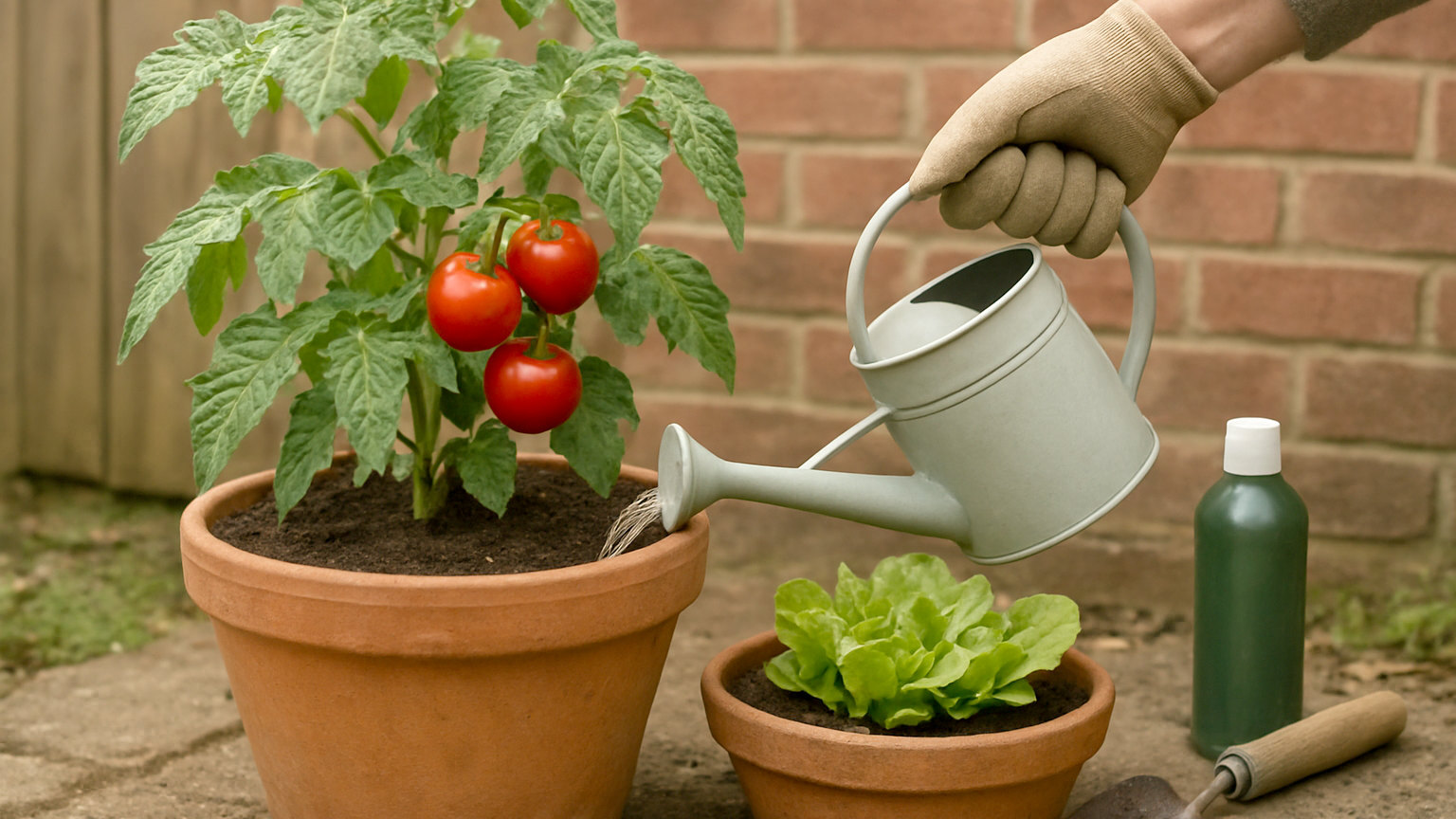
Almost any vegetable will grow in a container, and the difference between a good crop and a disappointing one is nearly always pot size. A container that is too small dries out several times a day, runs out of nutrients by midsummer and restricts roots to the point where the plant simply stops. Choose the pot for the crop and most other problems disappear.
What each crop needs
- Salad leaves, radish, spring onions: 15cm deep, any width
- Herbs, dwarf French beans, chard: 20cm deep
- Carrots (short varieties), beetroot, garlic: 25 to 30cm deep
- Tomatoes, peppers, chillies, aubergines: 30cm minimum, ideally 40cm
- Courgettes, potatoes, climbing beans: 40 litres or more
Wider is generally better than deeper for anything except roots and potatoes, because a wide pot holds more compost and dries out more slowly. Avoid tall narrow pots, which look elegant and hold very little growing medium.
Which crops are worth it
The ones that repay container growing are those that are expensive to buy, taste far better fresh, or crop over a long period. Salad leaves, herbs, tomatoes, chillies, French beans, courgettes and early potatoes all qualify.
Crops that are cheap, need a long season or take a lot of room rarely justify a container. Maincrop potatoes, brassicas, parsnips and sweetcorn are all better in open ground, and sweetcorn additionally needs to be grown in a block for pollination.
Compost and drainage
Use a good peat-free multipurpose compost, or a soil-based compost such as John Innes No. 2 or 3 for anything staying in the pot all season. Soil-based mixes hold water and nutrients better and are heavier, which stops tall plants blowing over.
Do not use garden soil in containers. It compacts, drains badly and brings weed seed and disease with it.
Every container needs drainage holes. Crocks in the bottom are unnecessary and actually reduce the available root volume; a piece of broken pot over the hole to stop compost washing out is enough. Stand pots on feet so water can escape freely.
Watering
Containers dry out far faster than open ground, and inconsistent watering causes most container failures. In midsummer a large pot of tomatoes may need water twice a day, and a hanging basket more.
Water thoroughly until it runs from the base, rather than sprinkling the surface. Check by pushing a finger a few centimetres into the compost rather than judging by the surface, which dries first and misleads.
Grouping pots together shades the sides and reduces evaporation. Mulching the surface with gravel or compost helps. Self-watering containers with a reservoir are genuinely useful if you are out all day, as are water-retaining granules mixed into the compost at planting.
Feeding
Fresh compost contains enough nutrients for around six weeks. After that the plant depends on what you add.
Use a balanced liquid feed for leafy crops and a high-potassium tomato feed for anything fruiting, from the point the first flowers set. Feed weekly, and follow the dilution on the bottle rather than guessing, since overfeeding scorches roots.
Position
Most vegetables want six hours of sun or more, and fruiting crops such as tomatoes and peppers want as much as they can get. Leafy crops, salad and many herbs tolerate and in summer prefer part shade.
The advantage of pots is that you can move them. Follow the sun through the season, and shift tender crops against a warm wall in early and late season.
Extending the season
Containers are easier to protect than open ground. Wheeling pots into a porch, a greenhouse or against a warm house wall in October gains several weeks at the end of the season, and doing the same in March lets you start earlier. Fleece thrown over a pot on a cold night costs nothing and saves a crop.
Pests
Growing off the ground on a hard surface reduces slug damage considerably, which is one of the strongest arguments for containers. Check under rims and pot feet, where slugs shelter during the day.
Vine weevil is the container pest to know. The white grubs eat roots and cause sudden collapse of an apparently healthy plant. Nematodes applied in late summer are the usual remedy, and fresh compost each season reduces the risk.


