
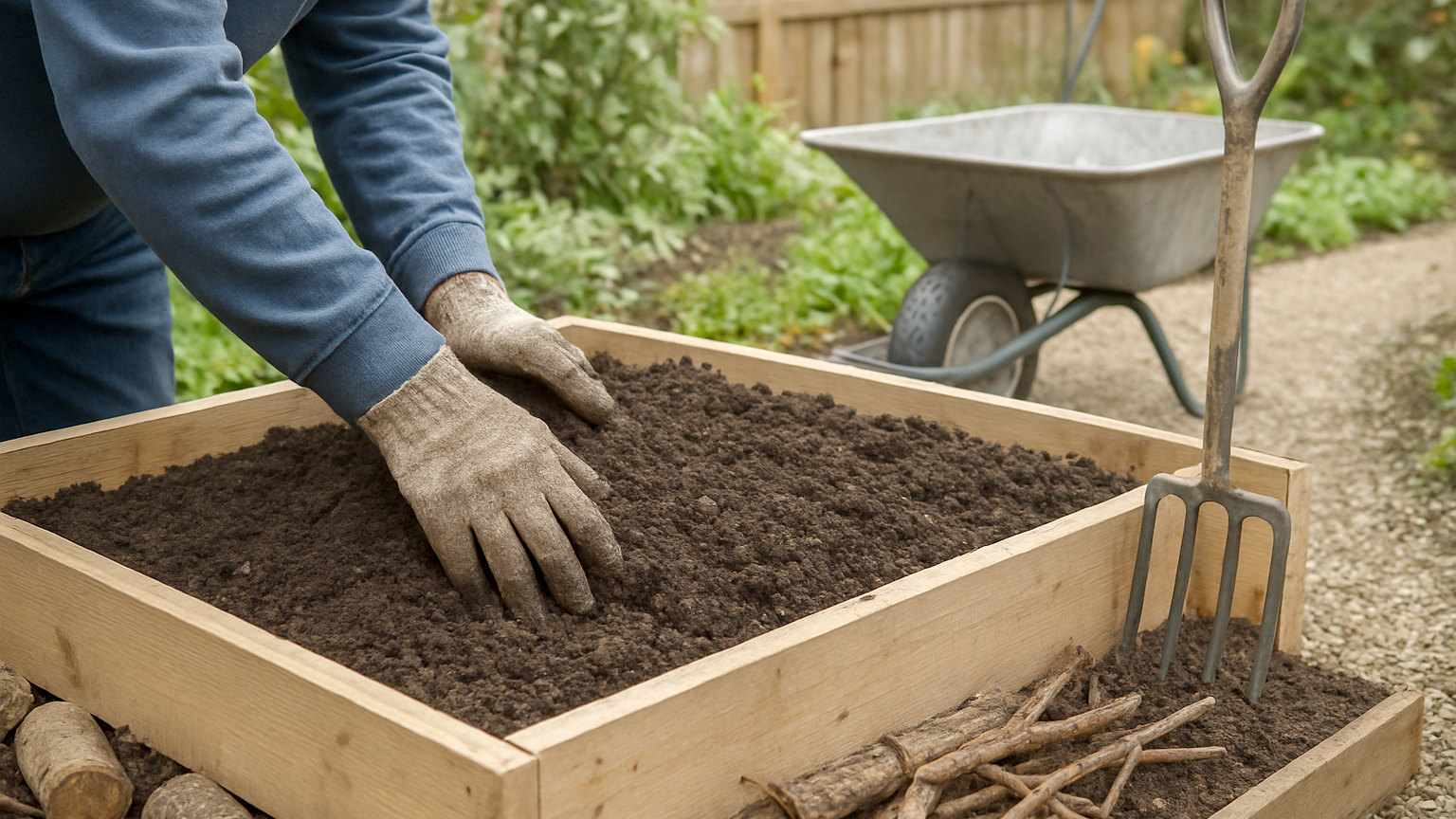
Filling a raised bed is usually the most expensive part of building one, and the cost rises sharply with depth. A few sensible decisions reduce it considerably without compromising the growing.
Work out the volume
Multiply length by width by depth in metres to get cubic metres. A bed two metres by one point two, filled to thirty centimetres, needs about 0.72 cubic metres, which is around three quarters of a tonne of soil.
That is a great deal more than people estimate, and it is worth calculating before ordering rather than after.
Buy in bulk
Bagged compost and topsoil cost several times what the same volume costs delivered loose. For anything beyond a very small bed, a bulk bag or a loose tipped load is far cheaper.
Order screened topsoil rather than unscreened, which contains stones and roots. Ask about the source, since cheap topsoil is sometimes contaminated with subsoil, builders' waste or perennial weed root.
Council green waste compost is often available cheaply in bulk and is good material, though it can be alkaline and variable, so it is better mixed with topsoil than used alone.
The mixture
Roughly two parts screened topsoil to one part good compost or well-rotted manure is the standard mix, and it works for almost everything.
For a bed intended for Mediterranean herbs or alpines, add a third of grit for sharper drainage. For a bed over solid clay or paving, err towards more organic matter.
Mix the components rather than layering them, so roots meet a consistent medium.
Filling a deep bed cheaply
For a bed deeper than about thirty centimetres, filling the bottom third with bulky woody material saves a great deal of soil and improves the bed over time.
Logs, branches, twiggy prunings, turf laid upside down, cardboard and coarse garden waste all work. They rot down slowly, holding moisture like a sponge and releasing nutrients over several years.
This approach, often called hugelkultur, is genuinely effective. The one thing to expect is settling: the level drops noticeably over the first two or three seasons as the material breaks down, and the bed needs topping up.
Avoid using large quantities of fresh woodchip in the root zone, since it robs nitrogen while it decomposes. Below the root zone it matters far less.
What not to use
Fresh manure scorches roots and should be well rotted, meaning at least six months and preferably a year, before it goes anywhere near a growing bed.
Builders' sand is salty and the wrong grade; use horticultural or sharp sand if you need to improve drainage.
Soil from a bed infested with bindweed, ground elder or couch grass will bring those with it. So will unscreened topsoil of unknown origin.
Do not use soil from a site that may be contaminated, particularly on an urban plot with industrial history, without knowing what is in it. Testing is available and worth doing before growing food.
Settling and topping up
Fill the bed slightly proud of the sides, because everything settles. Water it thoroughly and leave it a fortnight before planting if you can, which lets it settle and reveals any low spots.
Expect the level to drop each year as organic matter breaks down. Top up every autumn or spring with five centimetres of compost spread over the surface, which maintains both the level and the fertility.
Over grass or paving
Over grass or weeds, lay thick cardboard on the ground first. It smothers what is beneath and rots away within a season once the bed is in use.
Over solid paving or concrete, the bed needs to be deep enough for the crop, at least thirty centimetres for most vegetables and forty-five for deep roots, and needs a drainage layer of coarse material in the base.
Afterwards
Once filled, the bed should not be dug again. Add compost to the surface each year and let the worms take it down, which preserves the structure you have just paid for.
Water the bed thoroughly after filling and again before planting. Newly filled beds are often drier at depth than they appear, since bagged and bulk material is usually delivered dry, and a plant put into it can struggle from the start.


