
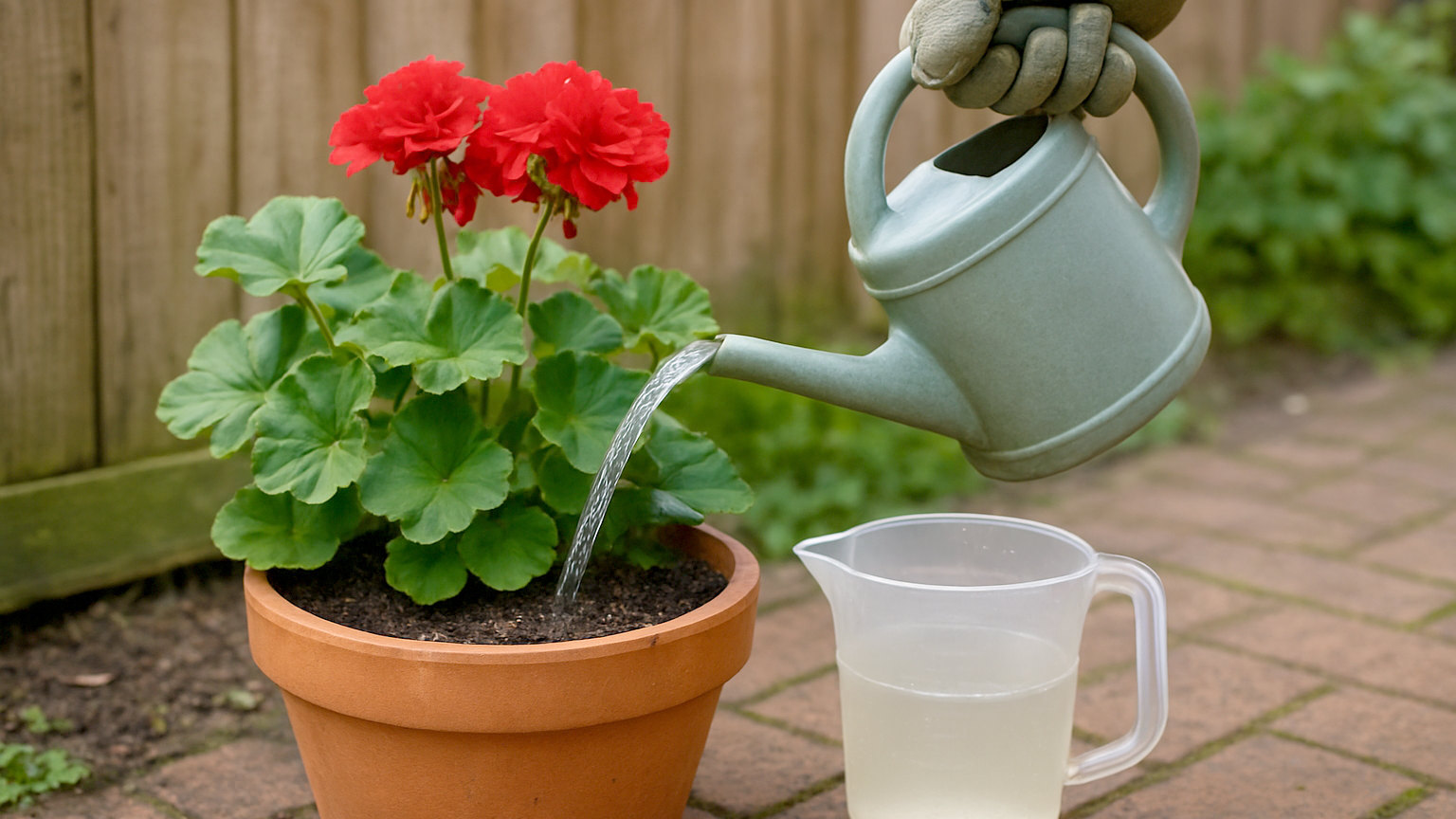
A plant in the ground draws on a large volume of soil replenished by worms, rain and decaying matter. A plant in a pot has a fixed quantity of compost, and once the nutrients in it are used up, everything the plant needs has to be supplied by you.
Six weeks, then nothing
Most fresh multipurpose compost contains enough nutrients for roughly six weeks. After that a plant is living on what you add.
Peat-free composts often run out sooner rather than later. Soil-based John Innes mixes last longer, particularly No. 3, but they are not indefinite either.
This single fact explains most container disappointments: a plant that grew beautifully in May and stalled in July has usually simply run out of food.
What the numbers mean
Fertiliser packaging carries three figures, the NPK ratio.
- Nitrogen drives leafy green growth
- Phosphorus supports roots
- Potassium supports flowering and fruiting
A balanced general feed suits foliage plants, young plants and leafy crops. A high-potassium feed, sold as tomato feed, suits anything flowering or fruiting: tomatoes, chillies, courgettes, strawberries and most flowering container plants.
Switching to a high-potassium feed once the first flowers appear is the single most useful adjustment in container growing.
Liquid feeds
Diluted in a watering can and applied weekly through the growing season. They act quickly, are easy to adjust, and are the standard approach for vegetables and annuals.
Follow the dilution on the bottle rather than guessing. Feeding at double strength does not double growth; it scorches roots.
Feed onto damp compost, never onto a dry pot, since fertiliser applied to dry compost concentrates around the roots and burns them.
Slow-release fertiliser
Coated granules that release nutrients gradually over three to six months, activated by warmth and moisture.
Mixed into the compost at planting, they cover most of a season for bedding, shrubs and permanent plantings, and remove the weekly obligation entirely.
They are less controllable than liquid feeds, so they suit ornamentals better than heavy-cropping vegetables, which usually benefit from liquid feeding on top.
Top dressing
For permanent plants in large pots, scrape off the top five centimetres of compost each spring and replace it with fresh, mixed with slow-release fertiliser.
It refreshes the nutrients without the disruption of repotting, and it is the standard annual job for a fruit tree, shrub or perennial that has reached its final pot size.
Recognising shortage
Uniform pale yellowing of older leaves with weak growth is nitrogen shortage, and the commonest deficiency in containers.
Yellowing between the veins on older leaves, veins staying green, is magnesium, corrected with Epsom salts as a foliar spray.
Brown scorching around leaf margins is potassium. Yellowing between the veins on the youngest leaves is iron, and on a lime-hater it means the compost pH has risen.
Recognising too much
Overfeeding is less common and does more immediate harm. Scorched brown leaf edges, a white crusty deposit on the compost surface or the outside of a terracotta pot, and sudden wilting despite moist compost all indicate excess fertiliser salts.
Flush the pot through with plenty of plain water, several times the volume of the pot, letting it drain freely, and stop feeding entirely for a few weeks.
Lush dark leafy growth with no flowers or fruit usually means too much nitrogen rather than too little of anything, and switching to a high-potassium feed corrects it.
When not to feed
Organic options
Comfrey and nettle feeds made by steeping leaves in water are effective and free. Comfrey is high in potassium and suits fruiting plants; nettle is higher in nitrogen and suits leafy growth. Both smell strongly and both need diluting until they are the colour of weak tea.
Seaweed extract, worm cast liquid and pelleted chicken manure are all useful additions, the last being slower acting and best worked into the compost surface in spring.
When not to feed
Do not feed in winter when plants are dormant, do not feed a newly potted plant for the first six weeks, and do not feed a plant that is sick, wilting or root damaged. Feeding a struggling plant makes things worse rather than better, since the problem is almost always water, drainage or roots rather than nutrients.


