
A plant described as fully hardy in the ground may not survive the same winter in a pot. The roots are the reason, and the protection they need is different from what most people provide.
Why roots are the problem
In open ground, roots sit in a large mass of soil that holds warmth and freezes only near the surface. In a container, cold penetrates from every side and the whole rootball can freeze solid.
The top growth of a hardy plant is unaffected by frost; the roots are not. This is why a hardy shrub can come through winter looking fine above and be dead below.
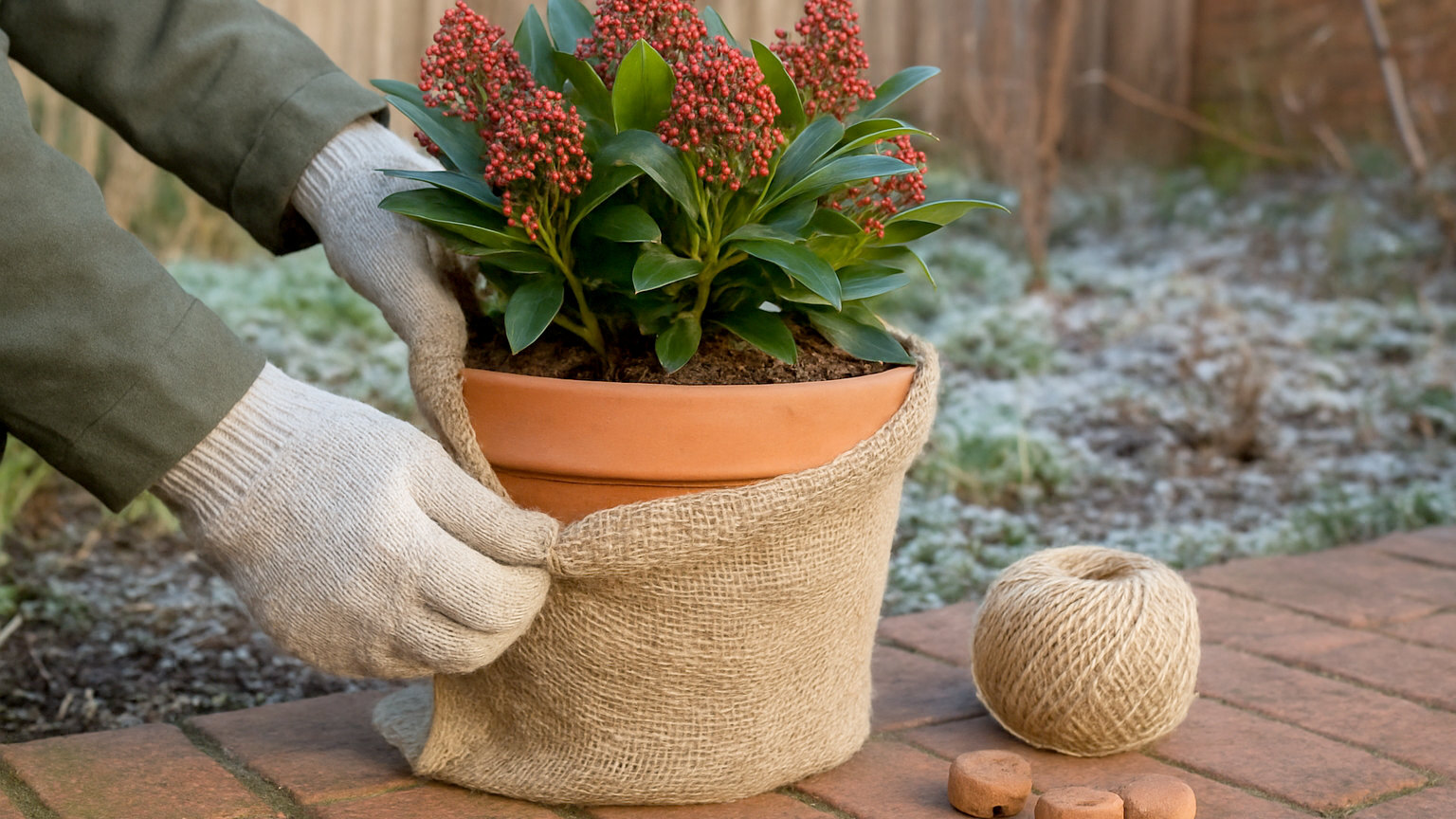
Wrap the pot, not the plant. Insulating the container is what protects the roots. Wrapping foliage in plastic does more harm than good, since it traps moisture and causes rot.
What to do
Move pots against a house wall, ideally on the south or west side, which radiates warmth and gives shelter from the worst wind.
Group containers together, which reduces the exposed surface area of each and moderates temperature swings.
Wrap vulnerable pots in bubble wrap, hessian or fleece, securing it with string. Two or three layers around the sides is enough, leaving the top open so rain and air still reach the compost.
Plunging a pot into a spare piece of border soil, sinking it to the rim, is the most effective protection of all if you have the space.
Raise them off the ground
Pot feet or a couple of tiles under each container serve two purposes.
They let water drain freely, which is critical, since a pot standing in water freezes solid and the roots rot. Waterlogging kills more container plants over winter than cold does.
They also break contact with cold paving and stop the drainage holes silting up.
Remove saucers in autumn. A saucer that is useful in July is a hazard in January.
Watering in winter
Most winter losses are from too much water rather than too little, so water sparingly and only when the compost is genuinely drying.
The exception matters: pots under an overhang, against a wall or beneath evergreen foliage may get no rain at all. Evergreens in containers are frequently lost to drought in February, because nobody thinks to check.
Water on a mild day, in the morning, so the compost is not saturated overnight.
Terracotta and frost
Unglazed clay absorbs water, which expands as it freezes and cracks the pot. Buy pots described as frost proof rather than frost resistant.
Raise terracotta on feet, keep it out of standing water, and consider moving prized pots under cover for the winter. An empty terracotta pot left outside full of rainwater will not survive many hard frosts.
What stands outside
Tough evergreens and hardy shrubs cope well in containers with modest protection: box alternatives such as small-leaved holly, euonymus, skimmia, sarcococca, dwarf conifers and heuchera.
Hardy grasses, ivy, hellebores and winter-flowering pansies and violas all stand outside and keep a container looking furnished.
Spring bulbs planted in autumn will come through in pots and are among the most reliable winter container plantings, since they are dormant and underground when it is coldest.
What must come in
Tender perennials such as pelargoniums, fuchsias and salvias, along with citrus, tender succulents and anything borderline in your area.
A frost-free greenhouse, a porch, a garage with a window or a cool spare room all work. Keep them dry, ventilated and as light as possible, and check them fortnightly for grey mould and for pests, which breed quietly through the winter under cover.
Cut back soft growth before bringing plants in, which reduces both the water demand and the material available to rot.
Planting for winter interest
A container by a door with an evergreen structure plant, some winter bedding and a few bulbs beneath earns its place through the months when nothing else does, and it is planted in September or October.
Site it where you will see it from indoors. A winter container at the bottom of the garden gives very little; the same planting outside a kitchen window earns its keep every day from November to March.
Scented winter plants such as sarcococca are worth including where you will pass them.


