
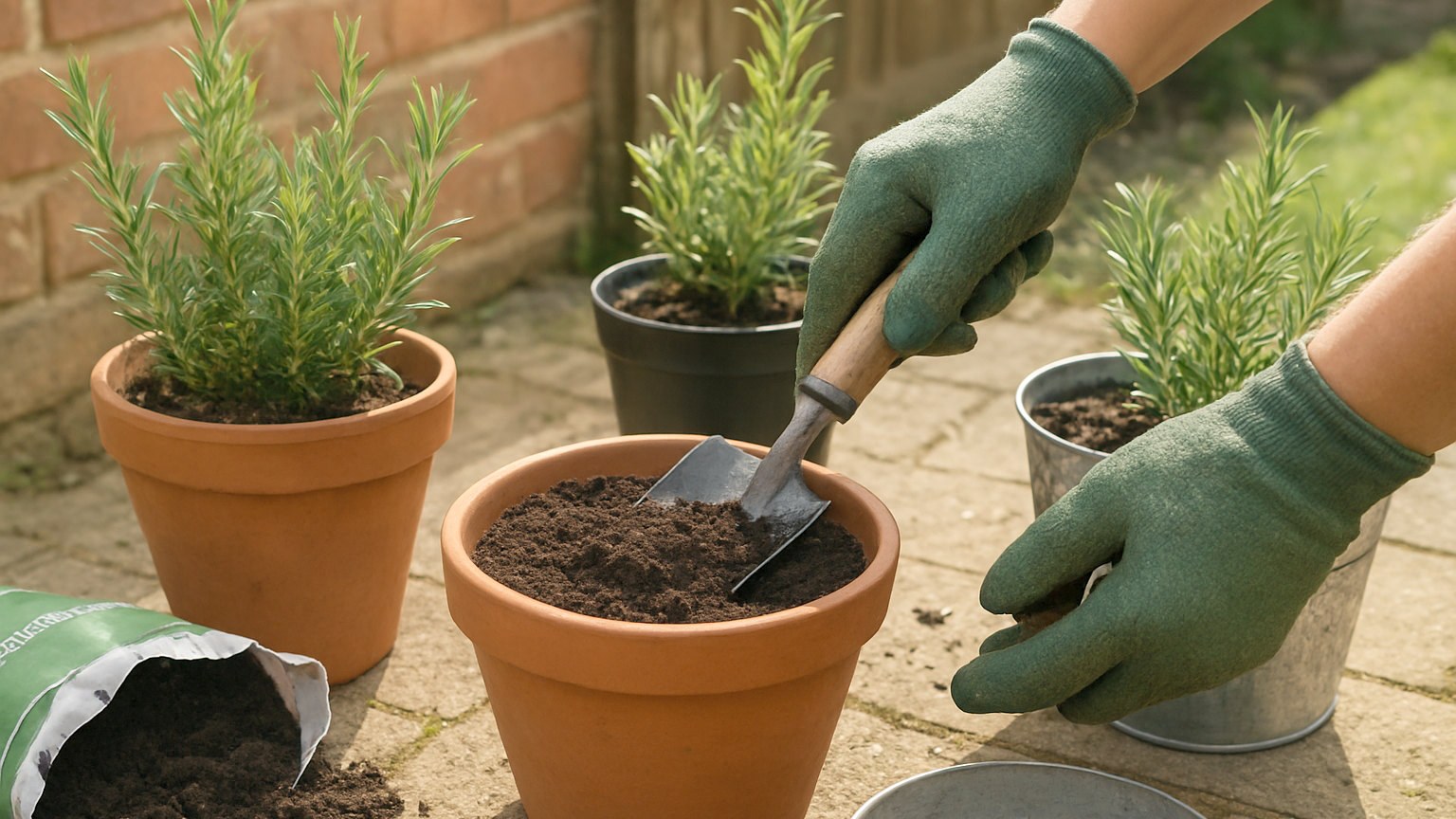
The material a pot is made of changes how often you water, how a plant behaves in frost and how stable it is in wind. None is best for everything, and matching the material to the plant saves a good deal of trouble.
Terracotta
Unglazed clay is porous, so water evaporates through the walls as well as the surface. That makes it dry out considerably faster than plastic, which is a disadvantage for thirsty plants and an advantage for anything wanting sharp drainage.
It suits Mediterranean herbs, succulents, alpines and bulbs. It is heavy, which stabilises tall plants, and it looks better than almost anything else.
The drawback is frost. Water absorbed into the clay expands when it freezes and cracks the pot. Buy pots described as frost proof rather than frost resistant, and raise them on feet over winter so they are not standing in water.
Plastic
Light, cheap, non-porous and retains moisture far better than terracotta. It is the practical choice for vegetables, thirsty plants and anywhere weight matters, such as a balcony.
Cheap plastic becomes brittle in sunlight over a few years and cracks. Thicker recycled plastic and modern resin containers last considerably longer and are worth the extra.
Being light is also a weakness, since a tall plant in a plastic pot blows over readily.
Glazed ceramic
Glazed pots are non-porous like plastic but heavy like terracotta, which is a good combination for moisture retention and stability.
They are expensive and they still crack in hard frost if water gets into the base or if they are standing in water.
Wood
Half barrels, troughs and purpose-made planters insulate roots well against both heat and cold, which is a genuine advantage.
Line the inside with polythene, leaving the base open, to slow rot. Use untreated timber for edibles or ensure any treatment is suitable for food growing.
Metal
Looks striking and heats up dramatically in sun, which can cook roots against the side of the container. Use a liner of bubble wrap or polythene around the inside walls, or reserve metal for shaded positions.
Galvanised containers are durable; untreated steel rusts through within a few seasons, and rust stains anything beneath it.
Fabric pots
Woven fabric containers are light, cheap, fold away and drain freely. Their real advantage is air pruning: roots reaching the fabric are stopped by exposure to air rather than circling, which produces a fibrous root system rather than a spiral.
They dry out quickly, so they need more watering. They suit potatoes, tomatoes and anything grown for a season.
Size
Bigger dries out more slowly, holds more nutrients and gives roots more room, and there is very little argument for a small pot except appearance.
Go up one pot size at a time when potting on. Moving a small plant straight into a very large container leaves a mass of unused compost that stays wet and turns sour.
Drainage
Every container needs drainage holes, and more of them than most pots come with. Drill extra if necessary.
Crocks in the base are unnecessary and slightly harmful. The old advice to fill the bottom with broken pots came from an era of different composts. In practice a layer of coarse material creates a perched water table and reduces the volume available to roots.
A single piece of broken pot or a square of mesh over each hole, to stop compost washing out, is all that is needed.
Stand pots on feet or a couple of tiles so water can escape freely and the base is not sitting in a puddle. This matters most in winter.
Colour and position
Dark containers absorb heat and can raise compost temperature significantly on a sunny patio, which stresses roots. Pale pots stay cooler. In full sun, a pale pot or one shaded by neighbouring containers keeps roots in better condition.
Repeating the same pot
Three or five identical containers look considered where a collection of mismatched ones looks accumulated. It is the cheapest way to make a group of pots read as deliberate rather than assembled over years.
Odd numbers work better than even, and varying the height while keeping the material consistent gives interest without clutter or fuss.


