
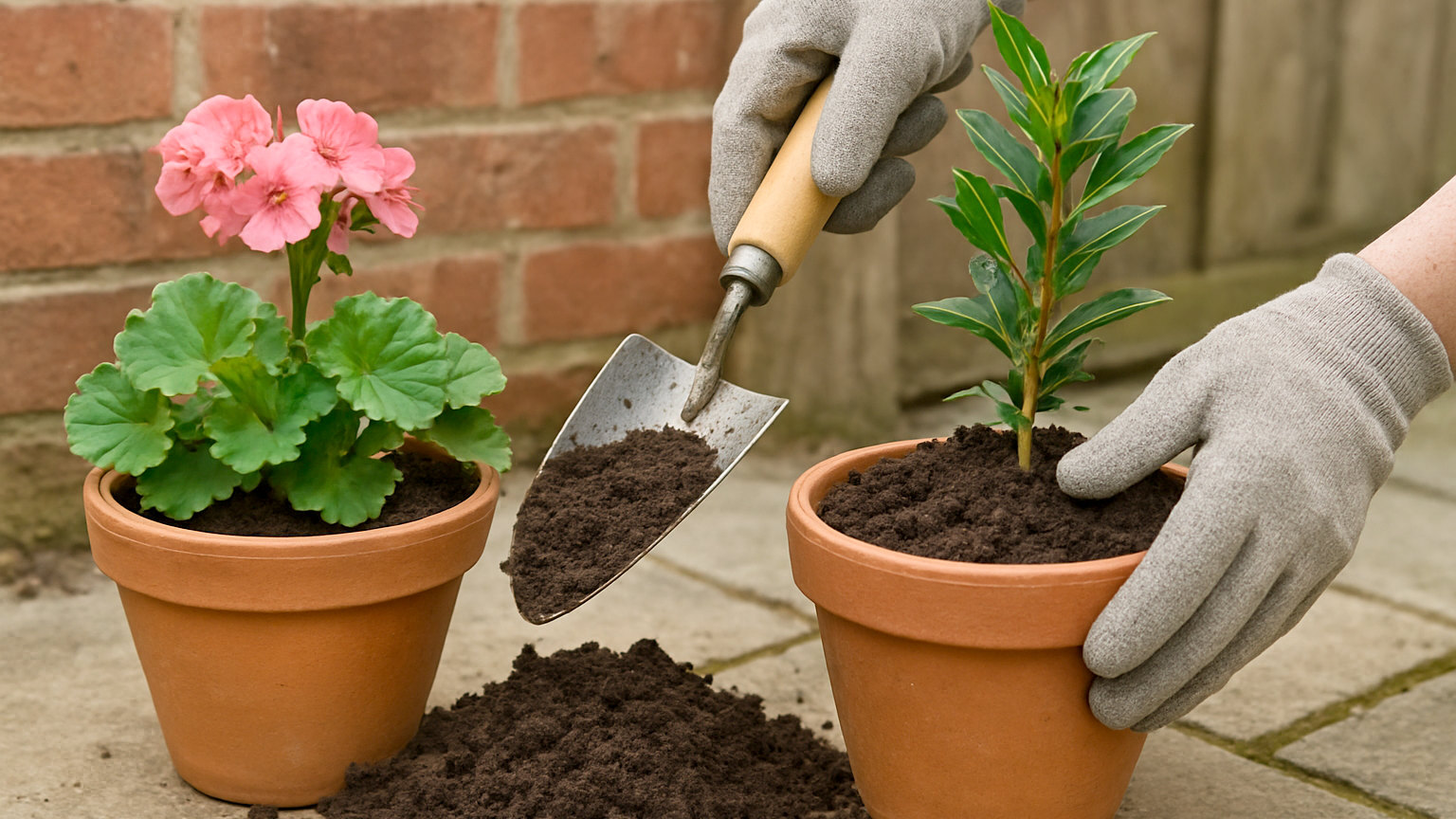
Peat has now been phased out of amateur compost in the UK, and peat-free products behave differently from what many gardeners were used to. Choosing the right type for the job matters more than it used to, because the differences between them are larger.
Multipurpose
The general-purpose choice, suitable for most annual planting: summer bedding, vegetables in pots, hanging baskets and anything being grown for a single season.
Modern peat-free multipurpose is usually based on wood fibre, bark, coir, composted green waste or a blend. It is lighter than the peat-based products it replaced, drains more freely, and holds nutrients for a shorter period.
Quality varies considerably between brands and between batches. If you find one that works, stay with it, and buy fresh each season rather than using bags that have sat open through winter.
Soil-based mixes
The John Innes formulations contain loam, and that changes everything about how they behave. They hold water and nutrients far longer, are heavier so they stabilise a top-heavy plant, and do not break down over time.
- John Innes No. 1 - lowest nutrient, for seedlings and young plants
- John Innes No. 2 - general potting for most plants
- John Innes No. 3 - richest, for shrubs, trees, fruit and anything staying in the pot for years
Use a soil-based mix for anything permanent. A shrub, a fruit tree or a perennial in multipurpose compost will be sitting in exhausted, collapsed material within two years, whereas the same plant in John Innes No. 3 keeps a workable structure indefinitely.
The weight is an advantage outdoors and a nuisance on a balcony or a roof terrace, where the load matters.
Blending the two
A mixture of roughly two parts multipurpose to one part John Innes No. 3 is a good general container compost, combining reasonable weight and water retention with a lighter, more workable texture.
Adding a third of grit or perlite suits anything wanting sharp drainage: Mediterranean herbs, succulents, alpines and bulbs.
Ericaceous compost
Acidic, for lime-hating plants: blueberries, rhododendrons, camellias, azaleas, pieris and heathers.
These plants cannot take up iron at higher pH and yellow steadily in ordinary compost. Use ericaceous compost, an ericaceous feed, and rainwater rather than hard tap water, since tap water gradually raises the pH regardless of what you planted in.
Seed compost
Finer and much lower in nutrients than multipurpose, because seeds carry their own food and high fertiliser levels scorch emerging roots.
Worth buying separately for sowing. At a pinch, sieved multipurpose mixed half and half with vermiculite approximates it.
What not to use
Garden soil in a container compacts, drains badly and brings weed seed, pests and disease with it. It behaves quite differently in a pot from how it behaves in the ground.
Spent compost from last year's containers is exhausted and may carry vine weevil or disease. It is excellent spread on a border or added to a compost heap, and poor for a new planting.
Fresh manure and unrotted material scorch roots and rob nitrogen from the plant as they break down, so neither belongs in a container.
Getting more from peat-free
Peat-free composts generally need watering more often and feeding sooner. Two adjustments help.
Water before the surface looks dry, since some peat-free mixes are difficult to rewet once they have dried out completely, and water then runs down the sides of the pot rather than soaking in.
Start feeding at about four to six weeks rather than waiting longer, and consider mixing a slow-release fertiliser in at planting.
Storing it
Reusing container compost
Compost from last season's pots is exhausted rather than useless. Mixed roughly half and half with fresh compost and a slow-release fertiliser it will do for a second season of undemanding plants, though not for seed sowing or for anything valuable.
Do not reuse compost that held a plant which died of root problems, or one affected by vine weevil, since both persist.
Storing it
Keep opened bags closed and under cover. Compost left open to rain becomes waterlogged and sour, and left in full sun it dries to a texture that will not rewet at all. Roll the top of the bag down and keep it in a shed or under a bench.


