
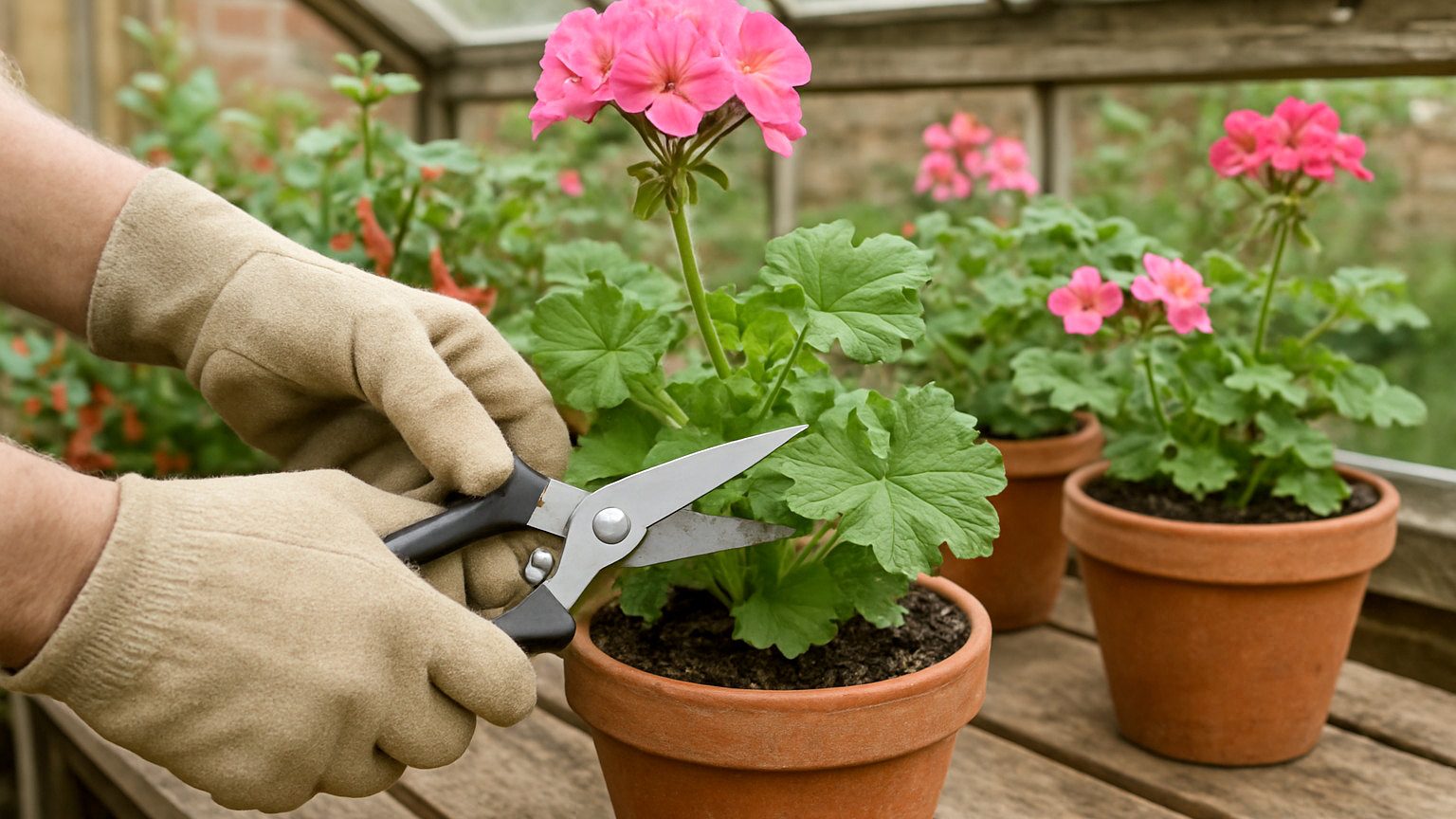
An unheated or barely heated greenhouse keeps a considerable range of tender plants alive through a British winter. The thing that kills them is rarely the cold: it is damp, stagnant air and too much water at the roots.
What to bring in
Tender perennials that would be killed outside: pelargoniums, fuchsias, salvias, osteospermum, argyranthemum, heliotrope and cannas.
Half-hardy shrubs and specimens: citrus, olives in a cold garden, bay in a pot, and tender succulents.
Dormant tubers and corms: dahlias, begonias and cannas, though these can equally be stored in a dry frost-free shed.
Borderline hardy plants in pots, since roots in a container are far more exposed to freezing than the same plant in the ground.
Bring them in before the frost
Move plants in during late September or October, before the first frost rather than after it. A plant that has already been frosted is often not worth saving.
Check every plant thoroughly first, turning leaves over and inspecting the compost surface. Whitefly, aphids, mealybug and vine weevil all overwinter happily in a greenhouse if you carry them in.
Remove dead and yellowing leaves, cut back leggy growth, and repot anything that clearly needs it before it goes in.
Cut back and keep dry
Reduce pelargoniums and fuchsias by about a third to a half, removing all soft growth and any flowers. Less top growth means less water demand and far less material to rot.
Water very sparingly through winter. Most overwintering losses are from rot rather than drought.
Let the compost approach dryness between waterings, water in the morning at the base, and never leave a pot standing in a saucer of water. A plant that is dormant needs remarkably little.
Ventilation matters more than heat
Still humid air is what causes grey mould, and grey mould is what kills overwintering plants.
Open a vent on every mild dry day, even in midwinter. Space plants so they are not touching, and remove any dead leaf or faded flower promptly rather than leaving it to rot among the foliage.
If you insulate with bubble wrap, leave one vent clear so ventilation is still possible.
Temperatures
Most of these plants need frost free rather than warm, which is around three to five degrees. Pelargoniums, fuchsias and most tender perennials survive at that comfortably.
Citrus want cooler than people expect, around five to ten degrees, with good light. A heated living room is worse for them than an unheated greenhouse.
Cacti and succulents want cold and completely dry, and rot at the first sign of winter watering. Most are hardier than people assume provided they stay dry.
Dahlias and cannas can be lifted and stored dry in boxes of compost rather than kept growing, which takes far less space and needs only frost protection.
Fleece thrown over plants on the coldest nights adds a useful couple of degrees at no cost.
Take cuttings as insurance
This is the most useful habit in overwintering. Take cuttings of pelargoniums, fuchsias, salvias and osteospermum in late summer, root them, and keep the small plants on a windowsill or in the greenhouse.
Rooted cuttings take up a fraction of the space of a mature plant, are far easier to keep alive, and mean that losing the parent does not matter. Many gardeners now overwinter cuttings deliberately and discard the old plants.
Light
Growth almost stops from late November to early February because of light rather than temperature. Clean the glass in autumn, since a season's grime reduces transmission substantially at exactly the wrong time.
Stand plants on staging rather than the cold floor, and keep them away from heavily shaded corners.
In spring
Increase watering gradually as growth restarts, repot into fresh compost, and begin feeding. Harden plants off over a fortnight before returning them outdoors after the last frost, since they will have soft growth and no wind tolerance.
Watch for pests all winter
A frost-free greenhouse is a refuge for whitefly, aphids, mealybug and vine weevil as much as for your plants, and they breed slowly but continuously through the cold months.
Check leaf undersides fortnightly, wipe off mealybug with a cotton bud dipped in surgical spirit, and deal with anything you find while numbers are still small. A pest population that survives the winter undisturbed is exactly what gives you a serious infestation in April.


