
Heating a greenhouse through a British winter is expensive, and the first question is whether you need to at all. Many gardeners heat far more space, to a far higher temperature, than their plants actually require.
Decide what you are heating for
Three different aims need three different approaches.
Frost free, holding around three to five degrees, protects overwintering tender perennials such as pelargoniums and fuchsias. This is the cheapest and most common aim.
Cool, around seven to ten degrees, allows slow growth over winter and suits citrus and some tender plants.
Warm, fifteen degrees or more, allows real winter growing and propagation, and is expensive enough that few amateurs do it.
Aim for the lowest that meets your needs, since every degree costs.
Insulate first
Insulation is far cheaper than heat and should always come first.
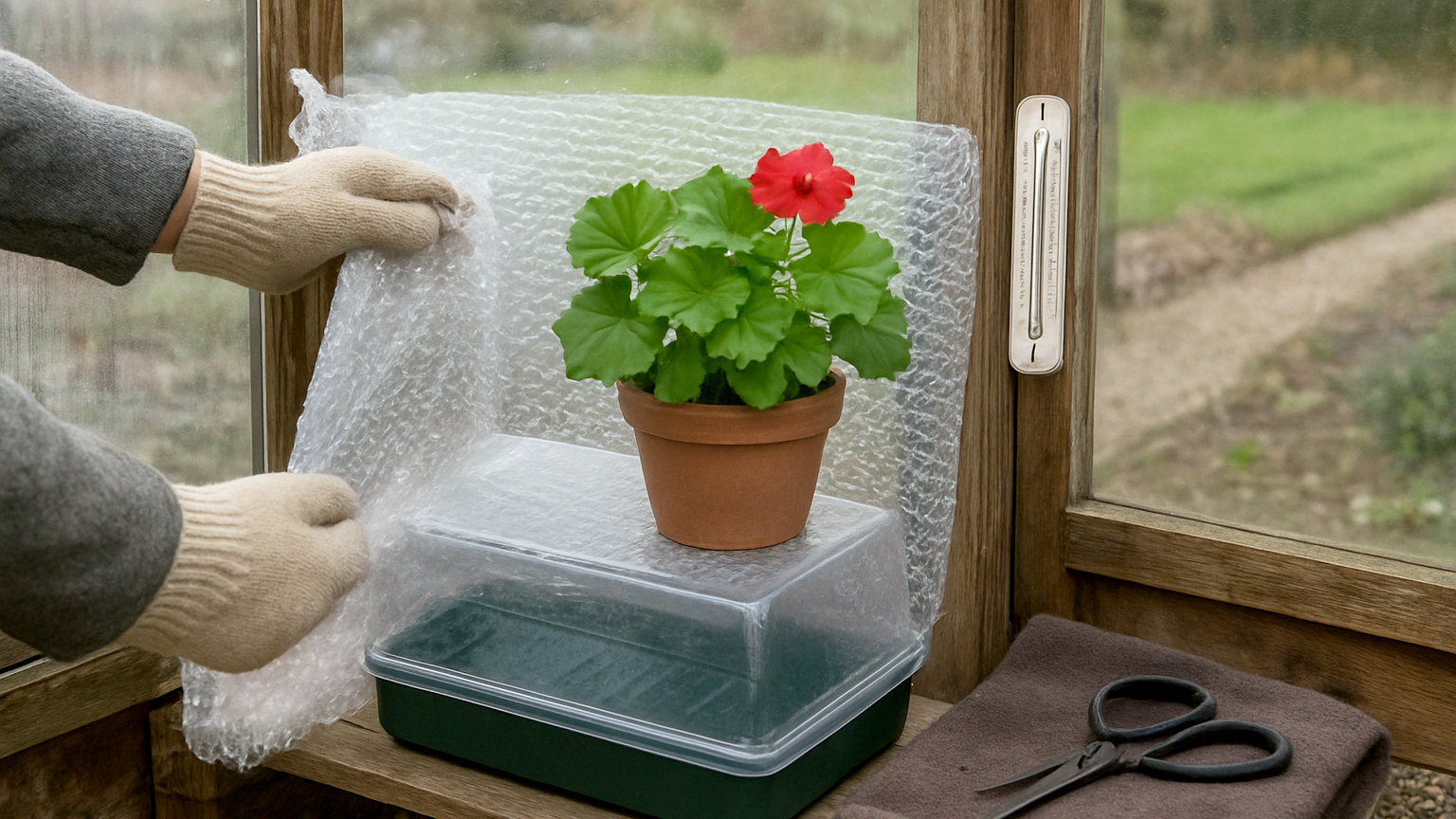
Line the inside with horticultural bubble wrap, which has larger bubbles than packing material and better light transmission, fixed to the glazing bars with clips. It typically reduces heat loss substantially for a modest cost.
The trade is reduced light and airflow, which matters for winter crops and much less for dormant plants. Leave one vent free of insulation so you can still ventilate.
Check for gaps, replace cracked panes, fit a brush strip to the door, and repair any missing glazing clips. Draughts undo a great deal of heating.
Heat only what you need
Rather than heating the whole structure, partition a section with bubble wrap or polythene and heat just that. Halving the volume roughly halves the running cost.
Smaller still, a heated propagator, a heated mat or a covered cold frame within the greenhouse warms only the space the plants occupy, and costs a fraction of heating the building.
Grouping plants together, standing them on a bench rather than the cold floor, and covering them with fleece on the coldest nights all help without any energy at all.
Types of heater
Electric fan heaters with a thermostat are the usual choice. They are controllable, produce no fumes or moisture, and circulate air, which reduces fungal problems. They need a proper outdoor-rated supply installed by a qualified electrician, protected by an RCD.
Electric tubular heaters give gentle background warmth and suit frost protection well.
Paraffin heaters need no power supply and are cheap to buy. They produce a great deal of water vapour, which raises humidity and encourages grey mould, and they produce fumes, so ventilation is required even in cold weather. They also need refilling and cannot be thermostatically controlled easily.
Gas heaters share the moisture and ventilation issues.
Use a thermostat and a thermometer
A thermostat is what makes heating affordable, switching the heater off the moment the target is reached rather than running continuously.
A maximum-minimum thermometer tells you what actually happened overnight, which is frequently not what you assumed. It is the cheapest useful instrument in a greenhouse.
Ventilate even in winter
Stagnant damp air causes more losses over winter than cold does. Grey mould spreads rapidly in still humid conditions and kills overwintering plants.
Open a vent on mild dry days, keep plants spaced rather than crowded, remove dead leaves promptly, and water sparingly and in the morning so foliage dries before nightfall.
Cheaper alternatives
Most overwintering plants can be kept in a porch, a spare room, a garage with a window or a cold frame against a house wall, at no running cost at all.
Running costs
Work out roughly what it will cost before committing. A thermostatically controlled electric heater holding a small greenhouse frost free over a British winter is a meaningful annual expense, and heating a large one to ten degrees is a great deal more.
That calculation often changes the answer, particularly for plants that could simply be replaced each year from cuttings taken in late summer at no cost at all.
Cheaper alternatives
Most overwintering plants can be kept in a porch, a spare room, a garage with a window or a cold frame against a house wall, at no running cost at all.
Before committing to heating, consider whether the plants involved justify it, or whether taking cuttings in late summer and overwintering small rooted plants on a windowsill would achieve the same thing.


