
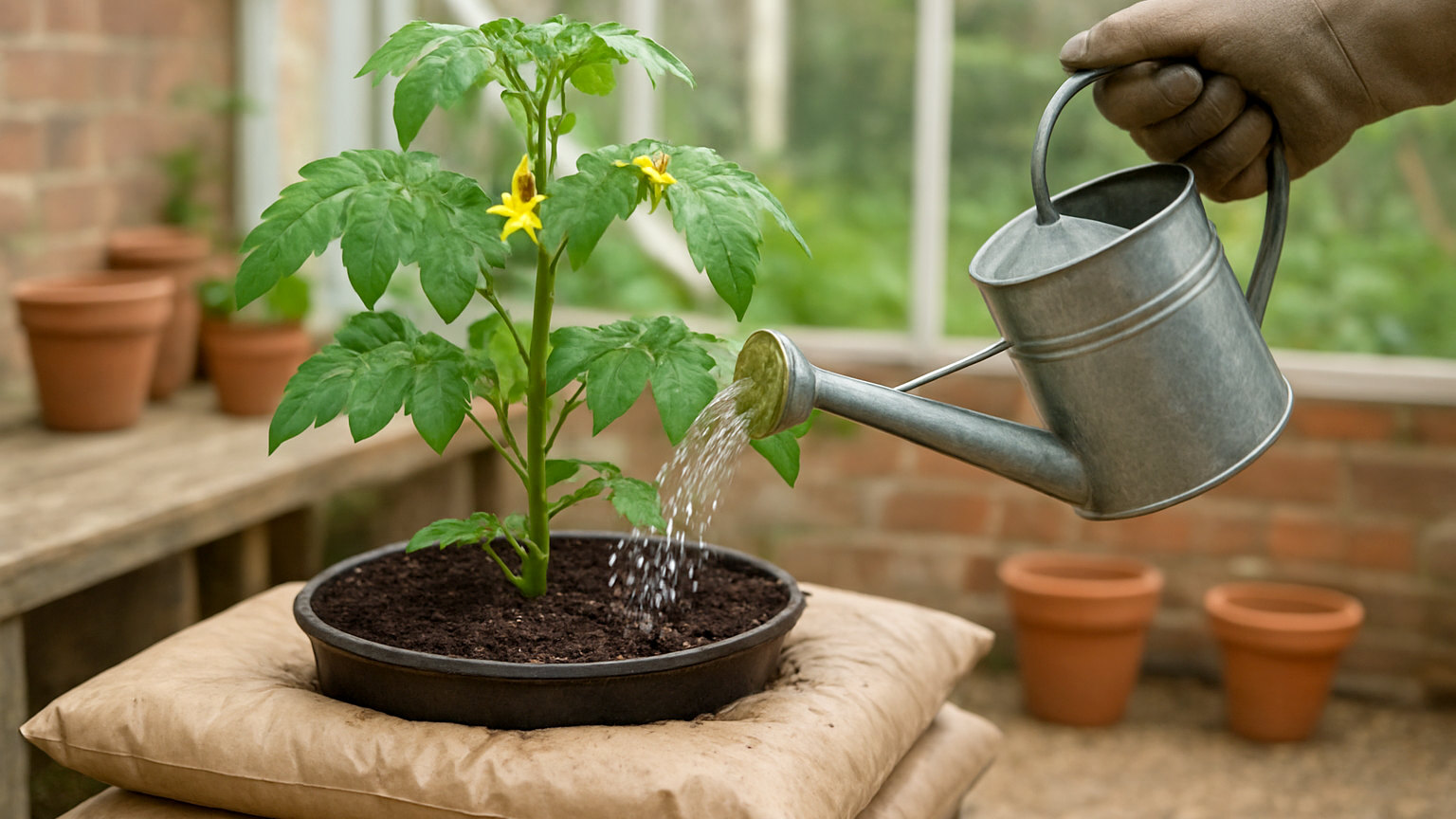
Grow bags are cheap, convenient and effective, and they have one significant limitation: they are shallow. A bag holds perhaps thirty litres of compost in a layer about fifteen centimetres deep, which is less root run than a tomato or a cucumber would choose.
How many plants per bag
Bags are usually marketed as taking three tomatoes. Two produces noticeably better plants and a better total crop.
For cucumbers, peppers and aubergines, two per bag is the sensible maximum. For lettuce, salad leaves or herbs, a bag will carry considerably more.
Crowding is the commonest cause of disappointment, since every plant is competing for the same shallow volume of compost and water.
Preparing the bag
Shake and knead the bag thoroughly before use to break up compacted compost, which settles hard in storage.
Lay it flat where it is to stay, since a full bag is heavy and awkward to move. Cut the planting holes rather than removing the whole top panel, which reduces evaporation considerably.
Pierce drainage slits in the sides, a few centimetres up from the base rather than in the bottom. That leaves a small reservoir of moisture in the base while still preventing waterlogging.
Watering is the whole difficulty
Grow bags dry out faster than any other container and are difficult to rewet once dry. Compost that has dried out shrinks away from the plastic, and water then runs straight down the sides and out of the slits without wetting the rootball at all.
Water little and often rather than flooding occasionally, checking daily and twice daily in hot weather.
The best solution is a watering reservoir. Sink an empty pot, a cut-off bottle or a length of pipe into the bag beside each plant and water into that, which delivers water to depth rather than across the surface.
Never let a bag dry out completely. Blossom end rot in tomatoes and peppers, split fruit and bitter cucumbers all follow from irregular watering.
Doubling up
Standing one bag on top of another, with the top of the lower bag cut away, doubles the depth of compost available and transforms results.
It costs the price of a second bag and gives a far greater buffer against drying out, along with more room for roots. For tomatoes especially it is worth doing.
Ring culture
The traditional method for greenhouse tomatoes and still an excellent one.
Stand bottomless pots, or rings, on the grow bag or on a bed of gravel. Fill the rings with compost and plant into them. The plant then develops two root systems: feeding roots in the ring above, and water-seeking roots reaching down into the bag or gravel below.
Feed into the ring and water into the base. The result is a plant far less vulnerable to drying out, and it is one of the more reliable ways to grow tomatoes under glass.
Feeding
Grow bag compost contains enough nutrients for around four to six weeks. After that the plant depends entirely on what you add.
Feed weekly with a high-potassium tomato feed once the first fruits set, increasing to twice weekly at peak cropping. Follow the dilution on the bottle rather than guessing, since the shallow compost volume means overfeeding scorches roots quickly.
Support
There is nothing solid for a cane to go into, and a cane pushed through the bag pierces it. Use a string tied to a wire above and anchored under the bag, or a proprietary grow bag frame.
Afterwards
Do not reuse a bag for the same crop, since the compost is exhausted and may carry disease.
Spent compost is perfectly good spread on a border, dug into a bed or added to a compost heap. Many bags can be reused for a quick crop of salad or as a container for potatoes, and the plastic should go for recycling where facilities accept it.
Alternatives
Large pots hold more compost, are easier to water evenly and last for years, which over several seasons often works out cheaper as well as better. A pot of thirty centimetres or more gives a tomato considerably more root run than a shared grow bag.
Where grow bags win is on a hard surface with no depth available, and for a quick temporary crop.


