
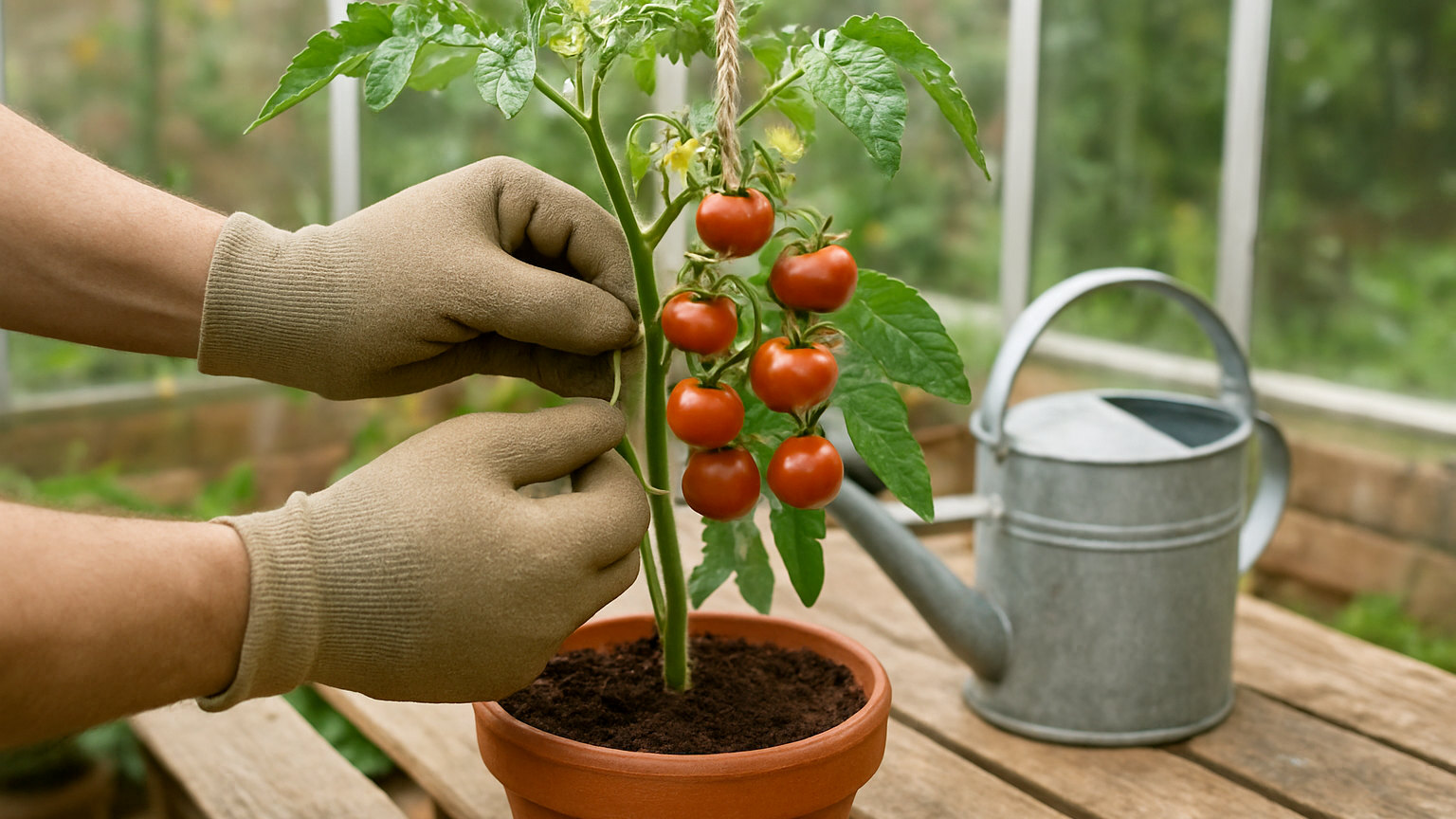
Tomatoes under glass ripen earlier, crop longer and largely escape the blight that ruins outdoor plants in a wet summer. Most of the skill is in two things: knowing whether you have a cordon or a bush variety, and watering consistently.
Cordon or bush
Cordon varieties, also called indeterminate, grow as a single tall stem and keep going until stopped. They need a support, regular side-shooting, and they produce the heaviest crop in a greenhouse. Most greenhouse varieties are cordons.
Bush varieties, or determinate, grow to a set size and stop, producing their crop over a shorter period. They need no side-shooting and suit pots and hanging baskets. Removing side shoots from a bush variety destroys most of the crop, so check the packet before you start pinching anything out.
Planting
Plant out into the greenhouse when the first flower truss is showing, usually May, into large pots of at least thirty centimetres, grow bags with two plants each, or the border soil.
Bury the stem deeper than it was in the pot, up to just below the lowest leaves. Tomatoes root along the buried stem, giving a bigger root system and a sturdier plant.
If you grow in border soil, be aware that using it year after year builds up disease. Either change the top thirty centimetres periodically or grow in containers.
Support and side-shooting
Cordons are usually trained up a string tied to a wire above and anchored below the rootball, twisting the stem around it weekly, or up a sturdy cane.
Side shoots appear in the joint between the main stem and a leaf, at forty-five degrees. Pinch them out while small, ideally with finger and thumb in the morning so the wound dries quickly. Left alone they become full stems, and the plant produces a great deal of foliage and much less fruit.
Remove leaves below the lowest ripening truss as the season progresses, which improves airflow and light to the fruit. Do not strip the plant bare, since the leaves are feeding it.
Watering, and blossom end rot
Irregular watering causes blossom end rot, the sunken dark patch on the base of the fruit. It is a calcium problem, but almost never a shortage of calcium in the soil. It happens because the plant cannot move calcium when the water supply fluctuates, so the cause is letting pots dry out and then flooding them.
Water little and often, ideally daily in warm weather and twice daily in a heatwave for pots. Mulch the surface, and stand grow bags where they will not bake. Once fruit shows the symptom it cannot be reversed, but correcting watering protects later trusses.
Splitting fruit has the same underlying cause, a sudden influx of water after a dry spell.
Feeding
Start feeding once the first truss has set fruit, using a high-potassium tomato feed, typically once a week and increasing to twice as cropping builds.
Do not use a general-purpose or high-nitrogen feed at this stage. It produces vigorous dark foliage and delays fruiting. Yellowing older leaves usually indicates the plant is running short of feed rather than being overwatered.
Pollination and ventilation
Tomatoes are self-fertile but need movement to release pollen. Tap the supporting string or cane at midday, or leave doors and vents open so insects and air can do it. Poor setting in a closed greenhouse is common and easily fixed.
Ventilation matters for humidity too. Greenhouses above about thirty degrees stop setting fruit, and stagnant humid air encourages grey mould. Open vents in the morning rather than at midday, and damp down the floor in hot weather.
Problems to watch for
Leaf curl on tomatoes is usually a response to heat or big swings in temperature and is rarely serious. Whitefly gather under leaves and are controlled well by the parasitic wasp Encarsia in a greenhouse. Greenback, where the top of the fruit stays hard and yellow, comes from too much direct sun on the fruit, so keep some leaf cover.
Stopping and ripening
In late summer, once a cordon has set four or five trusses in an unheated greenhouse, pinch out the growing tip two leaves above the top truss. This stops further growth and pushes the plant into ripening what it has.
Remaining green fruit at the end of the season will ripen indoors in a paper bag or a drawer, and adding a banana speeds it up. Anything still stubbornly green makes decent chutney.


