
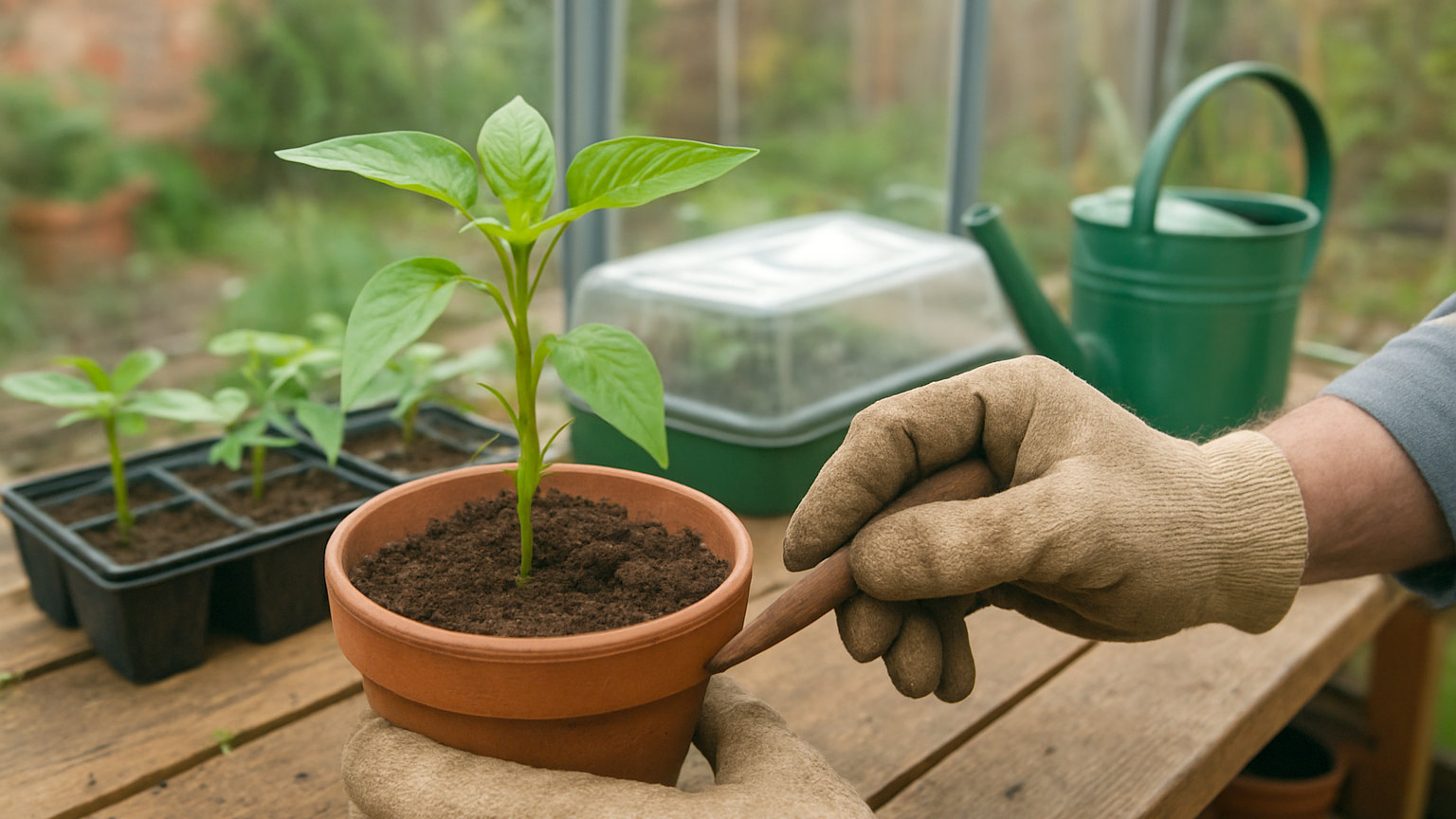
Chillies and peppers are grown identically and both need a longer season than a British summer provides, which is why they are sown in the depths of winter and why a greenhouse or a conservatory makes such a difference to them.
Sow early, and warm
Sow from January to early March. The hotter varieties, particularly the habanero types, need the longest season and should go in first.
Germination needs real warmth, around twenty-five to twenty-eight degrees. Below twenty degrees germination is slow and erratic, and this is the single most common reason chilli seed fails.
A heated propagator with a thermostat is close to essential. An airing cupboard works for the germination stage provided you check daily and move the tray into full light the moment shoots appear.
Germination can take two to three weeks even in good conditions, so patience is required before concluding a sowing has failed.
Growing on
Move seedlings into individual pots once the first true leaves appear, handling them by a leaf rather than the stem.
Keep them bright and reasonably warm, around eighteen to twenty degrees. Cold checks at this stage set plants back badly and they never quite catch up.
Pot on progressively as roots fill each container, ending in a pot of about twenty to twenty-five centimetres, or two plants to a grow bag. Going straight into a large pot leaves unused compost that stays wet and sours.
Pinching out
When the plant is about twenty centimetres tall, pinch out the growing tip. It then branches and produces considerably more fruit than a single stem would.
Some growers also remove the first flower, the so-called king flower that forms at the first branching point, which encourages the plant to build size before fruiting.
Support
A plant carrying a full crop becomes top heavy, and the stems are brittle. Put a cane in at potting on and tie the stem loosely as it grows, rather than trying to stake an established plant.
Watering and feeding
Water consistently, keeping the compost moist but never waterlogged. Both plants dislike sitting wet, and root rot is a common cause of sudden collapse.
Feed weekly with a high-potassium tomato feed once flowering begins. Too much nitrogen produces a large leafy plant with few fruit.
Pollination
Both are self-fertile, but they need movement to release pollen. In a closed greenhouse, tap the stems or the supporting cane gently at midday, or leave doors and vents open so insects and air can do the job.
Poor setting in a still greenhouse is common and easily fixed this way.
What makes a chilli hotter
Heat is largely determined by variety, and a jalapeño will never become a habanero however you treat it.
Within a variety, mild stress increases capsaicin. Slightly restricting water once fruit has set, and plenty of sun and warmth, both produce hotter fruit. Heat also increases as the fruit ripens, so a red chilli is hotter than the same one picked green.
Over-watering and heavy feeding produce larger, milder fruit.
Harvesting
Pick green or wait for full colour. Picking regularly encourages more fruit, and leaving everything to ripen at once slows production.
Cut with scissors rather than pulling, which snaps the brittle stems.
Overwintering
Chillies are perennial and can be kept for several years, cropping earlier and more heavily in their second season.
In autumn, cut the plant back by about two-thirds, reduce watering considerably, and keep it somewhere frost free and light at around ten to fifteen degrees. Water sparingly through winter, just enough to stop the compost drying out completely.
Repot into fresh compost in spring and resume normal watering and feeding as growth restarts.
Varieties
Heat is measured on the Scoville scale, and packets usually give a figure or a rating. Jalapeño and Hungarian Hot Wax are mild and productive. Cayenne types are the useful all-rounders for drying. Habanero and Scotch Bonnet are very hot and need the longest season, so sow those first.
Sweet peppers are grown identically and simply lack the capsaicin, so everything above applies to them unchanged apart from the sections about heat.
Drying and storing
Thin-walled chillies dry well threaded on a string and hung somewhere warm and airy. Thicker-walled types and sweet peppers are better frozen whole or sliced, since they do not dry reliably and go mouldy.


