
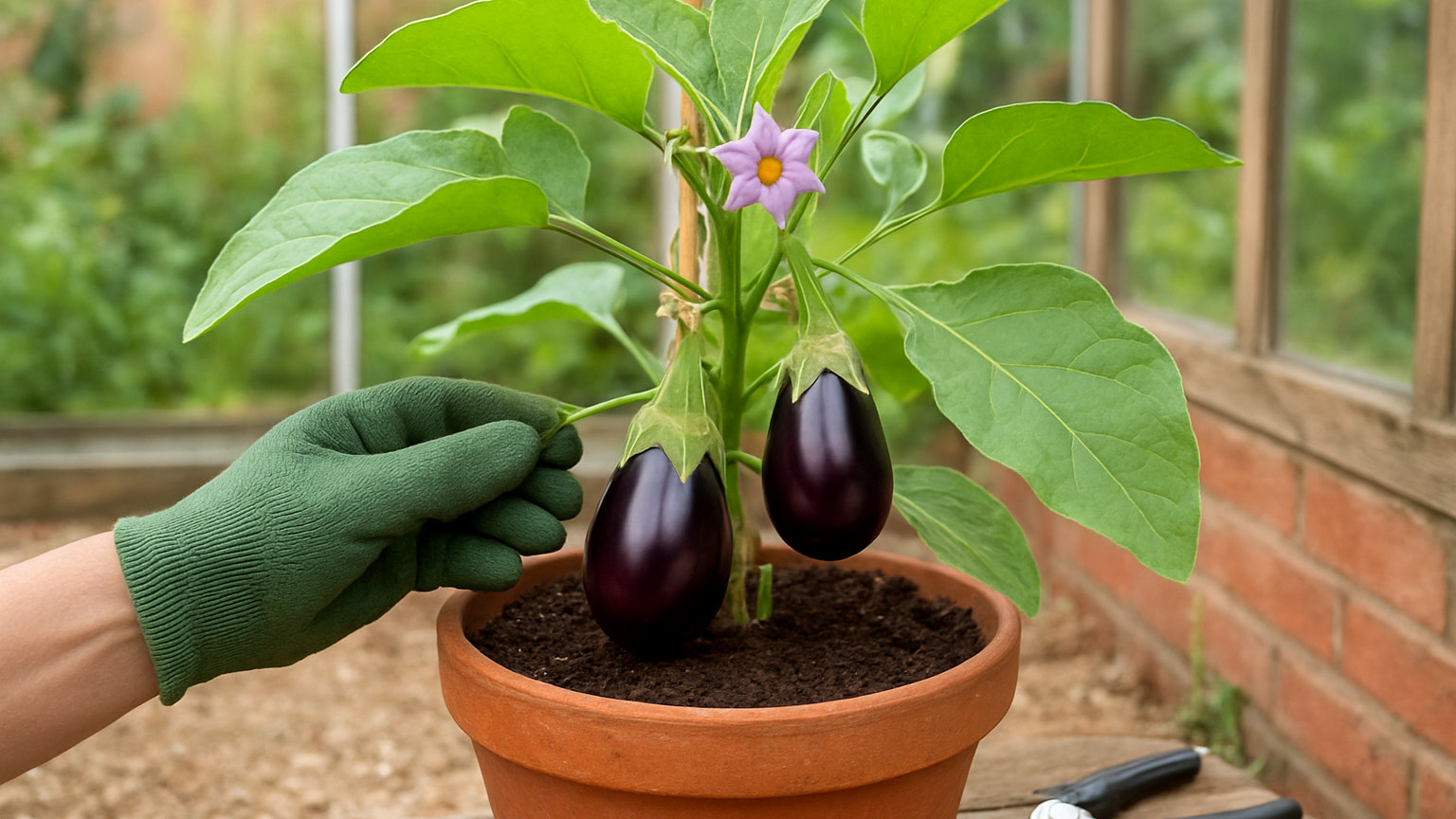
Aubergines are the most demanding of the greenhouse fruiting crops, wanting more heat and a longer season than tomatoes, peppers or cucumbers. In a good year under glass they crop well, and outdoors in most of Britain they rarely justify the space.
Sowing
Sow from January to March, earlier being better since the season is long. They need around twenty-five degrees to germinate reliably, so a heated propagator makes the difference between a full tray and an empty one.
Sow one seed per small pot or two per module, thinning to the stronger. Germination takes one to three weeks.
Soaking the seed overnight before sowing softens the coat and speeds things up noticeably.
Growing on
Keep seedlings bright and warm, ideally around twenty degrees, and avoid any cold check, which aubergines resent more than most.
Pot on progressively as roots fill each container, ending in a pot of at least twenty-five to thirty centimetres, or two plants to a grow bag. They make substantial plants and a cramped root run limits the crop.
Plant into their final position once about twenty centimetres tall, in a greenhouse position with maximum light.
Pinching and support
Pinch out the growing tip when the plant reaches about thirty centimetres, which encourages branching and more flowers.
Aubergine fruit is heavy and the stems are brittle, so support is not optional. Put a stout cane in at planting and tie the main stems as they grow, adding further ties as fruit develops.
Limit the fruit
Allow only four to six fruits per plant. This is the point most growers get wrong.
An aubergine will set far more than it can ripen in a British season, and a plant carrying a dozen small fruits produces nothing worth eating. Remove surplus flowers and small fruitlets once the plant has set the number you want, and pinch out the growing tips at that stage.
Smaller-fruited varieties can carry more, and the packet usually indicates a sensible number.
Watering and feeding
Water consistently, keeping the compost evenly moist. Aubergines are thirsty once fruiting, and irregular watering causes flowers to drop and fruit to develop unevenly.
Feed weekly with a high-potassium tomato feed from the point the first fruits set.
They also like humidity, so misting the foliage and damping down the greenhouse floor on warm mornings helps both with setting and with deterring red spider mite.
Pollination
Self-fertile, but needing movement to shed pollen. Tap the supporting cane at midday, or leave vents open for insects. In very dry air pollen becomes unviable, which is another argument for damping down.
Pests find them first
Aubergines seem to attract greenhouse pests ahead of everything else in the house.
Red spider mite is the main one, showing as fine pale speckling on the leaves, progressing to bronzing and fine webbing. It thrives in hot dry air, so humidity is the main defence, and the predatory mite Phytoseiulus is an effective biological control.
Whitefly cluster under the leaves and are controlled by the parasitic wasp Encarsia. Aphids gather on soft growing tips.
Check the undersides of leaves weekly, since all three establish before they become visible from above.
Harvesting
Pick when the fruit is full size for the variety and the skin is glossy and taut. Press gently: the flesh should give slightly and spring back.
A dull skin means the fruit is past its best and will be bitter with hard seeds. Cut with secateurs, leaving a short piece of stalk, since the calyx is spiny and the stems are tough.
Picking promptly encourages the plant to continue setting.
Varieties
The long dark purple types are the familiar ones and need the most heat. Smaller-fruited and striped varieties, and the white and pale lilac types, tend to crop more readily in a British greenhouse and can carry more fruit per plant.
Look for varieties described as early or as suitable for cooler climates, since the difference in reliability under British glass is considerable.
How long they take
Expect roughly five months from sowing to the first fruit, which is why a January or February sowing matters. A March sowing may crop, and only just, and only in a good summer with a warm autumn behind it.


