
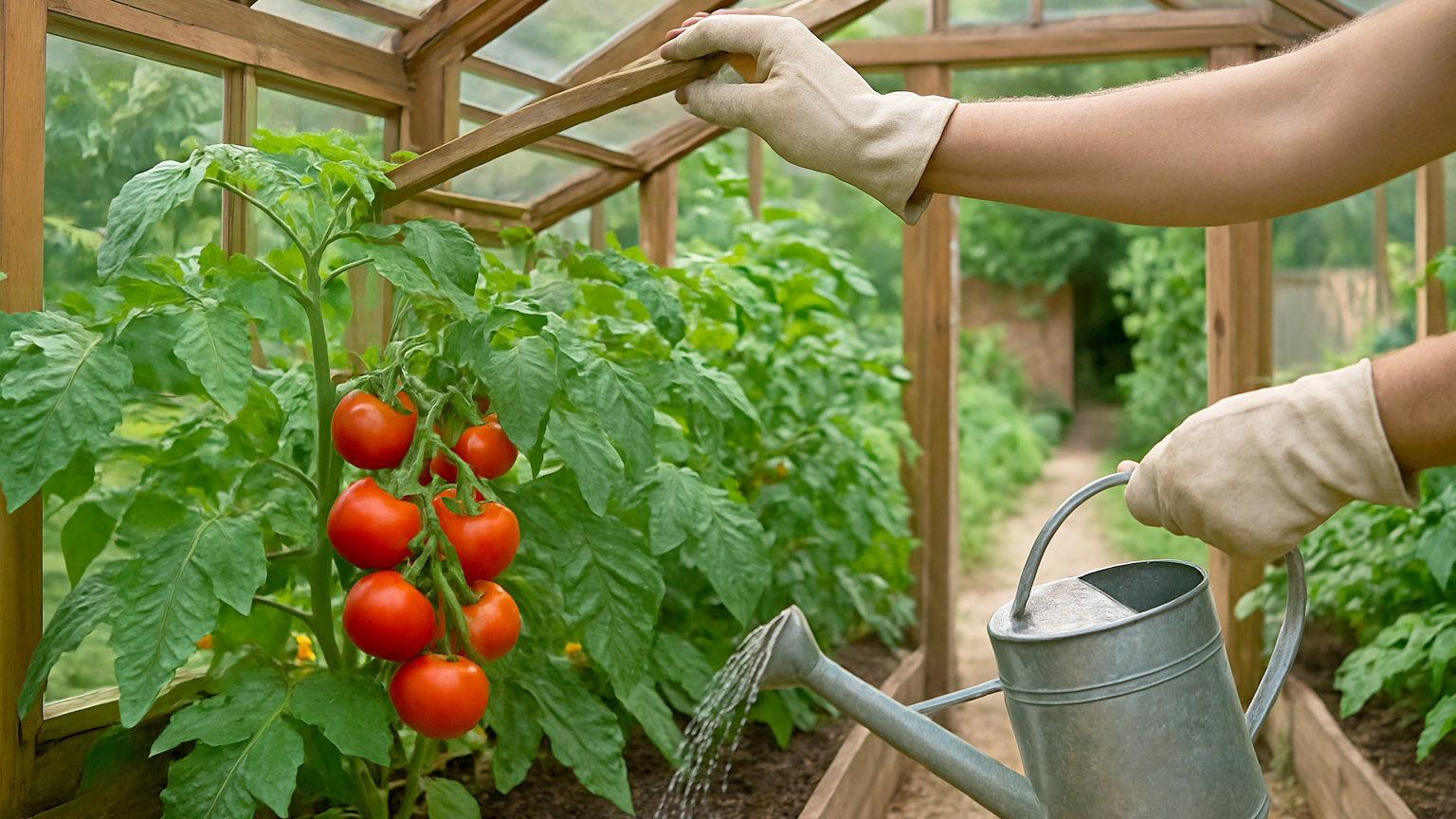
A greenhouse is a device for trapping heat, and in June and July it does that far too well. A closed greenhouse on a sunny day can exceed forty degrees, at which point tomatoes and peppers stop setting fruit, growth stalls and plants scorch. Managing that is most of the work of a greenhouse summer.
How much ventilation you need
The general guidance is that vent area should total around a fifth of the floor area, and most greenhouses are sold with considerably less. Adding a second roof vent or louvre vents to a standard model is one of the more worthwhile improvements you can make.
Open vents and doors early in the morning, before the heat builds, rather than waiting until it is already hot inside. Air needs somewhere to enter low down and leave high up, so a low louvre vent paired with a roof vent works far better than a roof vent alone.
Automatic vent openers are inexpensive, need no power, and open on a wax cylinder that expands with heat. For anyone out of the house on weekdays they are close to essential.
Shading
From late May, some form of shading reduces peak temperature substantially. Shade netting or mesh fixed outside the glass is most effective, since it stops heat before it enters. Shade paint applied to the outside is cheap and effective, and washes off in autumn. Internal blinds work but less well.
Shade the south and west sides rather than the whole structure if you can, so plants still get morning light. Remove shading in September, when light levels drop and ripening needs all the sun available.
Damping down
Splashing water over the greenhouse floor and staging on hot mornings cools the air as it evaporates and raises humidity, which helps plants cope with heat and deters red spider mite.
Do it in the morning rather than the evening, so the greenhouse dries out before nightfall. Warm damp air overnight is what encourages grey mould and fungal disease.
Watering through the season
Greenhouse plants have no rain and often a restricted root run, so they depend entirely on you. In high summer, pots and grow bags may need water twice a day.
Water in the morning where possible, giving a thorough soak that reaches the whole rootball rather than a splash across the surface. Little and often at the surface encourages shallow roots and leaves the plant vulnerable.
Consistency matters more than quantity. Alternating between bone dry and saturated causes blossom end rot in tomatoes and peppers, splitting fruit, and bitter cucumbers. If you cannot water reliably every day, capillary matting, self-watering containers or a simple drip system on a timer will do more for your crop than anything else you could buy.
Water butts collecting from the greenhouse roof are worth having, though stored rainwater can harbour disease, so use mains water for seedlings and young plants.
Humidity and disease
Greenhouses swing between two problems. Hot dry air brings red spider mite, a tiny pest showing as fine mottling on leaves and eventually webbing, which is discouraged by damping down and humidity.
Cool damp stagnant air brings grey mould and mildews. The answer to both is airflow: space plants properly, remove lower leaves as plants grow, ventilate every day the weather allows, and clear dead material promptly rather than leaving it on the floor.
Staging and layout
Slatted staging allows air to move through, which matters more than it appears to. Solid staging traps humidity underneath and creates a still, damp pocket where problems start. Leaving the area under the staging clear also gives you somewhere cool to stand pots of plants that dislike full summer sun.
Autumn and winter
Ventilate on mild days even in winter, since stagnant air causes more losses than cold does. An unheated greenhouse still gives useful frost protection for overwintering plants and hardy salads.
Clean the glass thoroughly in autumn, inside and out. Winter light is the limiting factor for anything overwintering, and dirty glass can cut it substantially. Wash down the frame and staging at the same time, since pests overwinter in the corners and joints.
Insulating with bubble wrap conserves heat, but reduces light and airflow, so it suits a greenhouse used for frost protection rather than one growing winter crops.


