
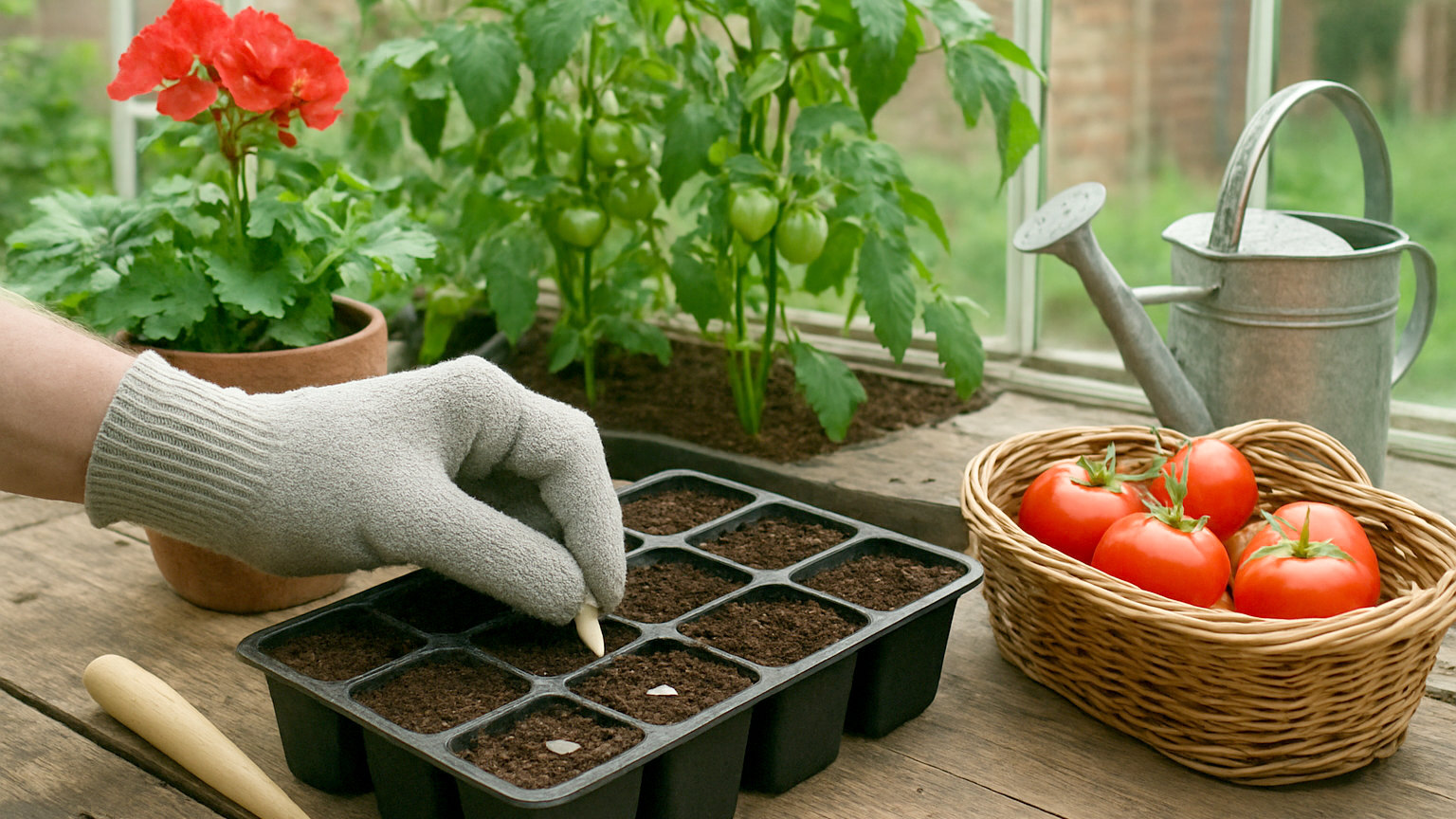
A greenhouse standing empty from October to March is doing half a job. Used properly it earns its space every month, and the key is knowing what belongs in it at each point in the year.
January and February
The propagation months. Sow chillies, peppers and aubergines in a heated propagator, since they need the longest season. Sow onions and leeks from seed, and sweet peas if you did not sow them in autumn.
Force rhubarb crowns brought in under a bucket. Take cuttings of overwintered chrysanthemums and dahlias started into growth.
Ventilate on mild days. Check overwintering plants for grey mould and water very sparingly.
March
The busiest month. Sow tomatoes, early brassicas, hardy annuals and most bedding. Start dahlia tubers and begonia corms into growth in pots.
Chit seed potatoes on the staging in good light. Sow salad for early cropping, and start the first cucumbers at the end of the month.
Space is at a premium from here until May, so plan what goes where.
April
Pot on the January sowings. Sow courgettes, squash, sweetcorn and French beans in modules towards the end of the month.
Plant greenhouse tomatoes into their final positions once the first flower truss shows. Begin hardening off the hardier plants in a cold frame.
Ventilation becomes important, and temperatures can climb sharply on a sunny April day.
May
Plant cucumbers, peppers and aubergines into final pots or grow bags. Continue hardening off, and clear the tender plants out to their outdoor positions after the last frost.
Start damping down on warm days. Put shading up towards the end of the month.
June to August
The cropping months, and the management is mostly about heat and water.
Open vents and doors early each morning. Damp down the floor on hot mornings. Water daily, sometimes twice, and feed weekly with a high-potassium feed once fruit has set.
Train and side-shoot tomatoes and cucumbers weekly. Watch for red spider mite and whitefly, and introduce biological controls early rather than late.
In August, sow winter salads in modules for autumn planting, and stop tomatoes by pinching out the growing tip.
September
Cropping continues, and the changeover begins. Remove shading as light levels drop, since ripening now needs all the sun available.
Plant winter salads into border soil or containers. Sow hardy annuals for overwintering, and take cuttings of tender perennials such as pelargoniums and fuchsias as insurance.
Reduce watering as growth slows and ventilate to keep humidity down.
October
Clear the summer crops. Ripen the last green tomatoes indoors rather than leaving them on failing plants.
Do the annual clean now: glass, overlaps, frame, staging, pots. Fit bubble wrap insulation afterwards if you intend to heat.
Bring in tender plants to overwinter, and pot up herbs such as mint and chives for winter picking.
November and December
Quiet months and not empty ones. Winter salads crop slowly. Overwintering plants need watching more than watering.
The main job is ventilation on mild dry days, since stagnant damp air causes more losses than cold. Remove dead leaves promptly and keep plants spaced.
Sow broad beans and hardy peas in root trainers for planting out, and stand pots of hardy seed outside to receive their cold period.
The winter principle
Growth almost stops between late November and early February because of light rather than temperature. Plants in the greenhouse are being held rather than grown, so water sparingly, feed not at all, and pick very lightly.
Making the space work harder
Staging that can be removed or folded lets you use the floor for tall summer crops and the bench for winter propagation. Shelves above head height suit trays of cuttings in spring and go largely unused in summer, so they are worth making removable too.
Growing vertically helps as much as it does in a small garden. Tomatoes and cucumbers up strings take almost no floor area, and hanging baskets of strawberries or trailing tomatoes use space that is otherwise wasted.
A greenhouse used year round needs planning at two points: February, when propagation competes with overwintering plants for bench space, and September, when summer crops are still cropping and winter salads want planting.
Both are eased by having a cold frame outside to take the overflow, which is why the two structures work so well together.


