
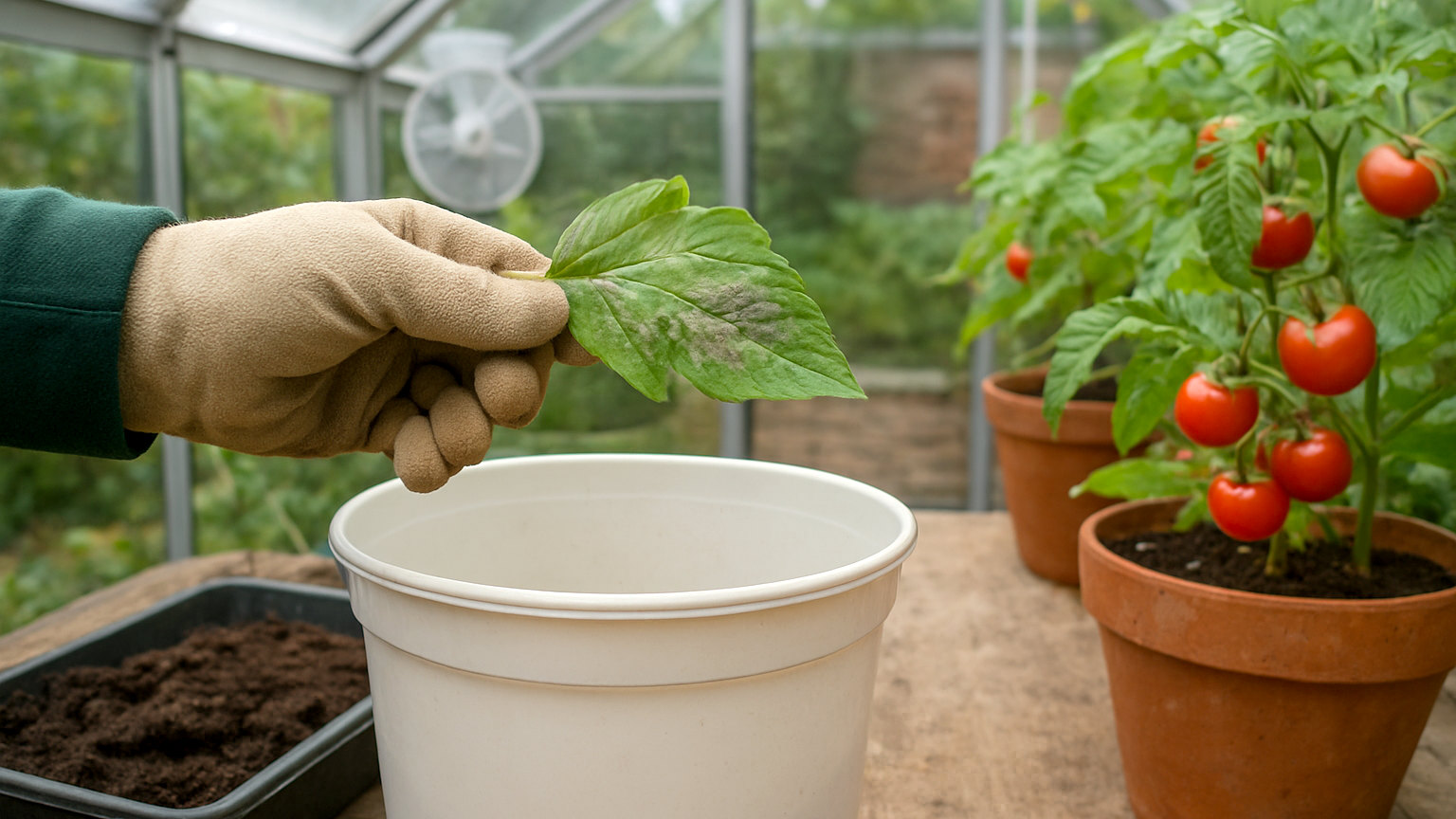
Greenhouse diseases divide into those caused by too much moisture in still air and those caused by dry roots in humid air. Both are prevented by the same thing, which is air movement, and neither has much in the way of a cure once established.
Grey mould
The most common greenhouse disease. Fuzzy grey-brown growth on dying leaves, stems, flowers and fruit, spreading rapidly from one plant to a neighbour that is touching it.
It thrives in cool, damp, still conditions and enters through damaged or dying tissue rather than healthy growth, which is why it takes hold on faded flowers and broken stems first.
Prevention is housekeeping. Remove dead and yellowing leaves and spent flowers promptly, space plants so they are not touching, ventilate every day the weather allows, water in the morning at the base, and avoid splashing foliage.
Once it appears, cut out affected material well into healthy tissue, bag it rather than carrying it through the house shedding spores, and improve the ventilation.
Powdery mildew
A white dusty coating on leaves and stems, common on cucumbers, courgettes, grapes and many ornamentals from midsummer.
It is caused by dry roots combined with humid air, which is the opposite of what most people assume and explains why watering the plant properly reduces it.
Water thoroughly and consistently at the base, mulch pot surfaces, space plants for airflow and remove the worst affected leaves. Resistant varieties exist for several crops and are worth choosing.
Downy mildew
Different from powdery mildew and needing the opposite response. Yellow blotches on the upper leaf surface with greyish fuzzy growth beneath, and it is worse in wet conditions.
Improve drainage and ventilation, avoid overhead watering, and remove affected material.
Damping off
Seedlings collapsing at soil level with a pinched dark stem. Caused by overcrowding, overwatering, dirty containers and stagnant air.
Sow thinly, use fresh compost and washed pots, water from below with tap water rather than butt water, and remove propagator lids as soon as germination begins.
Root rots
Plants wilting despite wet compost, with roots that are brown, soft and easily stripped rather than firm and white.
The cause is almost always overwatering or poor drainage. Check that pots are not standing in saucers of water, that drainage holes are clear, and that the compost is not compacted.
An affected plant can sometimes be saved by removing it from the pot, cutting away rotted roots and repotting into fresh compost, watering sparingly afterwards.
Viruses
Mottled, streaked or distorted leaves, stunted growth and poor cropping. Spread by aphids and on hands and tools.
There is no treatment. Remove and bin affected plants, wash hands and tools after handling them, and control aphids, which are the main vector.
Tomato and potato blight
Far less common under glass than outdoors, since the foliage stays dry, which is one of the main arguments for growing tomatoes in a greenhouse.
It can still enter on infected plants or spores blown through open vents. Dark patches on leaves and stems and firm brown patches on fruit are the signs, and affected plants should be removed and binned immediately.
The measures that cover most of it
- Ventilate every day the weather allows, including in winter
- Water in the morning, at the base, never over the foliage
- Space plants so air moves between them
- Remove dead and dying material promptly
- Clean the greenhouse and all pots thoroughly each autumn
- Use fresh compost, and change border soil or grow in containers
- Quarantine new plants before they join the others
Border soil
Growing the same crop in the same greenhouse border year after year builds up soil-borne disease, which is why tomatoes in a border often decline after several seasons. Either replace the top thirty centimetres periodically, or grow in containers and grow bags, which sidesteps the problem entirely.
Water quality
Stored rainwater is fine for established plants and carries organisms that cause damping off, so use mains water for seedlings, cuttings and anything vulnerable. Clean water butts out annually and keep them covered.
A note on treatment
Amateur fungicides for most of these have been withdrawn, which makes the cultural measures the whole of the treatment rather than a supplement to it.


