
A greenhouse is a long-term purchase and the decisions that matter are made before it arrives: how big, what it is made of, and where it goes. The first of those is the one people most often regret.
Buy bigger than you think
Almost everyone wishes they had bought a larger greenhouse. Space fills within one season, and the running cost difference between a small and a medium house is modest while the usefulness difference is considerable.
Two and a half by two metres, roughly eight by six feet, is the common starting size and is workable. Three by two and a half, ten by eight, is far more useful and allows staging down one side with border soil on the other.
Check the eaves height as well as the footprint. A low eaves makes working along the sides uncomfortable and limits what you can grow up the walls.
Glass or polycarbonate
Horticultural glass transmits the most light, lasts indefinitely, does not discolour, and looks better. It is heavier, more expensive, and breaks. Toughened safety glass costs more again and is worth it where children or a football are involved.
Polycarbonate is light, cheap, effectively unbreakable and insulates better, particularly twin-wall and multi-wall sheets. It transmits less light, diffuses it, discolours and becomes brittle over ten to fifteen years, and panels can blow out in a gale if not clipped properly.
For light quality and longevity, glass. For safety, insulation and cost, polycarbonate.
Aluminium or timber
Aluminium frames are the standard: cheap, light, maintenance free, slim glazing bars that block little light, and they last decades.
Timber, usually cedar, looks better, insulates slightly better and feels more solid, and it costs considerably more and needs treating every few years. The glazing bars are thicker and cast more shade.
Aluminium is the practical choice; timber is an aesthetic one.
The base
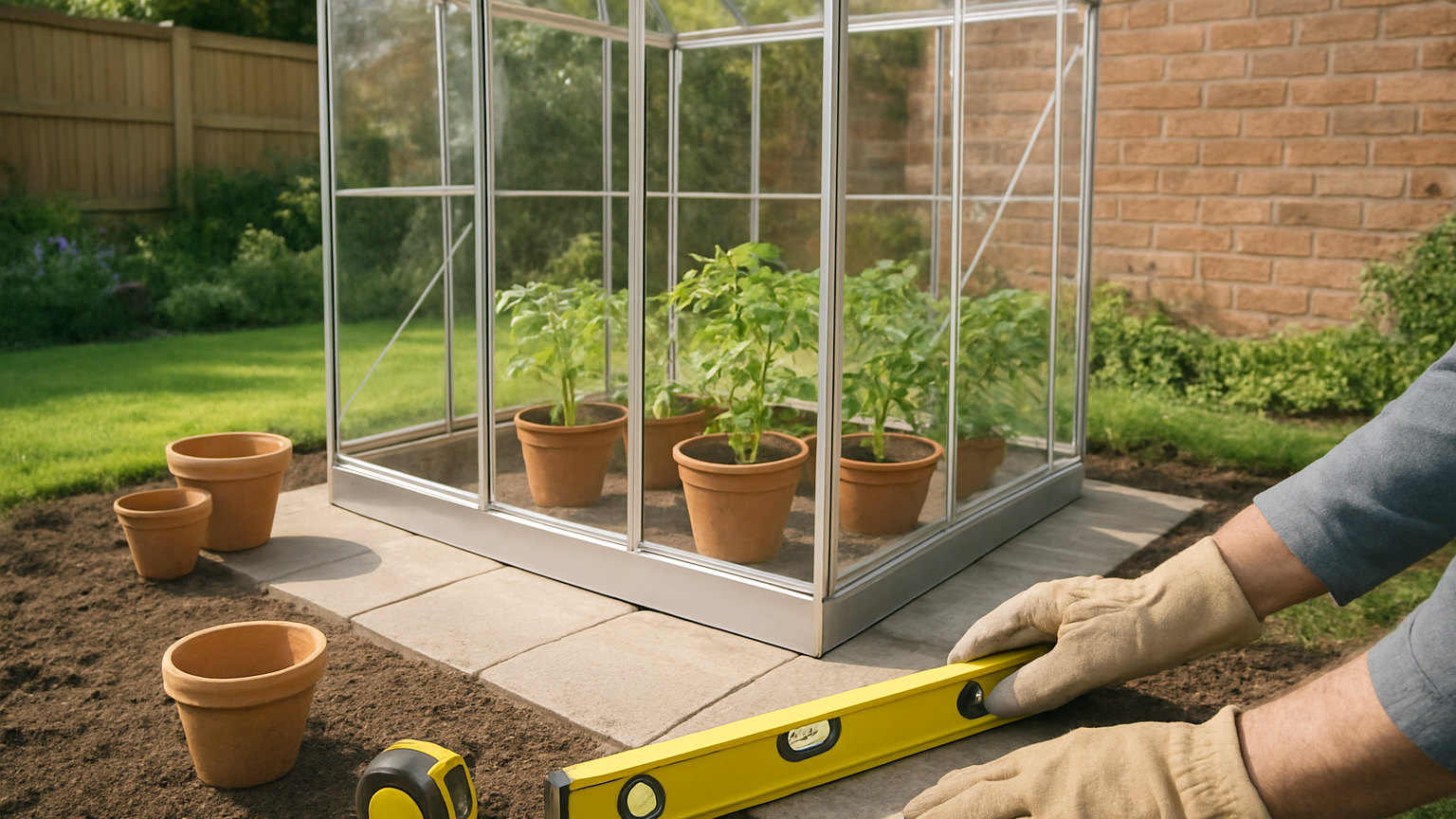
This is the step people economise on and should not. A greenhouse must sit on a level, solid, square base or the frame distorts, doors stick and glass cracks.
Options include a concrete slab, a course of bricks or blocks, paving slabs, or the manufacturer's steel base on a firm level surface. Whatever you use, check it is square by measuring both diagonals, and check it is level in every direction.
Anchor the greenhouse properly. An unanchored greenhouse will lift in a gale, and they are not as heavy as they look.
Where to put it
Maximum light is the priority, so an open position away from buildings and trees.
The conventional advice is to align the ridge east to west for a small greenhouse used mainly in winter and early spring, which maximises the light entering the long south-facing side. For summer growing the orientation matters much less.
Avoid overhanging trees, which drop leaves, cast shade, drip sap and risk branches. Avoid frost pockets and very exposed sites.
Consider access: you will be carrying water, compost and trays to it in all weathers, so a firm path is worth having. Proximity to a water supply and, if you plan to heat or light it, an electricity supply, both matter.
What to specify
More ventilation than the standard specification. Vent area should ideally total about a fifth of the floor area, and most greenhouses are supplied with considerably less than that. Adding a second roof vent and louvre vents at low level is the single best upgrade.
Guttering and a downpipe into a water butt is worth having, since a greenhouse roof sheds a useful quantity of rainwater.
An automatic vent opener, which works on a wax cylinder and needs no power, is inexpensive and close to essential for anyone out during the day.
Planning permission
Second hand
Used greenhouses are frequently available cheaply, and dismantling and moving one is a long day's work with two people. Check the frame is straight, that glazing clips and rubber seals are present, and count the panes, since replacing a full set of glass costs more than the frame is worth.
Planning permission
A domestic greenhouse is normally permitted development, subject to limits on height, area and proximity to boundaries. Listed buildings and conservation areas have tighter rules, so check with the local authority if either applies.


