
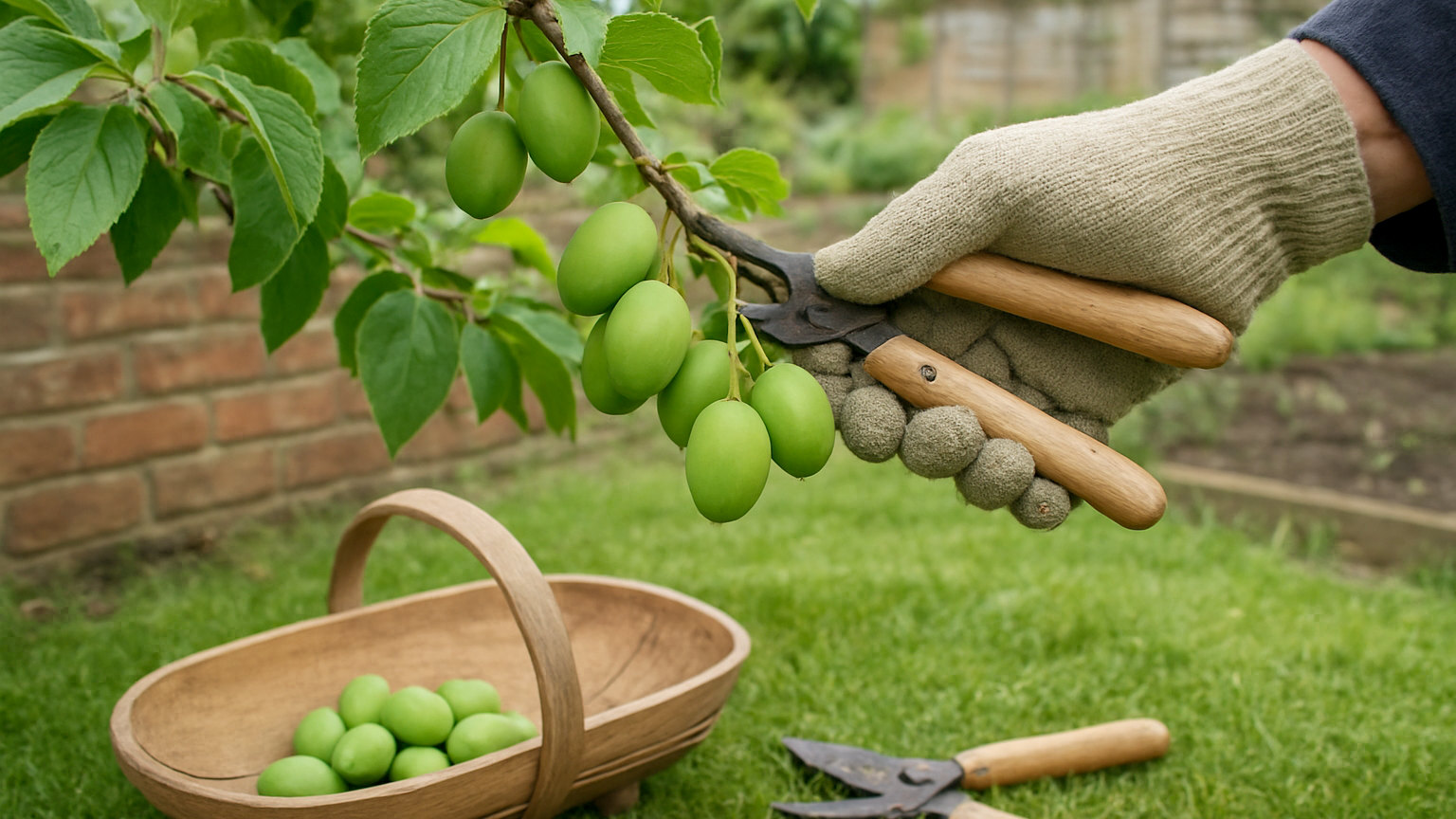
Plums are among the easiest tree fruit to grow and carry one absolute rule that separates a healthy tree from a dead one: they must never be pruned in winter.
The pruning rule
Prune plums, and all stone fruit, in summer when the tree is in active growth. Never in autumn or winter.
The reason is silver leaf disease, a fungus whose spores are airborne through the colder months and which enters through pruning wounds. It causes a silvery sheen on the leaves, dieback and eventually death of the tree.
In summer the tree is growing strongly and seals wounds quickly, and spore levels are far lower. June to August is the window, and the same applies to cherries, apricots, peaches and damsons.
Keep pruning light. Plums need much less than apples: remove dead, damaged and crossing wood, and thin congested growth to let light in.
Position and rootstocks
Plums flower early, often in March, which makes them vulnerable to frost. Avoid a frost pocket and choose a sheltered position, ideally with some morning shade so frosted blossom thaws slowly rather than fast.
They want deep, moisture-retentive but well-drained soil and dislike waterlogging.
- Pixy - dwarfing, around two to three metres. Good for small gardens
- St Julien A - semi-vigorous, around three to four metres. The usual garden choice
- Brompton - vigorous, for orchards rather than gardens
Varieties
Victoria remains the default for good reasons: self-fertile, heavy cropping, dual purpose for eating and cooking, and widely available. Its faults are a tendency to biennial bearing and susceptibility to silver leaf.
Opal and Czar are both self-fertile and reliable, Opal earlier and sweeter. Marjorie's Seedling is a late cooker.
Damsons and gages are close relatives grown the same way. Damsons are tough and tolerant of exposure; gages want more warmth and reward it with better flavour.
Many plums are self-fertile, which makes them a good choice where there is room for only one tree.
Thinning, which is not optional
Plums set enormously heavy crops and the branches are brittle. An unthinned tree in a good year will tear its own limbs off, and the wounds are exactly the entry point silver leaf needs.
Thin in June, after the natural drop, leaving fruits about five to eight centimetres apart. It feels wasteful and it produces larger, better fruit and a tree that survives the season.
Support heavily laden branches with props if necessary.
Watering and feeding
Water well in dry spells, particularly while fruit is swelling, since drought causes fruit drop and splitting.
Feed with sulphate of potash in late winter and mulch with well-rotted manure in spring, keeping it clear of the trunk. Avoid high-nitrogen feeds, which produce soft growth prone to disease.
Brown rot
Fruit developing brown patches with concentric rings of buff pustules, eventually shrivelling into hard mummified fruits that hang on the tree over winter.
Those mummies are the source of next year's infection. Remove and bin every one, along with any fallen affected fruit. Avoid damaging fruit when handling, since the fungus enters through wounds, including those made by wasps and birds.
Plum moth
Maggots inside ripening fruit, with the fruit ripening prematurely and often falling early.
Pheromone traps hung in the tree from May to August catch male moths and reduce mating success. They work best in a garden with a single tree rather than an orchard. Collect and destroy affected fruit rather than composting it.
Harvesting
Wasps
Wasps arrive as plums ripen and are drawn to any fruit already split or damaged. They do genuine harm by opening the skin, which then admits brown rot.
Pick promptly and remove damaged fruit rather than leaving it on the tree. Wasp traps hung away from the tree draw them off, and it is worth remembering that wasps spend most of the summer eating aphids and caterpillars in your garden before they turn to fruit in August.
Harvesting
Pick when the fruit parts easily from the spur and has softened slightly. Plums do not all ripen together, so go over the tree several times across a fortnight.
They do not store for long. Use them within a few days, or freeze, bottle or make jam, which is what a Victoria in a good year will require of you.


