
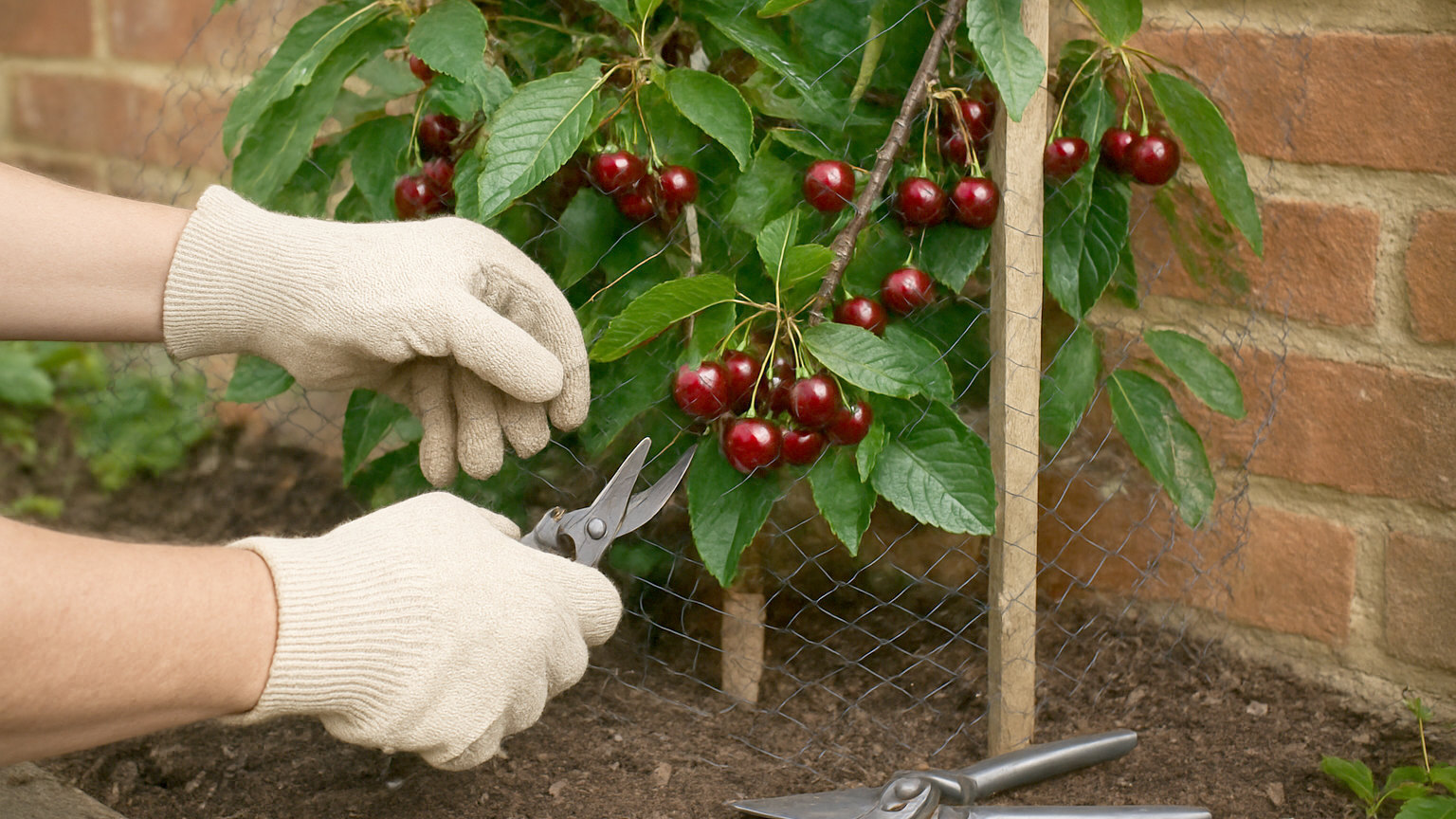
Cherries are straightforward to grow and difficult to harvest, because blackbirds and starlings will strip a tree in a day and usually the day before you intended to pick. Netting is not optional, and that fact should shape the size of tree you plant.
Sweet or acid
Sweet cherries are the dessert type, eaten fresh. They want a warm sunny sheltered position and produce the fruit most people picture.
Acid cherries, of which Morello is the main variety, are for cooking. They are considerably tougher, self-fertile, and will crop on a north-facing wall where almost nothing else fruits, which makes them one of the most useful plants for a difficult aspect.
If you have a shaded wall and want fruit, a Morello is the answer, and it is one of the few genuinely productive things that will crop on a north aspect.
Rootstocks and size
Modern dwarfing rootstocks have transformed cherry growing, since the old vigorous trees were far too large to net.
- Gisela 5 - dwarfing, around two and a half to three metres. The right choice for most gardens
- Colt - semi-vigorous, around four metres, and often used for fans
Choose the smallest tree that suits you. A cherry you can net is worth several times a cherry you cannot.
Netting
Net before the fruit begins to colour, not after. Birds find ripening cherries remarkably early.
Use netting with a mesh of at least two centimetres so small birds cannot become trapped, hold it taut over a frame rather than draped on the tree, and secure the bottom so nothing gets underneath. Check it daily and remove it once picking finishes.
A trained fan against a wall is far easier to net than a free-standing tree, which is another argument for growing them that way.
Pollination
Many modern sweet cherries are self-fertile, including Stella, Sunburst and Lapins, which removes the need for a partner. Older varieties need one flowering at the same time.
Morello and other acid cherries are self-fertile without exception, and will also pollinate some sweet varieties.
Pruning in summer only
Cherries are stone fruit and must never be pruned in winter, because of silver leaf and bacterial canker entering the wounds. Prune between June and August when the tree is growing strongly.
Sweet cherries fruit on older wood and need very little pruning: remove dead, damaged and crossing branches and keep the centre open.
Acid cherries fruit on wood made the previous year, so they need more attention. Cut out a proportion of the older fruited wood each summer to encourage new shoots for next year, in a similar way to pruning a summer raspberry.
Splitting
Cherries split when heavy rain follows a dry spell, as the fruit takes up water faster than the skin can accommodate. Split fruit then rots quickly.
Consistent watering through the swelling period reduces it considerably. Mulching helps hold moisture. A tree under cover, or a fan against a wall with an overhang, escapes it more often.
Nothing can be done once rain is forecast on a nearly ripe crop except picking early.
Bacterial canker
Sunken patches on the bark, often oozing amber gum, with dieback of shoots and small round holes in the leaves giving a shot-hole appearance.
Prune out affected wood in summer, cutting well back into healthy tissue, and disinfect tools between cuts. Avoid winter pruning, keep the tree well fed and watered, and choose resistant varieties where canker is a known problem locally.
Harvesting
Feeding
Apply sulphate of potash in late winter and mulch with well-rotted manure in spring, keeping it away from the trunk. Cherries are shallow rooted, so avoid digging around the base and keep grass and weeds clear of a circle around the trunk for the first few years.
Harvesting
Pick with the stalks attached, cutting or pulling gently rather than tugging, since tearing the fruit off damages the spur that would carry next year's crop.
Cherries do not ripen further after picking, so leave them until fully coloured and sweet. Taste one rather than judging by colour alone, since varieties differ.
They keep only a few days. Freezing works well for cooking cherries, and Morellos in particular are better cooked than eaten fresh, so a glut is easily dealt with as jam, pie filling or bottled fruit.


