
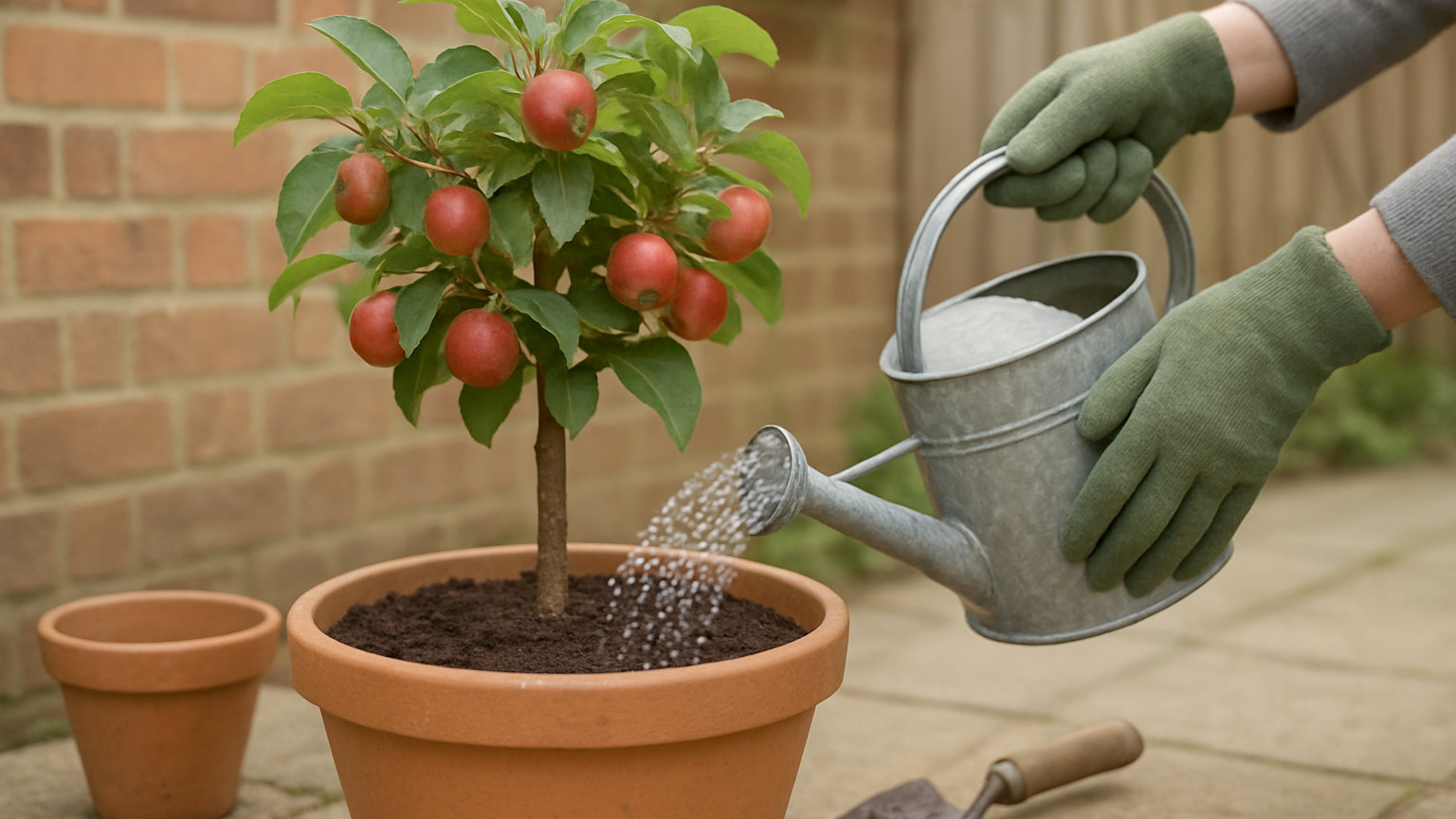
A container fruit tree makes fruit possible on a patio, a balcony or a garden with impossible soil. It works well provided the rootstock is genuinely dwarfing and you accept that the watering is a daily commitment through summer.
Rootstock decides everything
A tree on a vigorous rootstock in a pot will be permanently stressed and will never crop properly. Choose deliberately.
- Apples - M27 for very small, M26 for a slightly larger patio tree
- Pears - Quince C
- Plums - Pixy
- Cherries - Gisela 5
- Figs - any, since restriction is what makes them fruit
Trees sold as patio or minarette types are usually on these rootstocks already. Check before buying, since the label sometimes gives only the variety.
Pot size and compost
Start with a pot around forty to forty-five centimetres across and move up to fifty or sixty over a few years. Going straight into an enormous pot is counterproductive, since the unused compost stays wet and sours.
Use a soil-based compost such as John Innes No. 3, not multipurpose. It holds water and nutrients far better, does not break down as quickly, and its weight keeps a top-heavy tree stable in wind.
Ensure good drainage, stand the pot on feet, and never leave it in a saucer of water.
Watering is the commitment
This is where container trees fail. A fruiting tree in a pot may need watering daily from May to September, and twice on hot days.
Irregular watering causes fruit drop, splitting, bitter pit in apples and a general failure to crop. Consistency matters more than volume.
Mulch the surface of the pot with gravel or compost, group pots together to shade the sides, and consider a drip irrigation system on a timer if you are out all day. A fortnight away in August will cost you the crop otherwise.
Feeding
Compost is exhausted within about six weeks. Feed weekly through the growing season with a high-potassium tomato feed once the fruit has set, and use a balanced feed earlier in the year.
Top dress each spring by scraping off the top five centimetres of compost and replacing it with fresh, mixed with a slow-release fertiliser.
Repotting
Every two or three years, in winter while the tree is dormant, tip it out and inspect the roots.
Either move up one pot size, or if the tree is at its final size, root prune: tease out the roots, trim the outer few centimetres all round, and replant into the same pot with fresh compost. This keeps a tree productive in the same container indefinitely and is standard practice.
Prune the top growth lightly at the same time to balance what you have removed below.
Pollination
The same rules apply as for trees in the ground. Choose a self-fertile variety if you have room for only one, or grow two compatible varieties, or a family tree with two or three varieties grafted onto one rootstock.
Bees will find a pot on a balcony several floors up, and a pollination partner in a neighbouring garden counts.
Winter
Roots in a pot are far more exposed to freezing than roots in the ground, since cold penetrates from all sides.
Move pots against a house wall for winter, wrap the container in bubble wrap or hessian in a cold spell, and lift it onto feet so it does not stand in water. Do not bring the tree indoors, since it needs a cold period to break dormancy and fruit.
Fig and peach trees in pots benefit from being moved into an unheated greenhouse or a porch over winter, which also keeps rain off a peach.
Wind
What to expect from the crop
A container tree produces less than the same variety in the ground, and that is the trade for having it at all. A well-managed patio apple on M27 might give you a couple of dozen fruit rather than a hundred.
Thin the fruit as you would on a full-size tree, to one or two per cluster. A pot tree carrying too heavy a crop exhausts itself and often fails to fruit at all the following year.
Wind
A tree in leaf in a pot catches wind and will blow over. Use a heavy container, keep it against a wall or in a sheltered corner, and stake if necessary.


