
These three are all grown at the edge of what the British climate allows, and all three succeed against a warm south or west-facing wall in ways they never will in the open. Each has one specific requirement that decides whether you get fruit.
Figs: restrict the roots
A fig with unrestricted roots produces enormous quantities of leaf and almost no fruit. Restricting the root run is what forces it to fruit, and it is the single most important thing about growing them.
The traditional method is to line a planting pit about sixty centimetres square and deep with paving slabs on edge, with rubble in the base for drainage, and plant into that. A large container achieves the same thing and is easier.
Plant against a warm wall, and train as a fan. Water well in summer, since a restricted root run dries quickly, and feed with a high-potassium feed once fruit forms.
Which figs will ripen
In Britain, only one crop ripens. Figs produce embryonic fruits in late summer that overwinter and ripen the following year.
The ones that will ripen are pea-sized at the end of the season. Anything larger than a pea will not survive the winter and should be removed in autumn, since leaving them wastes the plant's energy and they rot on the branch.
Protect the overwintering fruitlets with fleece in a cold garden. Brown Turkey is the reliable variety for most of the country.
Figs are ripe when they soften, hang downwards and often show a drop of nectar at the eye. They do not ripen after picking.
Peaches: the leaf curl problem
Peach leaf curl is the reason most British peach trees fail. It causes leaves to blister, turn red and thicken before falling, and repeated defoliation exhausts the tree.
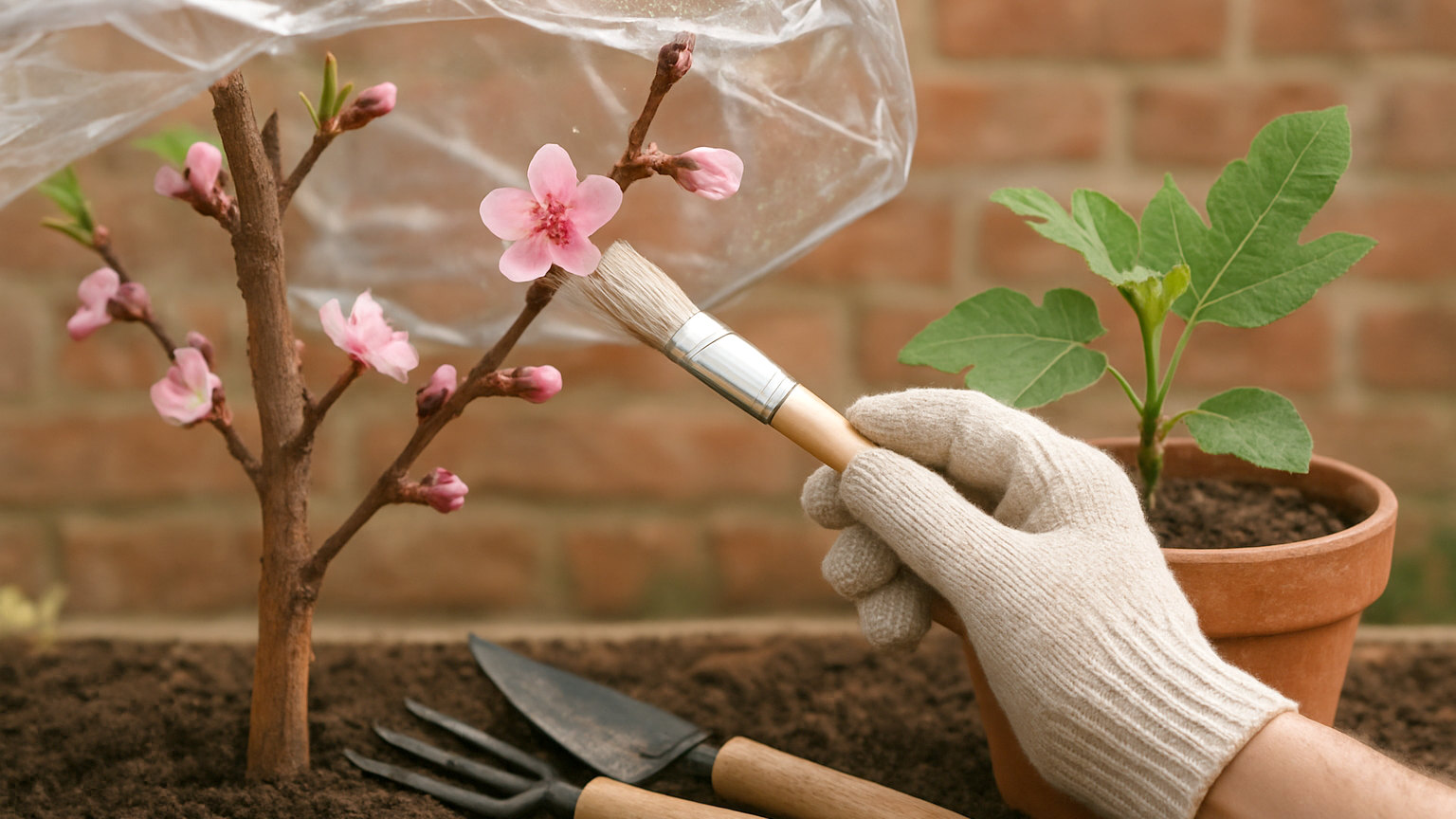
The spores are carried in winter rain, so keeping rain off the tree prevents it. Erect a clear polythene shelter over the tree, open at the sides for ventilation and access to pollinators, from January until mid-May.
That is the whole control. Fungicides are no longer available to amateurs for this, and a tree kept dry through late winter stays clean.
A fan against a wall is far easier to cover than a free-standing tree, and growing a peach in a large pot that can be moved under cover for the winter works well.
Peaches and apricots: hand pollination
Both flower very early, often in February or March, when there are few pollinating insects flying and the weather is frequently too cold for them.
Hand pollinate by dabbing the centre of each open flower with a soft brush or a piece of cotton wool, moving from flower to flower, around midday on a dry day. Repeat every couple of days while the blossom is open.
Protect the blossom from frost with fleece on cold nights, removing it during the day so insects can reach the flowers.
Apricots
Apricots need the warmest, most sheltered wall you have and free-draining soil. They dislike waterlogging above all.
They are self-fertile, so a single tree will crop. Modern varieties bred for cooler climates, such as Flavorcot and Tomcot, are considerably more reliable in Britain than older ones.
Thin the fruit in early summer to about eight centimetres apart, which improves size and prevents branch breakage.
Pruning all three
All are stone fruit and must be pruned in summer, never in winter, because of silver leaf and canker.
Figs are pruned in early summer, pinching back new shoots to about five leaves, which encourages the embryonic fruits to form. Remove old unproductive wood at the same time.
Peaches and apricots trained as fans are pruned in spring and summer, removing shoots growing directly towards or away from the wall and tying in replacements.
A caution with figs
Feeding all three
All three respond to a high-potassium feed from spring through the fruiting period, and resent high nitrogen, which produces leaf at the expense of fruit and softens growth against winter. Mulch in spring and water consistently, since irregular watering causes fruit drop in figs and splitting in peaches.
A caution with figs
Fig sap irritates skin and causes a reaction in sunlight in some people. Wear gloves and long sleeves when pruning, and avoid getting sap on bare skin on a sunny day.


