
Finding a maggot in an apple is the classic disappointment of home fruit growing. Several different pests produce broadly similar damage, and identifying which you have determines what, if anything, is worth doing.
Codling moth
The commonest culprit. A pinkish-white caterpillar with a brown head tunnels into the core of the fruit, and a small hole surrounded by brown frass appears on the skin, often near the eye at the base.
The moth flies from May to August and lays on developing fruit. There is usually one generation a year in Britain, sometimes two in a warm summer.
Pheromone traps hung in the tree from mid-May catch male moths. In a garden with one or two trees they reduce mating enough to make a real difference, and they also tell you when the moths are flying. Hang one trap per tree at about head height and replace the lure as directed.
Collect and destroy affected fruit rather than composting it, since the caterpillar leaves to pupate under loose bark or in debris.
Apple sawfly
Frequently confused with codling moth and dealt with differently.
Sawfly attacks earlier, in May and June, and produces a distinctive ribbon-like scar winding across the surface of the fruit where a young larva has grazed just under the skin. Fruit attacked more deeply drops in June with a wet, sticky, unpleasant-smelling exit hole.
The key difference is timing and appearance: sawfly damage is early and shows a surface scar, codling moth is later and tunnels straight to the core.
Collecting and destroying fallen fruitlets in June removes the larvae before they reach the soil to pupate, which is the practical control.
Winter moth and grease bands
Winter moth caterpillars eat leaves, blossom and young fruitlets in spring, leaving ragged foliage and holes in developing fruit.
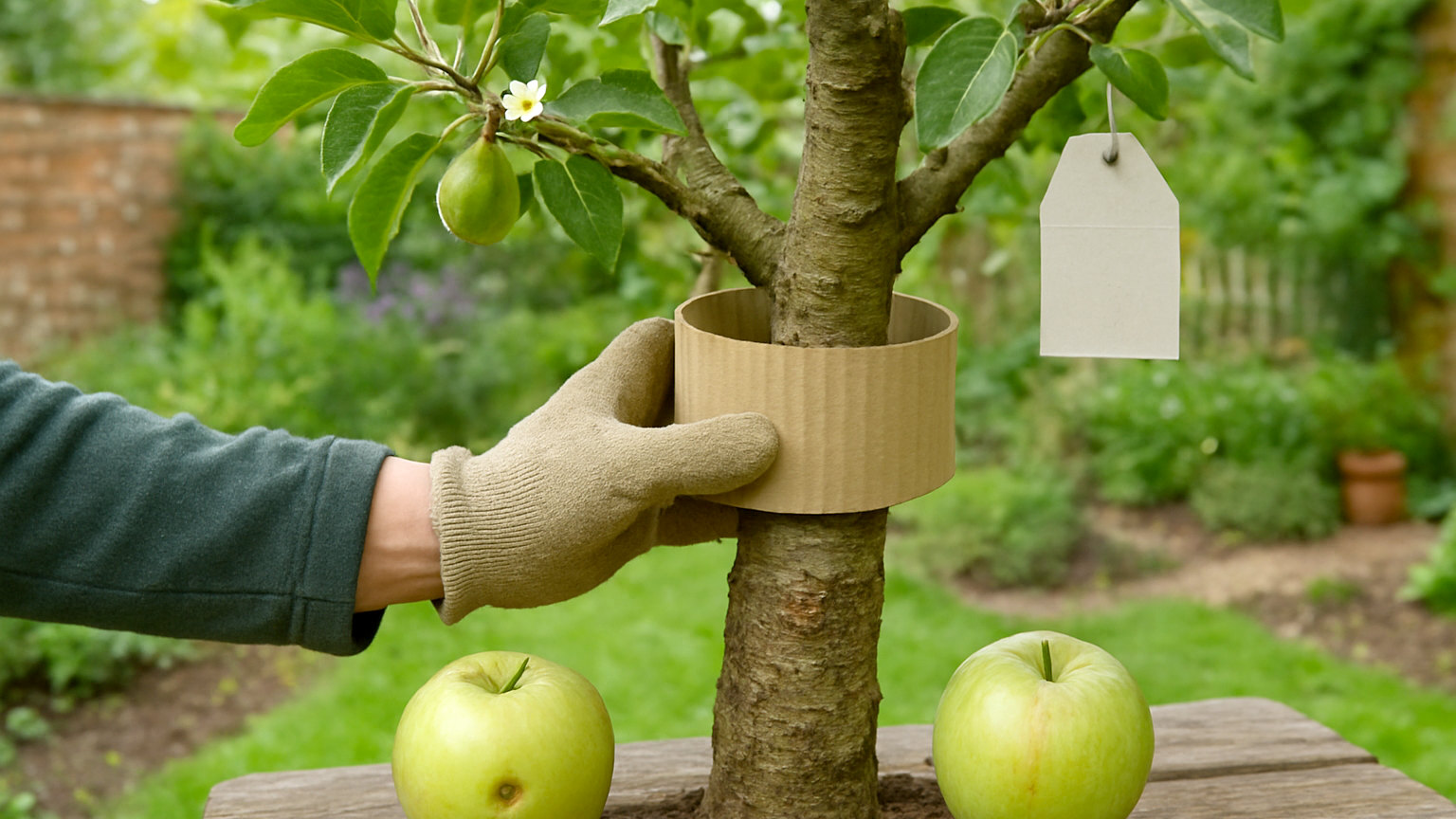
The female moth is wingless and must crawl up the trunk to lay, which gives an unusually effective control. Fit a grease band or a sticky barrier around the trunk, and around the stake, in October and leave it until spring.
Check it periodically, since it clogs with debris, and make sure no branch or weed provides a bypass around it.
Aphids
Several species attack fruit trees, distorting young leaves and shoots. Damage is mostly cosmetic on an established tree, and predators usually catch up.
Woolly aphid is the exception worth attention: white fluffy waxy masses on the bark, often around old pruning cuts and cankers. It causes soft swellings on the wood that crack and admit canker.
Scrub the colonies off with a stiff brush where you can reach, and encourage predators. Earwigs and blue tits both eat it in quantity.
Wasps
Wasps arrive in August and enlarge damage started by birds or by codling moth, then hollow the fruit out. They rarely initiate damage on sound fruit.
Pick promptly, remove damaged fruit, and hang traps well away from the tree. It is worth remembering that wasps spend most of the summer eating aphids and caterpillars in your garden before turning to fruit.
What to leave alone
Earwigs look destructive and eat far more codling moth eggs and aphids than they do fruit. Leave them.
Birds cause some damage and take enormous numbers of pests, particularly blue tits working over the branches in winter and spring.
The measures that help most
Red spider mite and scale
Fine pale mottling on leaves in a hot dry summer, sometimes with faint webbing, is red spider mite. It is worse on trees against a warm wall and is reduced by keeping the tree well watered.
Scale insects appear as small brown limpet-like bumps on stems and branches, excreting honeydew that sooty mould then grows on. Light infestations are tolerable; heavy ones can be scrubbed off.
The measures that help most
Good hygiene does more than anything: collect fallen fruit promptly, clear debris around the base, and remove loose bark where pests overwinter.
Greasebands, pheromone traps and prompt collection of fallen fruit cover the three main pests between them, and none of them involves spraying anything.
Encourage predators with nest boxes for tits, and accept a proportion of damaged fruit. A garden tree with ninety per cent sound fruit is doing well, and chasing the last ten per cent costs more than it returns.


