
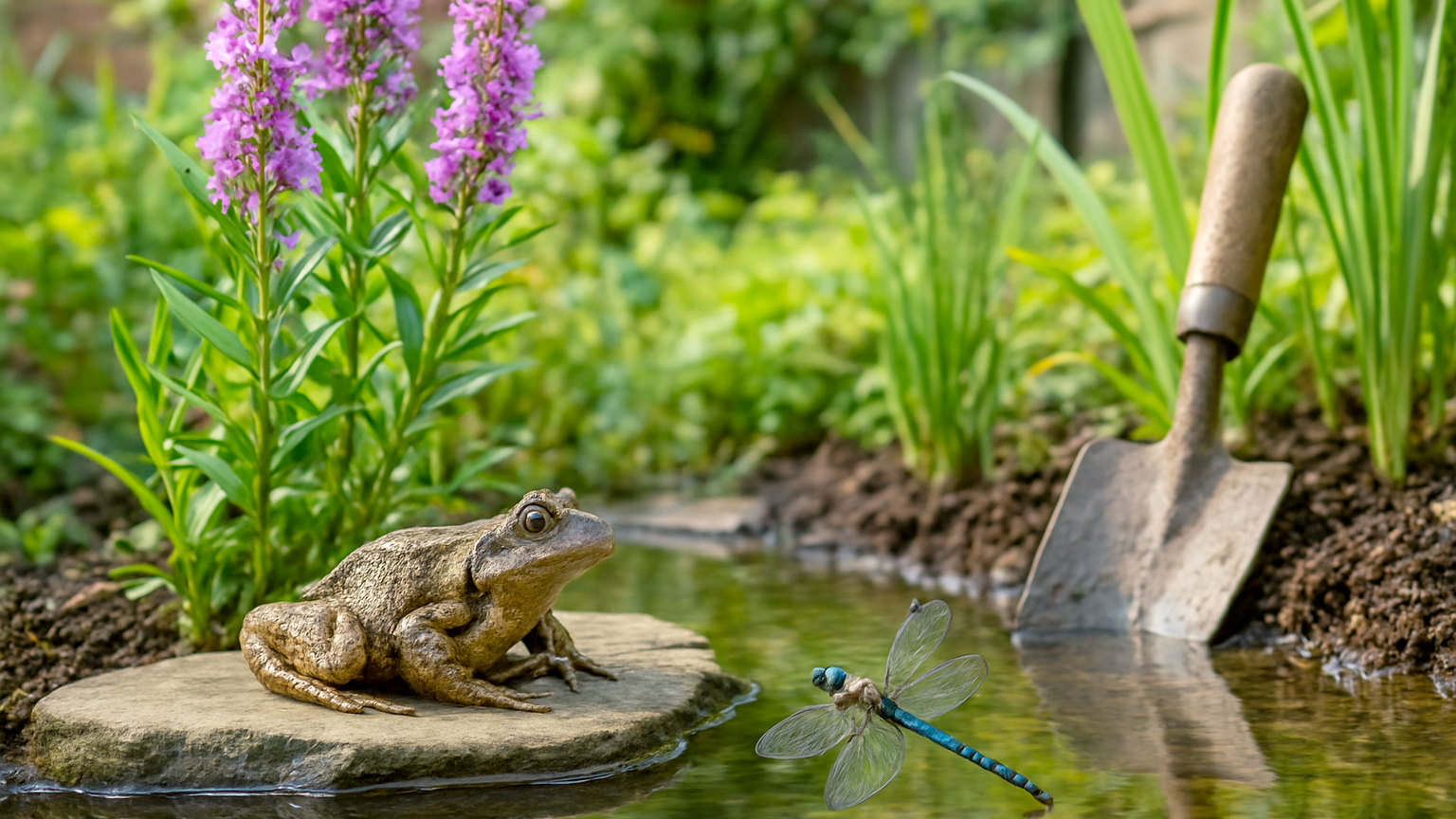
A pond brings more wildlife into a garden than anything else of comparable size, and almost all of it arrives without help. The gardener's job is to provide the conditions and then leave it alone.
What arrives, and when
Within weeks: pond skaters, water boatmen, diving beetles and other flying insects, which find new water remarkably quickly.
Within months: snails and other invertebrates, frequently arriving on plants; birds using the pond to drink and bathe.
Within the first year or two: frogs and toads, dragonflies and damselflies laying eggs.
Within a few years: newts, which are slower to colonise, and a substantial invertebrate community.
A pond dug in spring may have frogspawn the following year, and it is worth being patient rather than intervening.
Do not introduce animals
Do not move frogspawn, tadpoles, newts or other creatures from another pond or from the wild.
There are two serious reasons. Moving amphibians spreads disease, including ranavirus, which causes severe die-offs of frog populations and has been spread between ponds this way.
It also risks introducing invasive plant fragments and unwanted species in the water.
Great crested newts are protected by law and it is an offence to capture, disturb or handle them without a licence.
Wildlife finds ponds. Leave it to arrive.
What they need
A shallow sloping beach on at least one side, so animals can get in and out. This is the single most important feature for wildlife and the one most often missing from a preformed pond with steep sides.
Varied depths, including a deeper area of at least six hundred millimetres that will not freeze solid or overheat.
Marginal planting for cover, egg laying and emergence. Vertical stems such as rushes and reeds are what dragonfly larvae climb to emerge as adults.
Submerged plants for shelter and oxygen.
Some open water, since a completely covered surface suits little.
Cover beside the pond: long grass, a log pile, dense planting. Frogs and newts spend most of the year on land and need somewhere to go.
No fish
Fish and wildlife are largely incompatible in a small pond.
Fish eat tadpoles, newt larvae, insect larvae and eggs, and a pond with fish supports a fraction of the invertebrate life of one without.
They also produce waste continuously, which raises nutrient levels and causes algae.
If wildlife is the aim, leave the fish out. It is the single biggest decision.
The seasonal round
Frogs spawn from late winter, often February or March, in shallow water. Toads spawn slightly later in strings rather than clumps.
Newts arrive in spring and lay individual eggs wrapped in the leaves of aquatic plants, which is why leaving some soft-leaved planting matters.
Dragonfly and damselfly larvae live underwater for months or years before emerging, usually in early summer.
Birds use the pond year round, and in winter a small ice-free area matters.
Winter
Do not break ice by hitting it, which sends a shock wave through the water that can harm hibernating amphibians.
Melt a hole by standing a pan of hot water on the surface, or float a ball on the pond so it can be lifted out to leave an opening.
Leave some vegetation and leaf litter beside the pond over winter, which is where a great deal shelters.
Maintenance that respects it
Avoid major clearing between March and July, when amphibians are breeding.
Late autumn is the usual time for thinning plants and removing silt, once breeding is over.
Leave everything you remove beside the pond overnight so creatures can return to the water.
Take out no more than about a third of the planting in one go, so the pond retains cover and its balance.
Beyond the pond itself
Much of what a pond supports spends most of the year on land. Frogs, toads and newts use damp cover, log piles, long grass and compost heaps, and a pond in a mown lawn with nothing around it supports far less than one surrounded by rough planting.
Connect it to the rest of the garden, and leave a corner untidy.
A log pile, a patch of long grass and dense planting near the water roughly doubles what a pond supports, and costs nothing at all.


