
A pond is difficult and expensive to move, so the position deserves more thought than almost any other garden decision. Most of what makes a pond succeed or fail is decided before the first spade goes in.
Sun
Aim for a position in sun for most of the day, with some shade at the hottest part.
Sunlight drives the whole system. Aquatic plants need it, and a shaded pond supports far less life and grows fewer of the plants that keep water clear.
Complete shade produces a poor pond. Complete unshaded exposure in high summer heats a small pond quickly, which reduces oxygen and stresses everything in it.
Dappled shade from mid-afternoon is close to ideal.
Trees
Avoid siting a pond beneath or immediately downwind of deciduous trees.
Falling leaves rot in the water, consume oxygen as they decompose and release nutrients that feed algae. A pond under a tree needs netting every autumn and clearing every year.
Some trees are worse than others. Willow, poplar and laburnum leaves are particularly unwelcome, and cherry laurel leaves release compounds that are harmful in water.
Tree roots also complicate excavation and can eventually damage a liner.
Some shade from a shrub or a small tree at a distance is fine and often beneficial.
Level ground
Water finds its own level, so the edges of a pond must all be at the same height.
A pond built on a slope shows liner on the high side and overflows on the low one, which is the most common and most visible construction error.
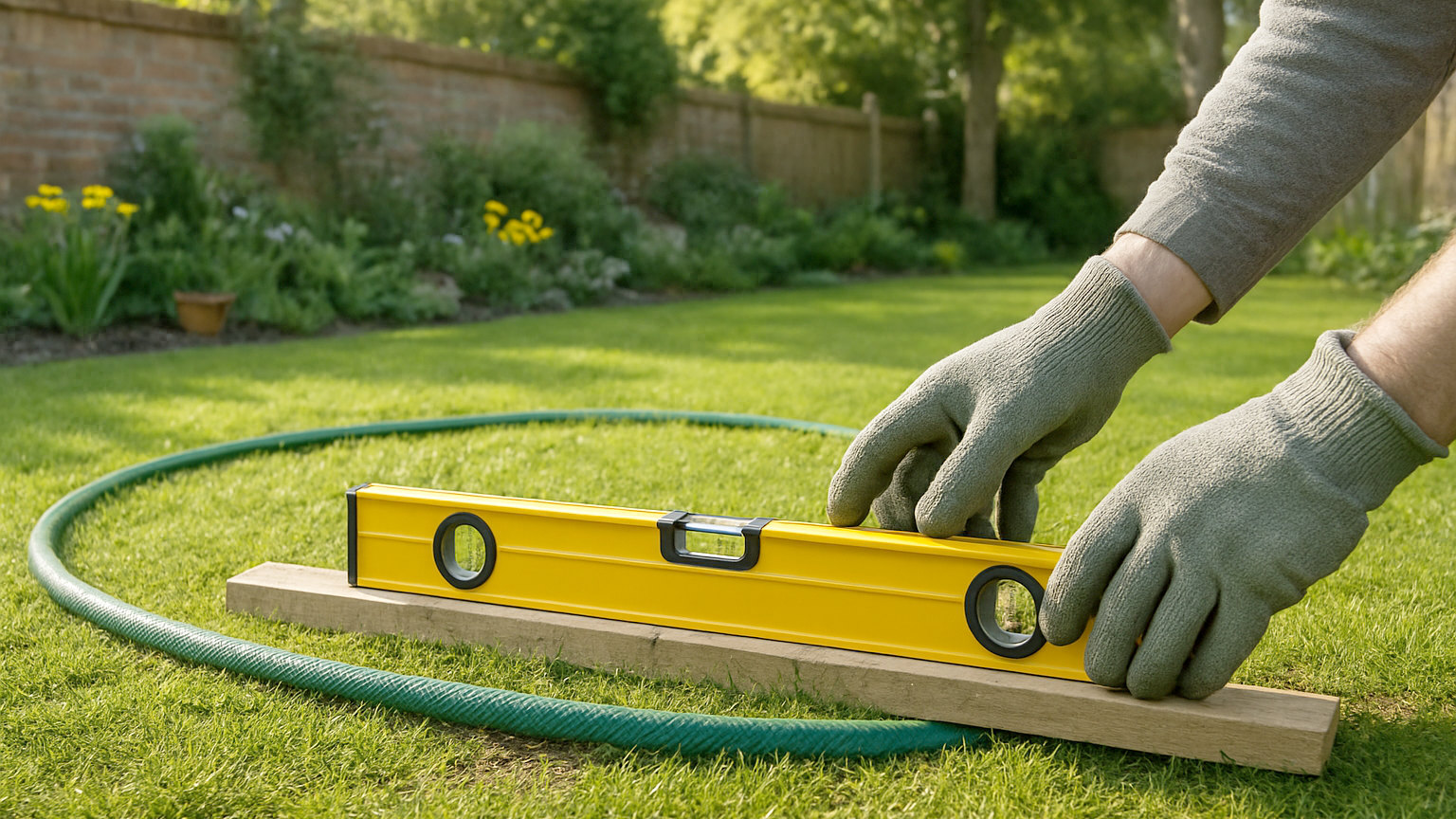
Check the levels carefully with pegs, a straight edge and a spirit level, or a laser level, before excavating.
On sloping ground, either cut into the slope and use the spoil to build up the lower side, compacting it thoroughly, or use a raised pond with a built edge.
Run-off and contamination
Do not site a pond where water runs into it from a lawn, a drive or a path.
Run-off carries fertiliser, which causes algal blooms, and it may carry herbicide, oil or salt.
Check where surface water goes after heavy rain before deciding.
Similarly, do not site a pond where it will drain into a watercourse if it overflows.
Services and ground
Check for buried services before digging. Electricity, gas, water and drainage runs are all commonly found in gardens and a pond excavation is deep.
Look for inspection covers and note where pipes enter the house.
Consider the water table. A liner pond dug into ground that is seasonally waterlogged can be pushed upwards by groundwater beneath it.
Consider what you will do with the spoil, which is a substantial volume. It can be used to build a bank, a raised bed or a rockery beside the pond.
Access for wildlife
At least one side should have a shallow sloping beach so animals can get in and out.
Site the pond where it connects to other habitat rather than isolated in the middle of a lawn. Planting, long grass or a log pile alongside gives cover for creatures arriving and leaving.
Practical considerations
Somewhere you will see it, since a pond is one of the most interesting things in a garden and a pond at the bottom of the plot is rarely watched.
Within reach of a water supply for topping up, and of a power supply if a pump is intended.
Away from the main route across the garden, particularly where children are around.
Not immediately against a boundary, since you will need access all round to maintain it.
Safety
Small children can drown in a very small depth of water. Where young children use the garden, either delay building a pond, fit a rigid fixed grille just below the water surface, or fence it with a self-closing latched gate.
A bubble fountain over a covered reservoir gives the sound and movement of water with no open surface.
Mark it out first
Lay a hosepipe out in the proposed shape and live with it for a week, looking at it from the house and from an upstairs window.
Ponds nearly always look smaller once dug than they did marked out, so err on the generous side. A larger volume of water is also far more stable in temperature and easier to keep clear.


