
This is the one aspect of a garden pond that has to be got right rather than approximately right.
The risk
A small child can drown in a very shallow depth of water, in a very short time, and silently.
Drowning does not look like drowning. It happens quickly and without splashing or shouting, and a child can be face down in a few centimetres of water while an adult is a short distance away.
Children under five are at greatest risk. Toddlers are drawn to water, are top heavy, and cannot reliably get themselves out.
This applies to ponds, water butts, buckets, paddling pools, water features with open reservoirs and anything else that holds standing water.
Options where young children use the garden
There are three responses that are genuinely adequate.
Fill it in temporarily. Converting a pond to a bog garden or a sandpit for a few years and reinstating it later is the simplest answer, and many people take it.
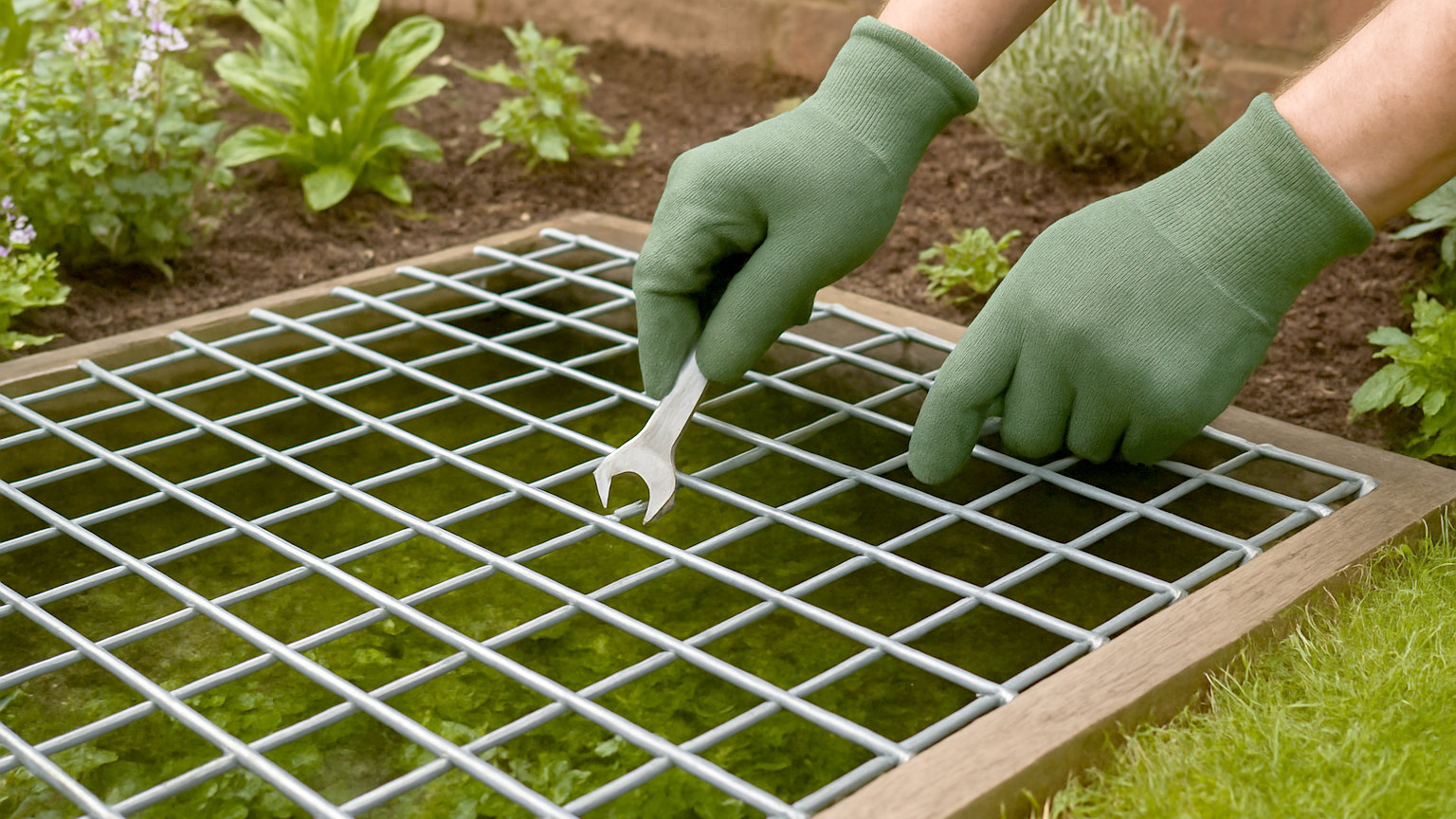
Fit a rigid grille. A heavy-gauge steel or rigid mesh grid, sitting just below the water surface, securely fixed at the edges so it cannot be lifted or displaced, and capable of taking a child's weight.
Fence it. A fence the child cannot climb, with a self-closing, self-latching gate with the catch out of a child's reach.
What is not adequate
Netting laid loosely over a pond is not a safety measure. A child falling onto it goes through or becomes entangled, which is more dangerous than open water.
A low decorative fence or a border of planting is not a barrier.
Supervision alone. Adults are momentarily distracted, doors are left open, and children move quickly and quietly.
A warning, since small children do not reliably act on one.
Neighbouring children
Consider children who visit, and children who might get into the garden.
Secure gates and boundaries, and think about grandchildren and visitors even if your own children are older.
Safe alternatives
A bubble fountain or pebble pool gives the sound and movement of water with the reservoir enclosed beneath a grid and gravel, so there is no open surface.
These are the usual answer for a family garden and are genuinely attractive.
Check that the reservoir lid is rigid, well supported and cannot be lifted by a child.
A bog garden gives moisture-loving planting and much of the wildlife value with no standing water.
A wall-mounted water spout with a small covered reservoir is another option.
Other water in a garden
Water butts must be lidded and the lid secured.
Empty buckets, trugs and containers rather than leaving them to collect rain.
Empty paddling pools after every use, and never leave one filled and unattended.
Cover or drain any sunken container or reservoir.
Reinstating a pond later
Children grow, and a pond filled in or grilled over can be restored when they are older.
Keep the liner in place beneath a temporary bog garden, and the pond can be reinstated in an afternoon.
Other pond safety points
Pond water can carry leptospirosis, which is a serious illness. Cover cuts, wear gloves when working in a pond, and wash hands thoroughly afterwards.
Blue-green algae, appearing as a blue-green scum in warm weather, can produce toxins dangerous to dogs and harmful to people. Keep animals away from any pond showing it.
Any electrical supply for a pump or lighting must be outdoor rated and protected by a residual current device, and permanent installation is work for a qualified electrician.
Provide a sloping beach on at least one side so that anything falling in, including pets and wildlife, can climb out again.
Teaching rather than only excluding
As children get older, showing them the pond, explaining the risk and letting them look at it supervised is part of the answer, alongside the physical measures.
Barriers are for the years when a child cannot be reasoned with, and they can come out later.
Never rely on a child's understanding alone while they are very young, however sensible they seem, and never leave a young child near water unsupervised even briefly.
Visiting other gardens
Be aware of ponds and water butts at grandparents' houses and at friends', where the same measures may not have been taken.


