
Most pond problems are diagnosable from the pattern of what is happening, and the commonest one, a dropping water level, has three quite different causes.
The water level is falling
Evaporation is normal, and in hot windy weather a pond can lose a noticeable amount in a week. Moving water evaporates considerably faster than still.
A leak in the liner.
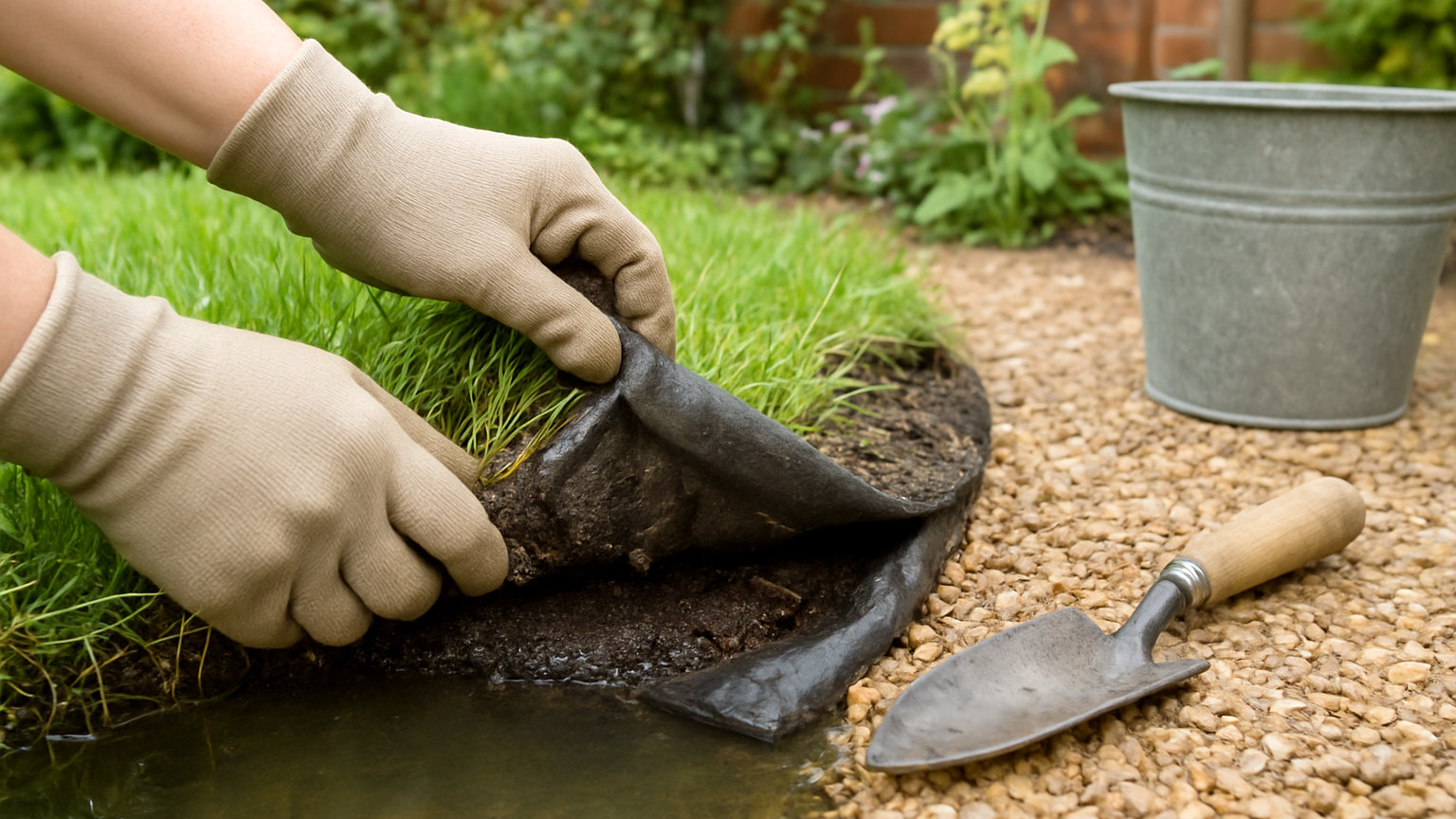
Wicking, where something bridges the liner edge and draws water out by capillary action: a plant rooted over the edge, soil touching the water and running up the bank, a stone or a piece of matting laid across the rim.
Wicking is far more common than people expect and can empty a pond steadily while the liner is perfectly sound.
Finding out which
Turn off any pump and let the pond settle.
Watch where the level stops. If it drops and then holds at a particular height, the leak is at that level and you only need to inspect that band.
If it keeps dropping to the bottom, the leak is low down or in the base.
If it holds at the normal level once the pump is off, the problem is in the pump, the pipework, a waterfall or a stream section rather than the pond.
If nothing drops at all over several days, it was evaporation.
Check the entire rim for anything crossing the liner edge before assuming a puncture.
Repairing a liner
Butyl and EPDM are repaired with proprietary patches and adhesive.
Lower the water below the damage, clean the area thoroughly, let it dry completely, and follow the instructions on the repair kit.
A patch on a dirty or damp liner will not hold.
Fibreglass preformed units can be repaired with a glass fibre kit. Cracked rigid plastic units usually cannot.
Where a liner has failed repeatedly or has degraded with age, relining is the practical answer, laying a new liner over the old with fresh underlay between them.
The water smells
A rotten-egg smell indicates anaerobic decomposition in the silt at the bottom, which means too much organic material and not enough oxygen.
Remove excess silt and decaying leaves, taking out no more than about a third at a time.
Increase oxygenating planting and, if necessary, add aeration.
Net the pond in autumn to stop the problem recurring.
Fish gasping at the surface
Low dissolved oxygen, usually in hot still weather, at night, or after a large mass of algae has died off.
Add fresh water, increase aeration with a pump or fountain, remove decomposing material, and provide shade.
This can kill fish quickly, so treat it as urgent.
The pond is silting up
Normal over years, as leaves, dead plant material and debris accumulate.
Remove excess in autumn, leaving everything beside the pond overnight so wildlife can return, and taking no more than about a third.
Some silt is beneficial and supports a great deal of life. A scrupulously clean pond is a poor one.
Liner showing above the water
Either the level has dropped or the pond was built out of level.
Check the levels around the rim with a straight edge. Where one side is low, water finds that level and the high side shows liner.
Correcting this properly means lifting the edge and rebuilding it, which is why levelling before excavating matters so much.
Nothing is living in it
Give it time. Colonisation takes seasons rather than weeks.
Check for the usual obstacles: no shallow beach for access, steep sides, fish present, no marginal planting, deep shade, or run-off from a treated lawn reaching the water.
Persistent green water in an established pond
Look for a nutrient source: leaves, fish, ordinary compost in baskets, run-off, or tap water top-ups.
Add oxygenators and increase surface cover before considering any treatment.
The pump has stopped
Usually a blocked intake, which is the commonest fault by a wide margin. Clean it and check the impeller for debris.
A pump run dry burns out, so check reservoir levels regularly on any feature with a concealed tank.
Isolate the supply before handling any pump, and never work on an outdoor electrical installation without doing so.
Herons
Herons take fish from shallow open ponds readily and are protected, so they cannot be harmed.
Deeper margins, plenty of surface cover, a net during the worst months and somewhere for fish to hide all reduce losses.


