
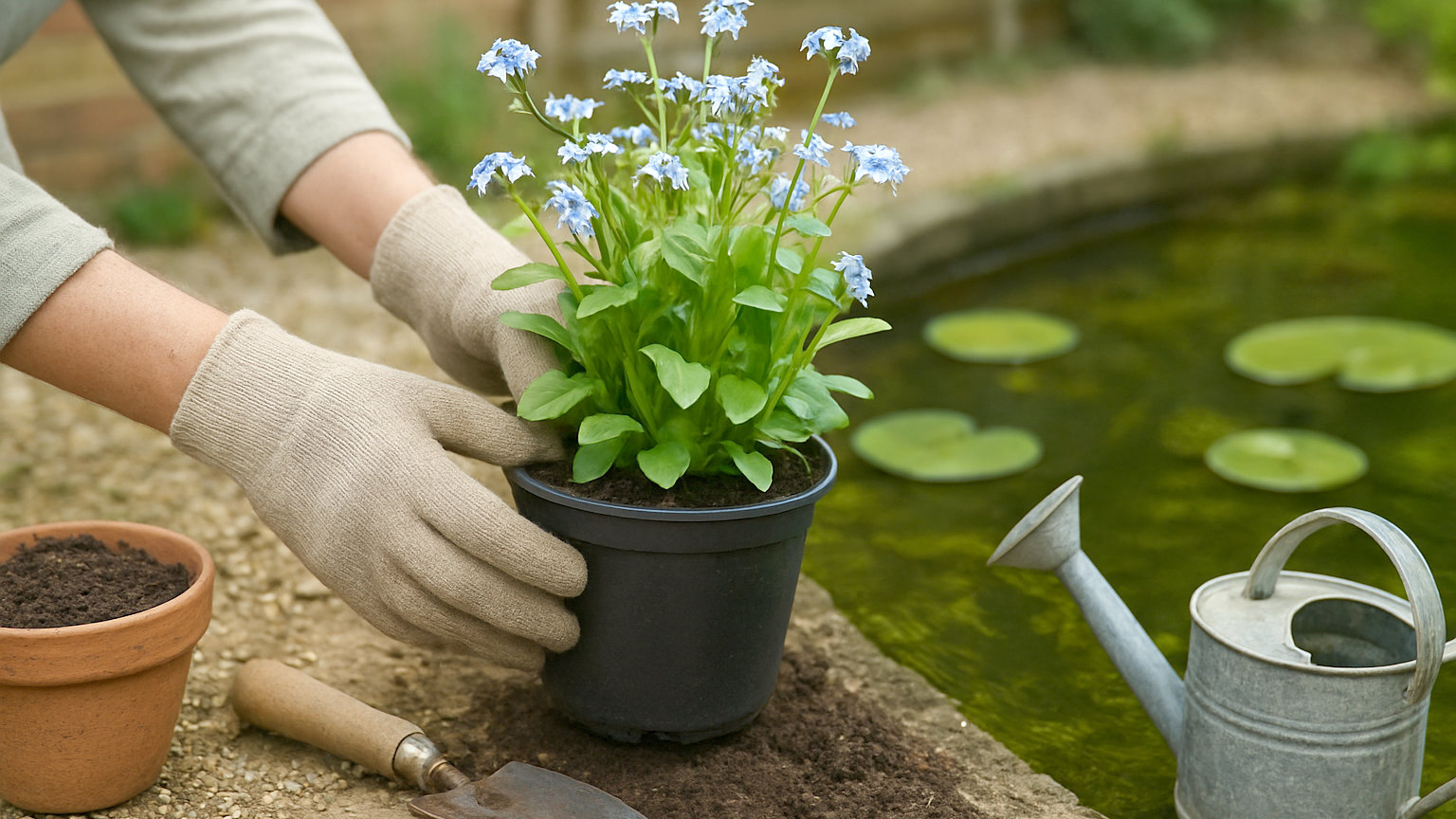
Pond plants are grouped by the depth of water they need, and a good pond has something from each group. The zones do different jobs, and a pond planted only with marginals or only with lilies never balances.
The zones
Bog and damp margin: permanently moist ground beside the pond rather than in it.
Marginal shelf: zero to about three hundred millimetres of water. Most pond plants live here.
Deep water: three hundred millimetres to a metre or more, for water lilies and similar plants rooted in the bottom with leaves at the surface.
Floating: not rooted at all, drifting on the surface.
Submerged oxygenators: growing entirely underwater.
Marginals
The most visible planting and where most wildlife activity happens.
Native and well-behaved choices include marsh marigold, water forget-me-not, water mint, brooklime, flowering rush, purple loosestrife, lesser spearwort and pickerel weed.
Reeds, sedges and rushes give the vertical structure that dragonfly larvae climb to emerge.
Water forget-me-not and brooklime are particularly useful, since they trail into the water and give cover at the edge.
Avoid vigorous species such as reedmace, which is sold as bulrush and will take over a small pond entirely.
Deep water plants
Water lilies are the main group, and choosing the right size is essential.
Lilies are sold by the depth they need, from small ones for two hundred millimetres to vigorous ones needing a metre or more.
A vigorous lily in a small pond covers the entire surface within two seasons and has to be removed.
Aim for lily pads covering somewhere between a third and a half of the surface, which shades the water, reduces algae and gives cover.
Water hawthorn is a useful alternative, flowering in cooler weather when lilies are dormant.
Floating plants
Frogbit and water soldier are native and well behaved, providing surface cover and shelter.
Duckweed arrives uninvited, multiplies rapidly and is difficult to remove entirely. Skim it off with a net regularly.
Oxygenators
Submerged plants that release oxygen, absorb nutrients and provide shelter and egg-laying sites.
Hornwort, water starwort, water crowfoot and spiked water-milfoil are good native choices.
They are the main competitor to algae for nutrients and are what keeps water clear, so a pond should have a reasonable quantity from the start.
Planting method
Use aquatic planting baskets with an aquatic compost, which is low in nutrients specifically so it does not feed algae.
Never use ordinary multipurpose compost or garden soil with added fertiliser, which releases nutrients into the water and causes a persistent algal bloom.
Top the basket with a layer of gravel to stop the compost washing out and to deter fish from disturbing it.
Lower baskets in gradually, propping them on bricks and removing the bricks over a few days, so plants are not submerged suddenly.
Some gardeners plant directly into a layer of soil on the pond bottom, which suits a wildlife pond and makes plants harder to control.
How much
Aim for surface cover of about a third to a half from lilies and floaters combined, and marginal planting round much of the edge, leaving some open water and one clear beach for access.
Plant in spring or early summer, when plants establish quickly.
Invasive species
Several aquatic plants are seriously invasive and it is an offence to plant them or cause them to grow in the wild.
New Zealand pigmyweed, floating pennywort, parrot's feather, water fern and water primrose are among those banned from sale in England.
Buy from a reputable supplier, check the species names, and never tip surplus pond plants or water into a stream, ditch or wild area.
Dispose of excess plant material by composting it well away from any watercourse or drain.
Where the plants come from
Buy from a reputable aquatic nursery rather than taking plants from the wild, which risks introducing disease and invasive species and may be an offence depending on the site.
Rinse new plants and inspect them for duckweed, blanketweed and unwanted snails before adding them to the pond.
Maintenance
Divide and thin plants every few years in late summer or early autumn, before growth slows.
Cut back marginals in autumn or leave the stems standing over winter for insects, cutting in late February instead.
Leave anything removed beside the pond overnight so creatures caught in it can return.


