
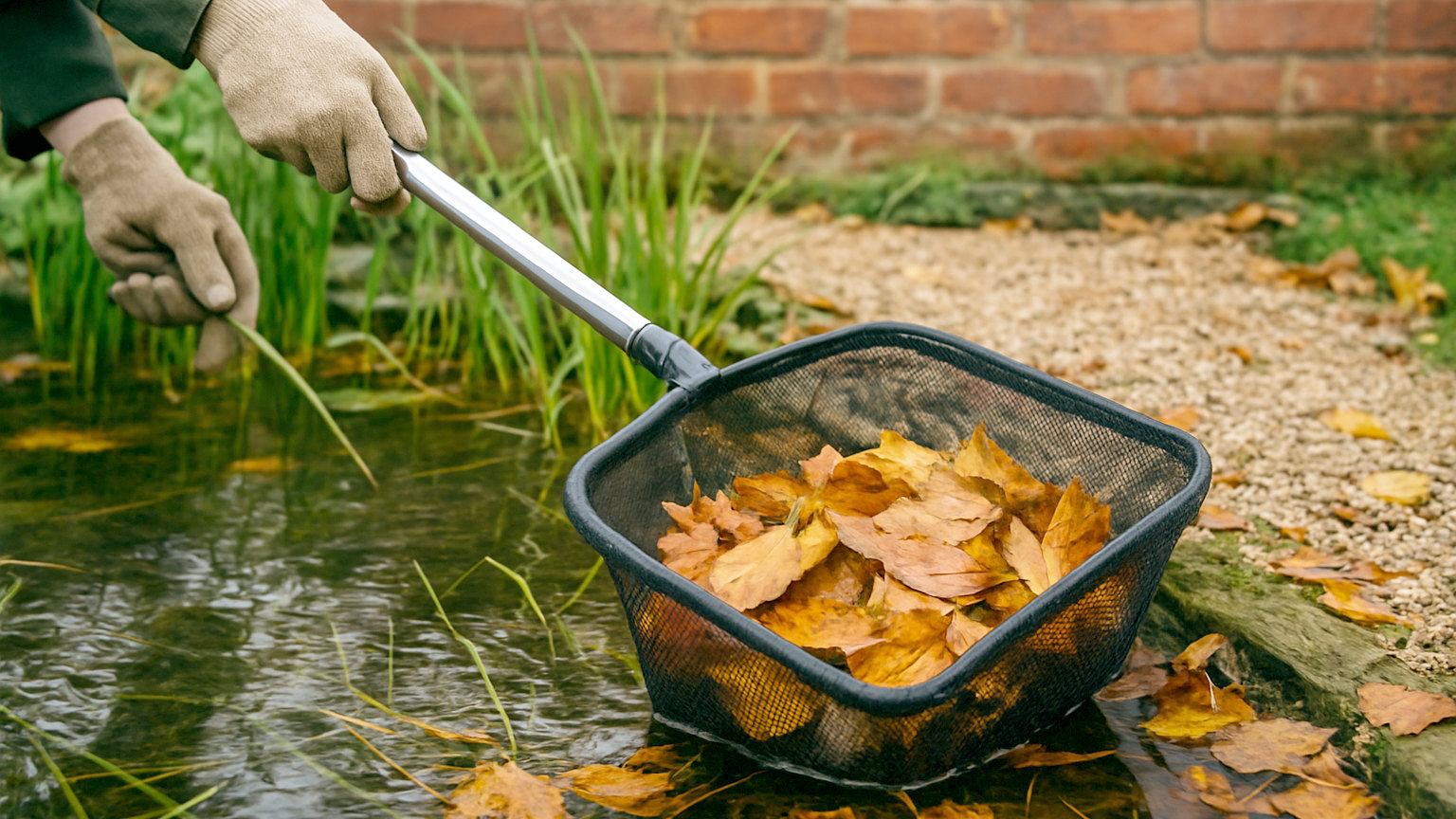
A well-balanced pond needs remarkably little attention, and what it does need is concentrated into autumn. Most of the year the correct action is to leave it alone.
Spring
Remove the leaf netting once the leaves have finished falling and been cleared.
Check the pump and filter if you have them, clean them and restart them.
Check the water level and top up with rainwater where possible.
Divide and replant congested marginals as they come into growth.
Expect green water and leave it alone. The algae grow before the plants and the balance restores itself as the planting comes away.
Avoid disturbing the pond from March onwards, when frogs, toads and newts are breeding. Frogspawn, toad strings and newt eggs are all present and easily destroyed.
Summer
Top up in dry weather, ideally with rainwater. Add water gradually rather than in a rush, which chills the pond.
Remove blanketweed by twisting it out on a stick, leaving everything removed beside the pond overnight so creatures can return.
Thin excessive surface growth so about half the water remains open, and skim duckweed with a net.
Watch for fish gasping at the surface in hot still weather, which indicates low oxygen. Add fresh water and increase aeration.
Deadhead marginals and remove any dying foliage before it falls into the water.
Otherwise, watch it. Summer is when a pond is most interesting and least in need of intervention.
Autumn
The main working season.
Net the pond before the leaves fall, stretched taut and clear of the water surface, and remove it once leaf fall has finished. This is the single most useful pond job of the year, since rotting leaves are the main source of the nutrients that cause algae.
Cut back and remove dying marginal growth, or leave the stems standing for insects and cut in late winter instead.
Remove excess silt if it has built up substantially, taking out no more than about a third and leaving it beside the pond overnight.
Thin and divide plants, again removing no more than about a third of the planting in one season.
Clean the pump and filter.
Autumn is the right time for any substantial work, since the breeding season is over and the wildlife is less vulnerable than in spring.
Winter
Very little to do, and one thing to get right.
Do not break ice by hitting it. The shock wave travels through the water and can harm fish and hibernating amphibians.
Melt a hole by standing a pan of hot water on the surface until it sinks through, or float a ball on the pond before it freezes and lift it out to leave an opening.
An opening allows gases from decomposing material to escape, which matters most in a pond with fish or a lot of leaf litter.
Remove any pump that is not rated for winter use, or raise it so it is not circulating and chilling the deep water where fish are overwintering.
Drain and store any small feature or container that could freeze and crack.
Leave vegetation and leaf litter beside the pond, which is where amphibians shelter.
The full clear-out
Rarely necessary, and only where silt has built up so far that the pond has become shallow.
Do it in autumn, never in spring.
Retain as much of the original water as you can in containers, keep the plants moist, and check everything removed for wildlife before disposing of it.
Refill with rainwater where possible, and return some of the old water and silt to reintroduce the established organisms.
Expect the pond to go green afterwards while the balance re-establishes.
Health
Pond water can carry leptospirosis. Cover cuts, wear gloves and wash your hands thoroughly after working in a pond.
What not to do at any time
Do not empty and refill a pond to clear green water, which destroys the balance and produces a worse bloom within weeks.
Do not disturb the pond during the breeding season from March to July.
Do not remove all the silt, all the plants or all the algae at once, since each supports part of what lives there.
And do not add tap water in quantity when rainwater is available, since it carries nutrients that feed algae.


