
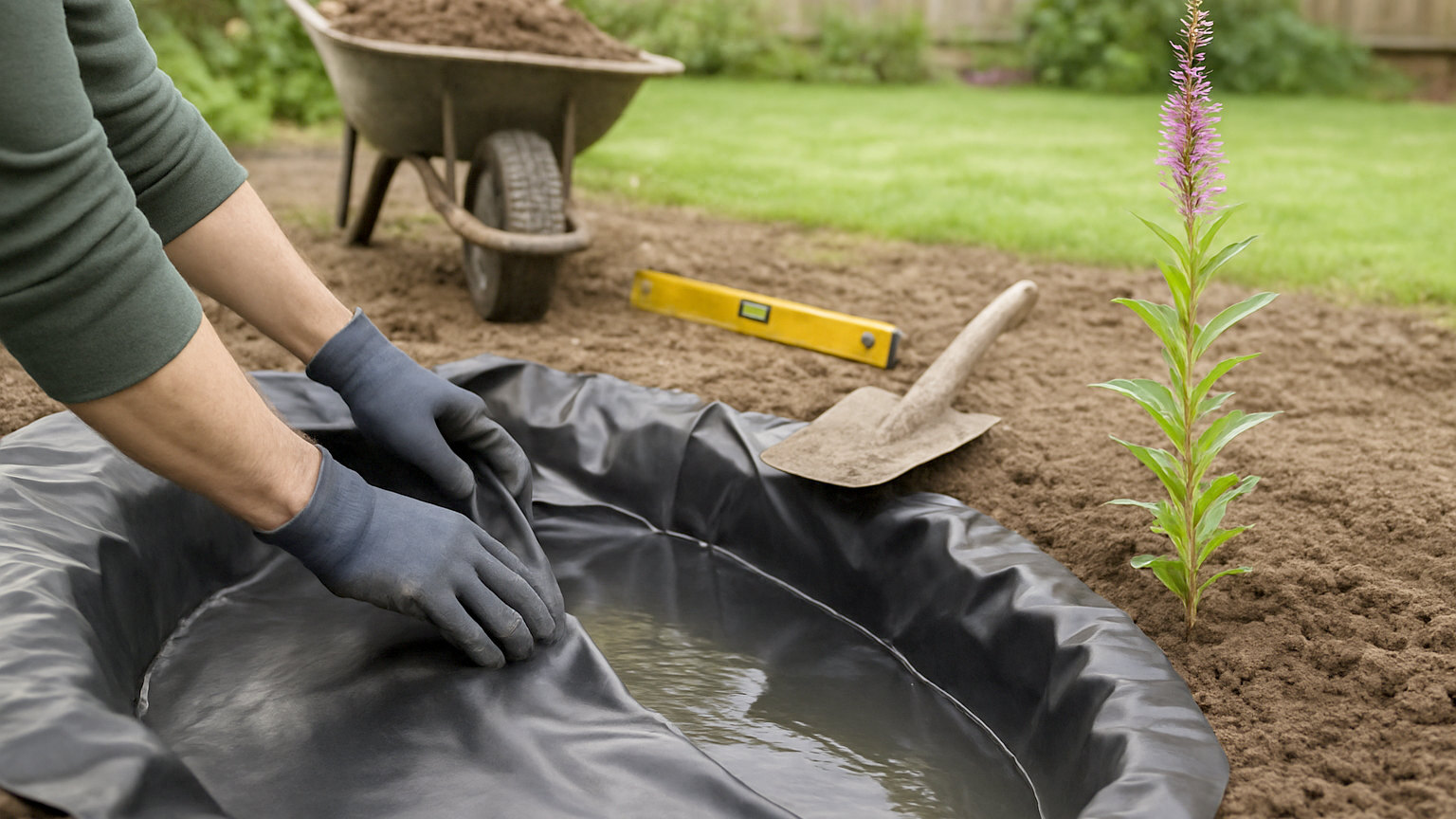
A pond is the single most effective thing you can add to a garden for wildlife. Frogs, newts, dragonflies, birds and countless insects will find it within a season, and a wildlife pond needs no pump, no filter and very little maintenance.
Safety first
Small children can drown in very shallow water, in seconds and silently. If young children use or visit the garden, deal with this before anything else rather than after.
Options include a rigid mesh or grille fixed just below the water surface, strong enough to take a child's weight, or secure fencing with a self-closing gate around the pond area. Alternatively, build a pebble pool or a bubbling feature with the water in a covered reservoir underground, which gives sound and drinking water for birds with no open water at all.
A pond can always be added later. Check with your insurer as well, since some policies have conditions about open water.
Where to put it
Choose a spot in sun for at least half the day, since most pond plants need light and sunlight drives the ecosystem. Some afternoon shade helps limit algae.
Keep it away from overhanging trees. Falling leaves rot in the water, releasing nutrients that cause algal blooms and deoxygenating it. Willow, poplar and cherry are particularly problematic.
Avoid the lowest point of the garden if it collects run-off from lawns or paths, since fertiliser and pesticide washing in causes problems. Check for underground services before digging.
Size and profile
Bigger is easier. A larger volume of water stays more stable in temperature and chemistry, and a pond of three square metres or more is much simpler to keep balanced than a tiny one. That said, even a sunken washing-up bowl supports life.
The profile matters more than the size.
- A deep zone of at least 600mm, so part of it does not freeze solid and amphibians can overwinter
- A shelf at around 200 to 300mm for marginal plants
- A gently sloping beach along at least one edge, which is the most important feature
The beach lets frogs, hedgehogs and birds get in and out. A pond with vertical sides all round is a trap, and animals that fall in cannot climb out.
Lining it
For liner size, add twice the maximum depth to both the length and the width, plus about half a metre overall for the overlap. A pond three metres by two and 600mm deep needs a liner of roughly 4.7 by 3.7 metres.
Butyl or EPDM rubber lasts longest and is flexible enough for irregular shapes. PVC is cheaper and shorter lived. Preformed rigid units are simplest but usually have steep sides, so they need a ramp added.
Remove every stone and root from the excavation, then line it with underlay, old carpet or a thick layer of sand before the liner goes in. A single sharp stone will eventually puncture a liner.
Lay the liner loosely, fill slowly with a hose, and let the water press it into shape, easing out folds as it fills. Trim the surplus only when full, leaving a generous overlap buried under turf or stones.
Filling and planting
Rainwater is far better than tap water, which is high in nutrients and encourages algae. Fill from a water butt if you can, or fill from the tap and leave it a week before planting.
Plant in four groups: oxygenators submerged in the water, floating plants such as water lilies for surface shade, marginals on the shelves, and damp-loving plants around the edge.
Use native species where possible and buy from a reputable supplier. Several invasive aquatic plants are banned from sale and cause serious damage if they escape into waterways, so never take plants from the wild or accept them from an unknown source.
No fish, no pump
Leave a wildlife pond without fish. Fish eat tadpoles, insect larvae and eggs, and a pond with fish supports a fraction of the wildlife of one without.
No pump or filter is needed either. A planted pond balances itself within a year or two. Expect green water in the first spring, which clears as plants establish.
Aftercare
Top up with rainwater in summer. Net it in autumn or clear leaves regularly. Remove excess blanketweed by twisting it out with a stick, and leave it beside the pond overnight so creatures can crawl back.
In winter, if it freezes over, float a ball on the surface or melt a hole with a pan of hot water rather than breaking the ice, which sends shockwaves through the water.


