
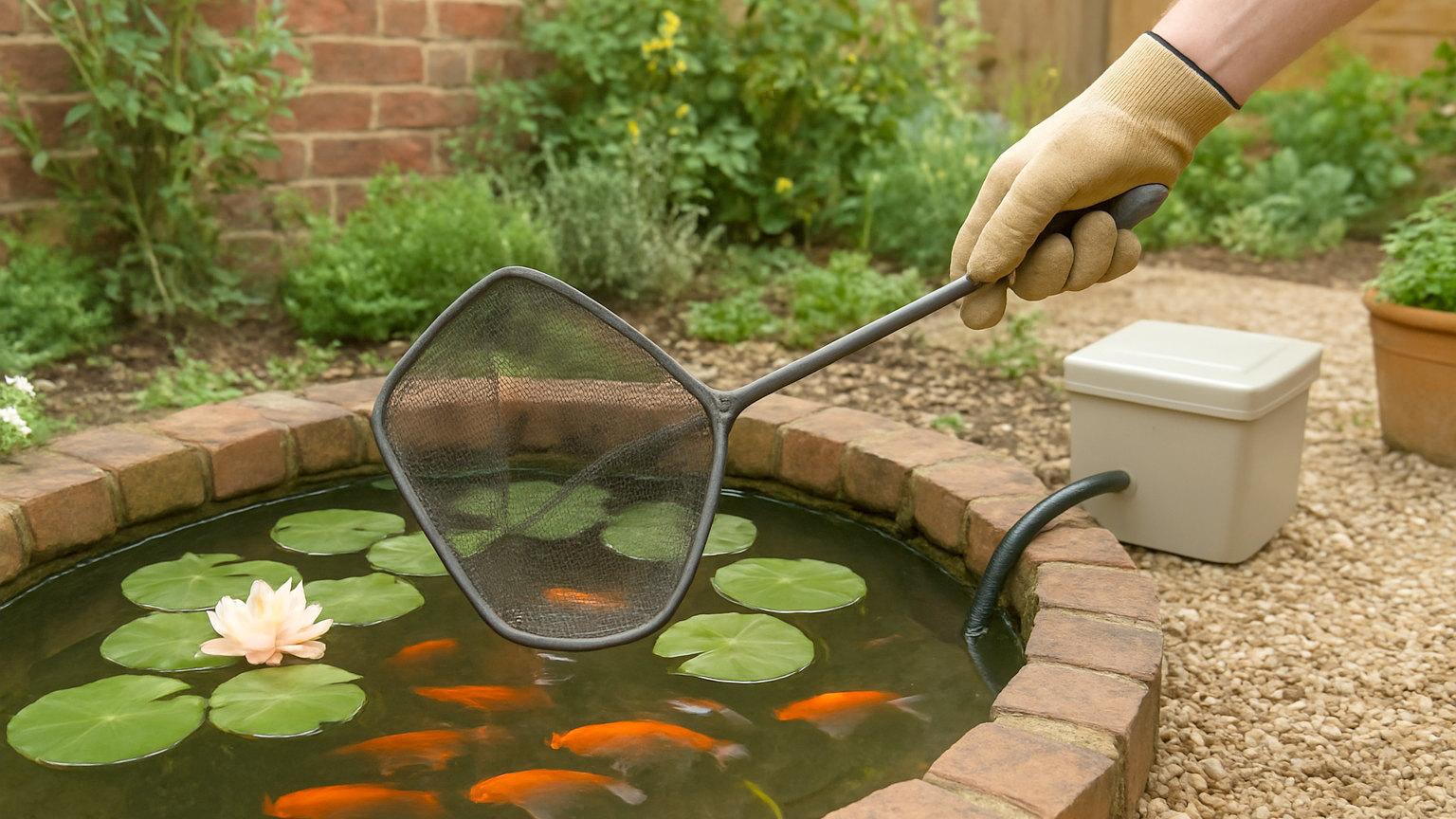
Fish are the commonest addition to a garden pond and the one that most changes what the pond becomes. The decision is worth making deliberately rather than by default.
Fish or wildlife
In a small pond you can have a good wildlife pond or you can have fish, and not really both.
Fish eat tadpoles, newt larvae, insect larvae and eggs. A pond with fish supports a fraction of the invertebrate life of one without, and newts in particular rarely breed successfully alongside them.
Fish also produce waste continuously, which raises nutrient levels and drives algae, and they disturb planting and stir up silt.
In a large pond with heavy planting and shallow margins, some coexistence is possible. In a typical garden pond it is not.
What fish need
Volume. Far more than people assume. A few goldfish need a pond of several thousand litres, and koi need substantially more again, with a depth of at least a metre and a half.
Depth of at least six hundred millimetres so the water does not freeze solid or overheat, and more is better.
Filtration, because the fish load exceeds what planting can absorb. A pump and filter running continuously, sized for the volume and the number of fish.
Oxygen, particularly in hot weather, which usually means moving water from a pump, fountain or waterfall.
Shelter from herons, which take fish from shallow open ponds readily.
Stocking
Understock rather than overstock. The commonest cause of problems in a fish pond is too many fish for the volume and the filtration.
Add fish gradually over months rather than all at once, so the filter can develop the bacteria that process their waste.
A new pond should be left to mature for several weeks before any fish are added.
Goldfish, shubunkins and orfe suit a domestic pond. Koi grow very large, need a substantial specialist setup and are not suitable for an ordinary garden pond.
Feeding
Feed sparingly, only what is eaten within a few minutes, and remove anything uneaten.
Uneaten food decomposes and is a major nutrient input, producing exactly the algal problems people then try to treat.
Stop feeding when water temperatures fall below about ten degrees, since fish cannot digest food properly in cold water.
Fish in a well-planted pond find a good deal of their own food, and need far less feeding than people assume.
Winter
Fish overwinter in the deepest water and become largely inactive.
Do not break ice by hitting it, which sends a shock wave through the water that harms fish and hibernating amphibians.
Melt a hole by standing a pan of hot water on the surface, or float a ball that can be lifted out.
An ice-free area matters because it allows gases from decomposing material to escape.
Remove decaying leaves and vegetation in autumn, which is the main source of those gases.
Common problems
Fish gasping at the surface indicates low oxygen, usually in hot still weather or after a large die-off of algae. Increase aeration, add fresh water and remove decomposing material.
Sudden deaths after a chemical treatment, which is why algicides need great care in a stocked pond.
Herons, which are protected and cannot be harmed. Netting, a heron deterrent, deeper margins and plenty of cover all help.
Chlorinated tap water, which harms fish. Use rainwater to top up, or a dechlorinator.
The commitment
Fish need feeding, the filter needs cleaning, the pump runs continuously, and the pond cannot simply be left alone for a fortnight in the way a wildlife pond can.
Consider that before stocking, and consider what happens when you go away.
Never release them
Do not release surplus or unwanted fish into any watercourse, lake or wild pond. It is damaging and can be an offence.
Rehome them through an aquatic retailer or a local pond keeper instead.
If you inherit fish
A pond bought with a house frequently comes with fish, and the choice is then whether to keep them.
Rehoming them and letting the pond become a wildlife pond transforms what it supports within two or three seasons, and removes the filtration and feeding commitment entirely.
Keeping them means maintaining the filter, feeding through the season and accepting a quieter pond in terms of amphibians and invertebrates.


