
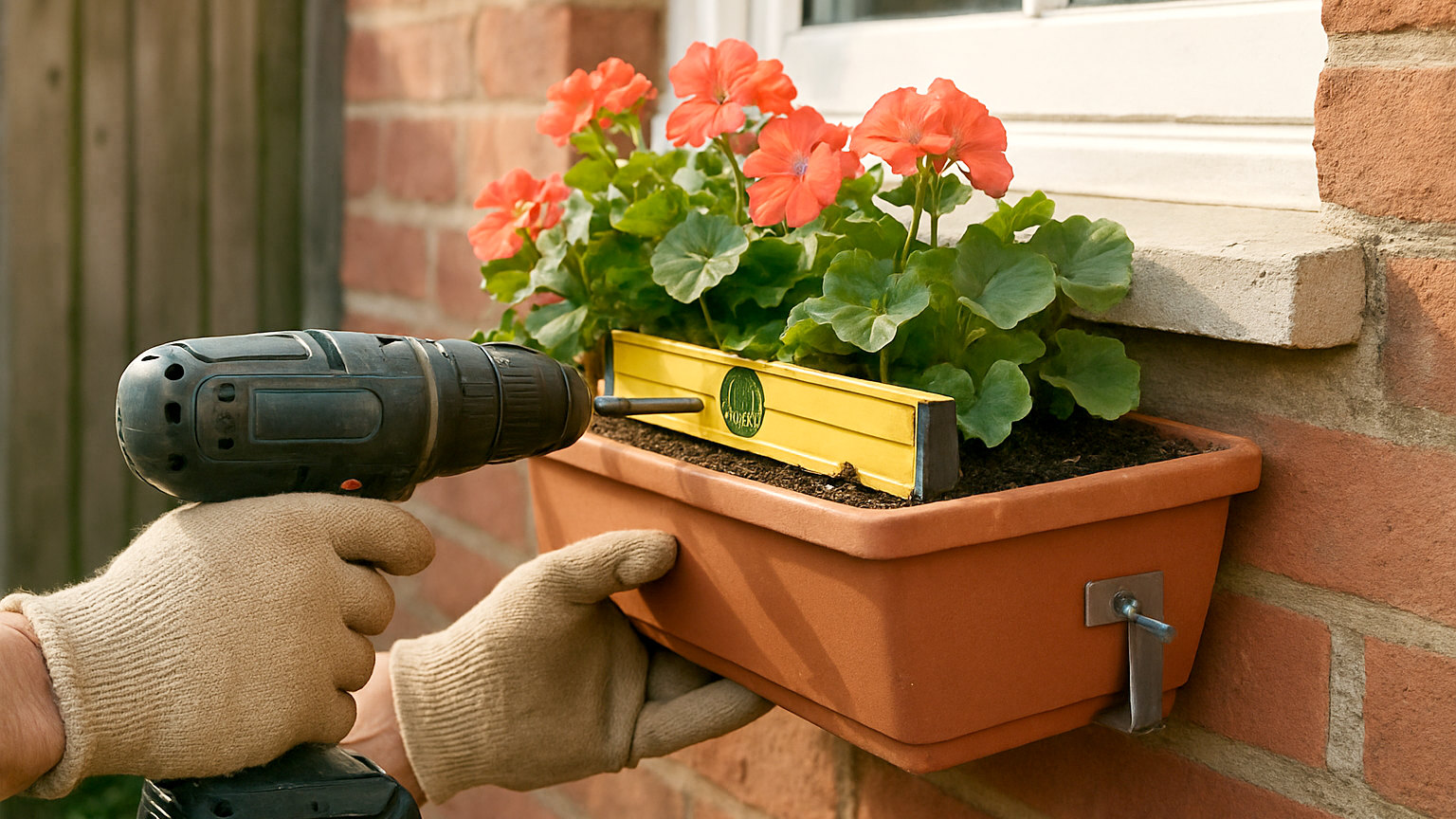
A window box is the smallest useful garden there is, and available to almost everyone. It is also the container most likely to fall on somebody, so the fixing deserves as much thought as the planting.
Fixing it safely
A window box full of wet compost is heavy, and above ground floor level a fall could be fatal.
Never simply rest a box on a sill, particularly a sloping one.
Use purpose-made brackets rated for the load, fixed into sound masonry with appropriate plugs, or a retaining bar or rail across the front.
Check the fixings at least annually and after any gale.
Where the box sits above a pavement, path or neighbouring property, treat the fixing as a safety-critical job rather than a decorative one.
Check the lease or tenancy for flats, since many restrict window boxes and fixings to the building fabric entirely.
Choosing a box
Wider and deeper is better, as with any container. Depth of at least twenty centimetres suits most planting; twenty-five or more is better.
Lightweight materials reduce the load: fibreglass, composite and plastic weigh far less than terracotta or stone.
Timber insulates well and needs lining, leaving the drainage holes clear.
Make sure it has drainage holes, and consider where the water will go when you water it.
A liner or an inner pot makes seasonal replanting far easier, since the display can be swapped without disturbing the box.
Drainage and drips
Water running down a wall stains it, and water dripping onto a pavement or a neighbour's balcony causes complaints.
Use a drip tray beneath, or water carefully and sparingly rather than flooding the box.
Do not let a box stand permanently in water, which drowns the roots.
Compost
Use a peat-free multipurpose for seasonal displays, replaced each year, or a loam-based mix for permanent planting, which holds moisture and nutrients better.
Add water-retaining granules for summer displays, since a shallow box dries very fast.
Do not fill to the brim; leave a couple of centimetres for watering.
Watering and feeding
Window boxes dry out faster than almost any other container, being shallow, exposed and often against a warm wall.
Expect to water daily in summer, and twice daily in a hot spell on a south-facing wall.
Mix slow-release granules into the compost at planting, and add a weekly liquid feed from midsummer.
Planting
The classic formula is something upright, something filling and something trailing over the edge.
Summer: pelargoniums, petunias, bidens, verbena, nemesia, trailing lobelia.
Autumn and winter: violas, cyclamen, heuchera, small evergreens, ivy, skimmia, with bulbs planted beneath for spring.
Spring: dwarf narcissi, crocus, muscari, primroses.
Permanent: small evergreens, thyme, sedums and sempervivums, which tolerate drying out and need little.
Herbs: thyme, chives, parsley, marjoram and mint in its own compartment, on a sunny kitchen sill.
Match the planting to the aspect. A north-facing box suits ferns, ivy, violas and heuchera; a south-facing one suits Mediterranean herbs and drought-tolerant bedding.
Indoor windowsills
A bright sill grows herbs, salad leaves, microgreens and chillies through much of the year.
Rotate pots regularly, since plants lean towards the light and become one-sided.
Beware the temperature swing: a sunny sill can be very hot by day, and the space behind a closed curtain on a winter night is much colder than the room.
Water less than you expect indoors, since there is no wind and no rain, and overwatering is the usual cause of failure.
Making it work
Plant more densely than you would in the ground, since a box is a display rather than a growing bed and will be replanted anyway.
Replace seasonal planting two or three times a year, which keeps a window box looking deliberate rather than tired.
Wildlife
Even a window box supports pollinators if the planting is single-flowered rather than double, and nectar-rich.
Herbs left to flower, particularly thyme, marjoram and chives, are excellent for bees and cost nothing extra.
Aspect matters most
Before choosing plants, establish which way the window faces and how much sun the sill actually receives, since that determines everything else.
A box that never gets direct sun can still be good, planted for foliage rather than flowers, using ferns, ivy, heuchera and violas.


