
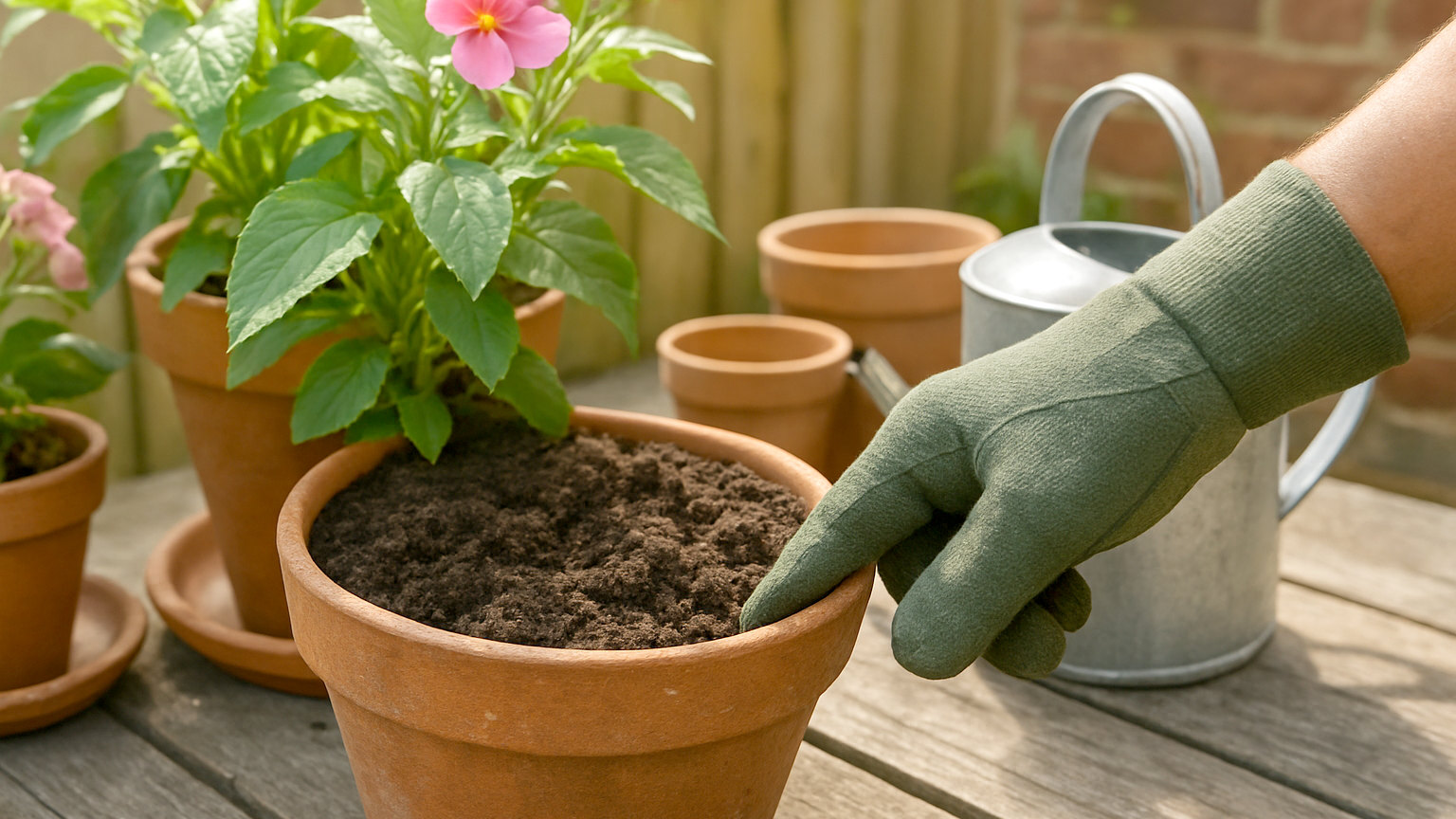
Almost every container plant that dies, dies of drought, and a good proportion of the rest drown. Both come from watering by habit rather than by checking.
Judge by weight and touch
The surface tells you very little, particularly with peat-free composts, which look dry on top while remaining moist below.
Push a finger into the compost to the second knuckle. If it is moist at that depth, leave it.
Lift or tilt the pot. A dry container is dramatically lighter than a wet one, and after a few weeks you can judge it instantly.
A moisture meter is useful for large pots where neither method is practical.
Water thoroughly, not often
A splash across the surface wets the top centimetre and encourages roots upwards, where they dry out fastest.
Water until it runs freely from the drainage holes, which means the whole rootball is wet.
Then leave it until it needs water again rather than topping up daily out of habit.
With a very dry pot, water runs straight down the gap between the compost and the pot wall without wetting anything. Stand the pot in a bucket or a tray of water for half an hour instead, until the compost has taken it up.
When
Early morning is best, so the plant has water available before the heat, and the foliage dries.
Evening is the next best, and leaves foliage damp overnight, which can encourage disease.
Midday watering in strong sun is wasteful through evaporation and not otherwise harmful.
In hot weather, small containers may need water twice a day. This is not a sign of doing something wrong; it is the nature of a small volume of compost in the sun.
Reducing the work
Use larger containers. The single most effective change.
Group pots together. They shade each other, raise local humidity and reduce evaporation, and they are quicker to water in one place.
Mulch the surface with gravel, bark or slate, which cuts evaporation noticeably.
Move pots out of the worst positions. Against a hot south-facing wall or on a windy balcony, plants dry out remarkably fast, and wind dries them faster than sun.
Choose plants that cope. Sedums, sempervivums, lavender, rosemary, grasses and pelargoniums tolerate drying out. Hydrangeas, hostas and most vegetables do not.
Use water-retaining granules in seasonal displays, or a compost containing them.
Irrigation
For more than a handful of pots, drip irrigation on a timer is transformative.
A kit with a timer at the tap, a supply pipe and an adjustable dripper into each pot costs modestly and removes the daily job entirely.
Run it in the early morning, check it regularly since drippers block, and adjust the run time by season rather than leaving it on the summer setting all year.
Any permanent connection to a mains water supply requires a backflow preventer under water regulations, to stop garden water being drawn back into the drinking supply.
Check whether a hosepipe ban is in force before using one, since breaching a Temporary Use Ban is a criminal offence, and the rules vary by supplier.
Going away
Move all containers into shade, group them together and water thoroughly before leaving.
A timer and drip system handles anything longer than a few days.
Capillary matting with one end in a reservoir works for smaller pots.
Ask a neighbour for anything valuable, and leave clear instructions.
Overwatering
Constantly saturated compost excludes air, and roots rot.
The symptoms resemble drought, since damaged roots cannot take up water: wilting, yellowing and collapse.
Check the compost before watering a wilting plant, since watering a drowning one finishes it.
Remove saucers in winter and raise pots on feet so water drains away freely.
Water quality
Rainwater is better than tap water for everything, and essential for camellias, rhododendrons and blueberries, which are damaged by the lime in hard water.
A water butt fed from a shed, greenhouse or garage roof supplies a surprising amount, and even a small butt on a downpipe is worth having.
Keep butts lidded and secured, both to keep the water clean and because open water is a drowning risk to small children.
New plantings
Anything newly potted needs more frequent watering than an established container until the roots have grown out into the compost, which takes several weeks.


