
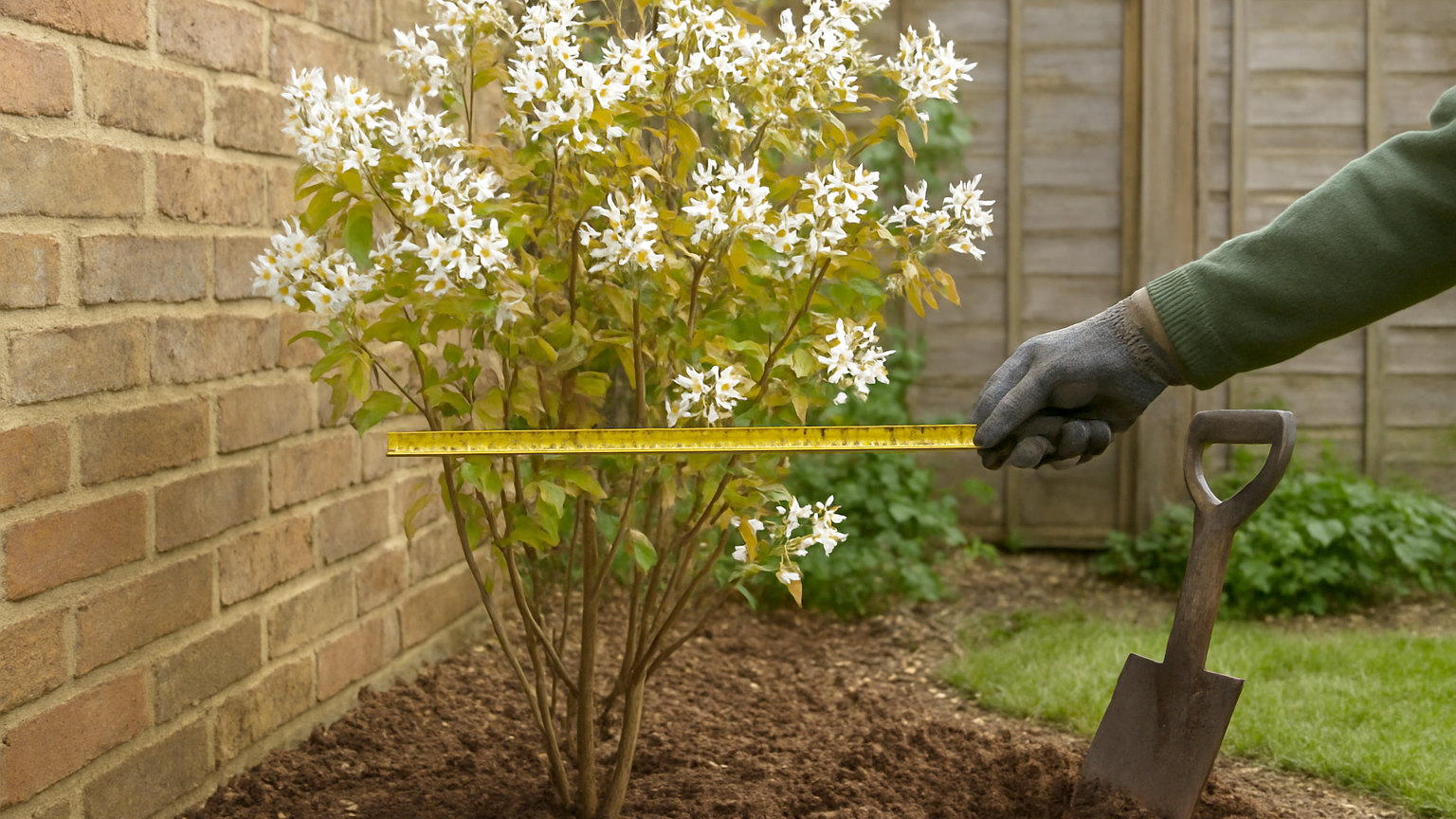
A tree gives a small garden height, shade, structure and a sense of maturity that nothing else provides. Choosing one that will not outgrow the space is the whole of the decision.
Judge by eventual size
Nursery labels quote size at ten years, which is not the same as the mature size.
Find out the ultimate height and spread and plant on that basis.
A tree that will reach twelve metres does not belong in a small garden, however attractive it is at two.
For most small gardens, aim for something reaching four to seven metres.
Distance from buildings
Two separate concerns.
Practical: shade cast on the house and the garden, gutters filled with leaves, branches against the building, and light lost from windows.
Structural: on shrinkable clay soils, trees can contribute to subsidence by drying the ground, and removing a mature tree near a building can cause heave.
Species and soil both matter enormously. Willow, poplar and large elms are the worst offenders and have no place near a house.
Where the soil is clay and the building is close, take advice before planting anything substantial, and check any guidance your insurer provides.
Also consider drains, which roots exploit where joints have already failed, and boundaries, since overhanging growth becomes a neighbour's grievance.
Multi-stemmed forms
Particularly good in small gardens.
A multi-stemmed tree has several trunks from near ground level, giving a lighter, more sculptural form, less dense shade, and more visual interest at eye level.
Amelanchier, birch, cornus and hazel are all grown this way.
Reliable choices
Amelanchier lamarckii: perhaps the best all-round small garden tree. White blossom, good autumn colour, berries for birds, light canopy, reaching around six metres.
Crab apple: blossom, fruit for wildlife and pollination for nearby apples. Many varieties suit small gardens.
Birch: light canopy that casts dappled shade, white bark for winter interest. Choose a smaller variety and consider multi-stemmed forms.
Acer griseum: peeling cinnamon bark, superb autumn colour, slow and modest in size.
Cercis siliquastrum: flowers directly on the bare branches in spring, heart-shaped leaves.
Sorbus: berries and autumn colour, with several compact varieties.
Magnolia stellata: slow, spreading and outstanding in early spring.
Hawthorn: tough, wildlife-friendly and tolerant of almost anything.
Trained fruit as an espalier or a fan takes almost no ground and produces a crop.
Planting
Autumn to early spring, while dormant, and bare-root plants bought in that window cost a fraction of container-grown ones.
Dig a wide shallow hole rather than a deep one, at the same depth the tree grew before.
Do not add fertiliser to the planting hole. Improve a wide area instead.
Stake low and short, at about a third of the stem height, and remove the stake after two or three years.
Keep a mulched circle clear of grass around the base, which speeds establishment more than anything and prevents strimmer damage, which kills young trees within seconds.
Water thoroughly through the first two or three summers.
Trees in containers
Possible for a limited period with the right species: acers, olives, bay, small crab apples and trained fruit on dwarfing rootstocks.
Use the largest container practical with loam-based compost, water reliably, topdress annually and repot or root prune every few years.
Expect a container tree to be smaller, shorter lived and more demanding than one in the ground.
Before planting
Check for Tree Preservation Orders and conservation area status if any existing tree is involved, and check for buried services before digging.
Work on a protected tree without consent is an offence carrying substantial penalties.
Position
Consider the shade the tree will cast in ten years, and on whom, since a tree that shades a neighbour's garden or windows creates a lasting grievance.
Place it where it will be seen from the house, and where it frames a view rather than blocking one.
A tree towards the boundary rather than the centre leaves the ground usable and still gives the height, though allow for the eventual spread crossing the line.
A neighbour is entitled to cut back growth overhanging their side to the boundary, which can leave a lopsided tree.
What a tree gives
Height and scale, dappled shade, seasonal change, screening from above where nothing at ground level helps, and habitat.


