
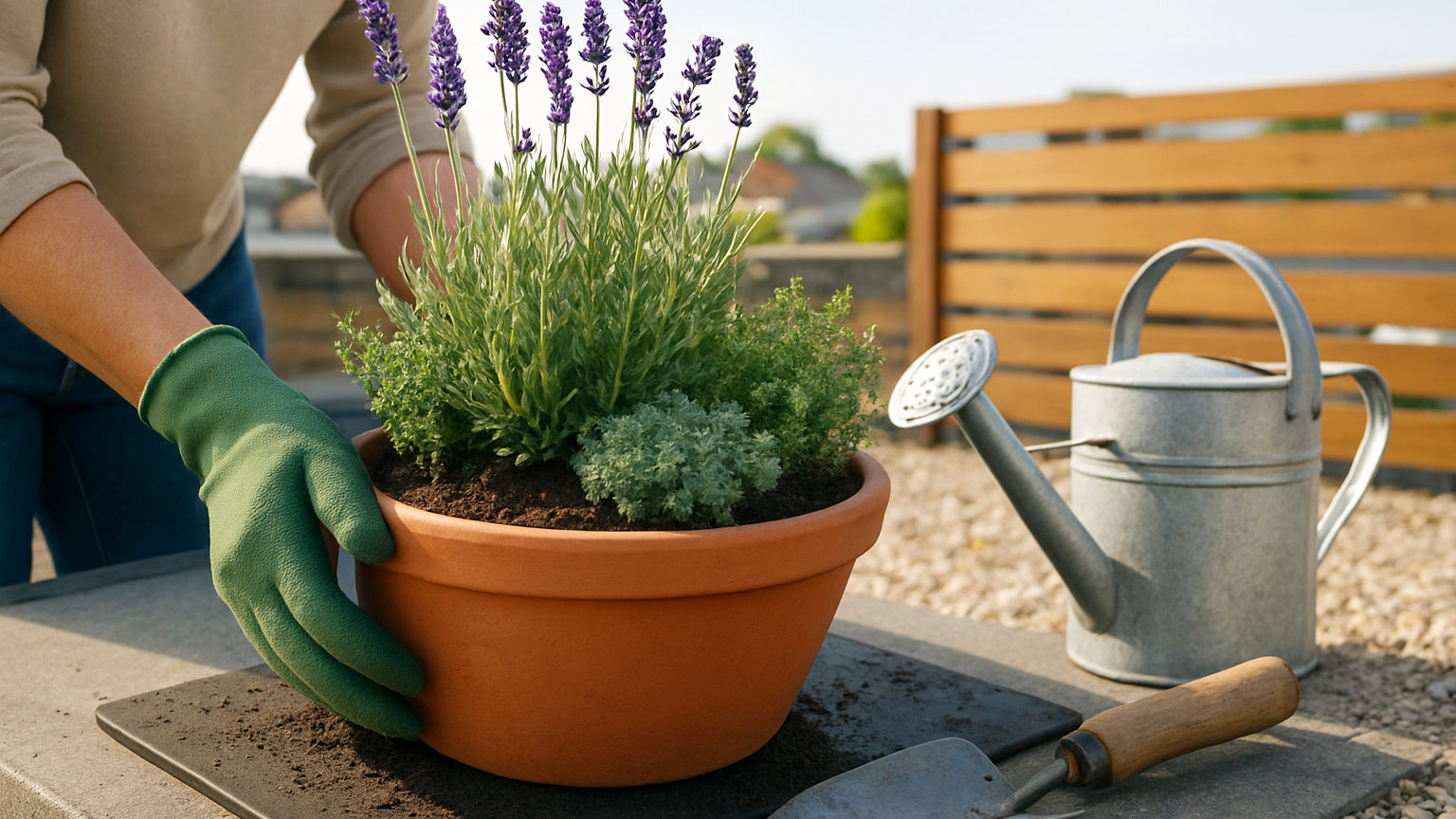
A roof terrace offers space and light that a ground-level garden in the same location would not. It also concentrates every difficulty of container growing: exposure, weight, drainage and access.
Structure first
Establish the loading capacity before anything else.
Roofs are designed for specific loads, and a planted terrace with saturated compost, paving, water and people can substantially exceed what a roof was built for.
This requires a structural engineer, not an estimate. Consult one before committing to any layout.
Concentrate weight over load-bearing walls and columns at the perimeter rather than mid-span.
Where the roof is not designed for a terrace, converting it is a substantial project needing structural work, building regulations approval and usually planning permission.
The waterproof membrane
Everything above depends on it, and a leak is expensive and disruptive.
Do not fix anything through the membrane.
Use a root barrier beneath any planting, since roots find and exploit the smallest weakness.
Use a protection layer and a drainage layer above the membrane before any build-up.
Keep drainage outlets accessible and clear them regularly, since a blocked outlet on a flat roof leads to ponding and eventually to serious weight and water problems.
Design so the membrane can be inspected and eventually replaced, which means avoiding permanently fixed heavy structures over it.
Wind
The dominant factor on any roof, and far more severe than at ground level.
Wind dries plants far faster than sun does, scorches foliage, and shreds anything large-leaved.
Anything that could be blown off must be secured, since a falling object from a roof is potentially fatal. Check fixings regularly.
Use permeable screening rather than solid, which filters wind rather than creating turbulence, and fix it to structure capable of taking the load.
Choose plants that cope: grasses, pines, junipers, sedums, lavender, rosemary, santolina, hebes, elaeagnus, olive in a mild area.
Plant densely and low, and let taller planting shelter within it.
Growing medium
Use a lightweight mix, incorporating perlite or a proprietary roof-garden substrate, rather than loam-based compost.
Dry weight matters less than saturated weight, which is what the engineer will be calculating.
Shallower build-ups with drought-tolerant planting, along the lines of a sedum roof, weigh far less than deep containers with shrubs.
Irrigation
Effectively essential rather than optional.
Exposure and shallow rooting mean containers dry out extremely fast, and hand watering on a roof in summer is a daily commitment.
Fit drip irrigation on a timer, with a backflow preventer on any mains connection as required by water regulations.
Check drippers regularly, since a blocked one kills a plant within days in these conditions.
Access and logistics
Everything has to be carried up, including compost, pots and paving.
Consider how a large container will be got there, and whether it can ever be removed.
Plan for waste as well: prunings, spent compost and dead plants all have to come down.
Safety and permissions
Guarding must be adequate for the height, at the appropriate standard, with no climbable horizontal rails and no gaps that a child could pass through.
Check the lease, which may restrict use, planting, fixings and structures.
Check whether planning permission is needed, since creating or altering a roof terrace usually requires it, particularly where it overlooks neighbours.
Never use a barbecue, fire pit or fuel-burning heater in any enclosed or partly enclosed space, because of carbon monoxide.
What it gives
Light, space and outlook that a shaded urban ground-floor garden cannot, and a genuinely useful growing environment for sun-loving and drought-tolerant planting.
It also insulates the building, absorbs rainfall and supports pollinators, all of which are real benefits in a dense urban area.
Starting modestly
A few lightweight containers of tough planting, properly secured and irrigated, tests the conditions before committing to a full installation.
What survives a winter and a summer on your particular roof tells you more than any plant list will.
Even then, nothing goes on a roof until the loading has been established by someone qualified to assess it.
Maintenance
Check fixings, drainage outlets and irrigation regularly, and inspect the membrane wherever it can be seen.
Clear leaves and debris promptly, since a blocked outlet on a flat roof is a serious problem rather than a nuisance.


