
What makes a small garden feel small is taking it in at a single glance from the back door. Almost every effective technique for making one feel larger comes down to interrupting that view so the eye discovers the space gradually instead.
Hide part of it
If you can see the whole garden at once, the brain measures it instantly. Break that up and it reads as larger than it is.
A screen, an archway, a well-placed shrub or a change of level partway down creates the suggestion of somewhere else to go. It does not need to hide much. A glimpse through a gap is more effective than a full screen, because the eye follows it.
A path that curves out of sight, even briefly, does the same job.
Use the diagonal
The longest line in any rectangular space is the diagonal. Laying out paths, paving and beds at forty-five degrees to the boundaries uses that longer dimension and pulls the eye across the plot rather than straight down it.
It also breaks up the boxy feel of a rectangular plot with parallel fences, which is what makes small gardens read as corridors.
Circular themes work similarly. A circular lawn or paved area in a narrow garden disguises the shape of the boundaries entirely.
Limit the palette
Too much variety makes a small space feel cluttered and therefore smaller. Restricting yourself to a few plants used repeatedly, and two or three colours, gives a calm coherent result that reads as one space rather than a collection of small ones.
Repetition is the technique that does most work here. The same plant recurring along a border ties the whole garden together.
Cool colours, blues, purples and whites, recede visually and make a boundary feel further away. Hot reds and oranges advance and bring it closer, so use them near the house if at all.
Go vertical
Floor space is what you lack; wall space you probably have plenty of.
Climbers on every fence and wall, wall-mounted planters, trellis, shelving, and trained fruit as espaliers or cordons all add planting without taking ground. Green boundaries also make a fence recede, whereas a bare fence emphasises exactly where the garden stops.
A small multi-stem tree adds height and a canopy to look through, and takes very little ground area. Contrary to instinct, height makes a small garden feel bigger rather than more enclosed.
Fewer, larger containers
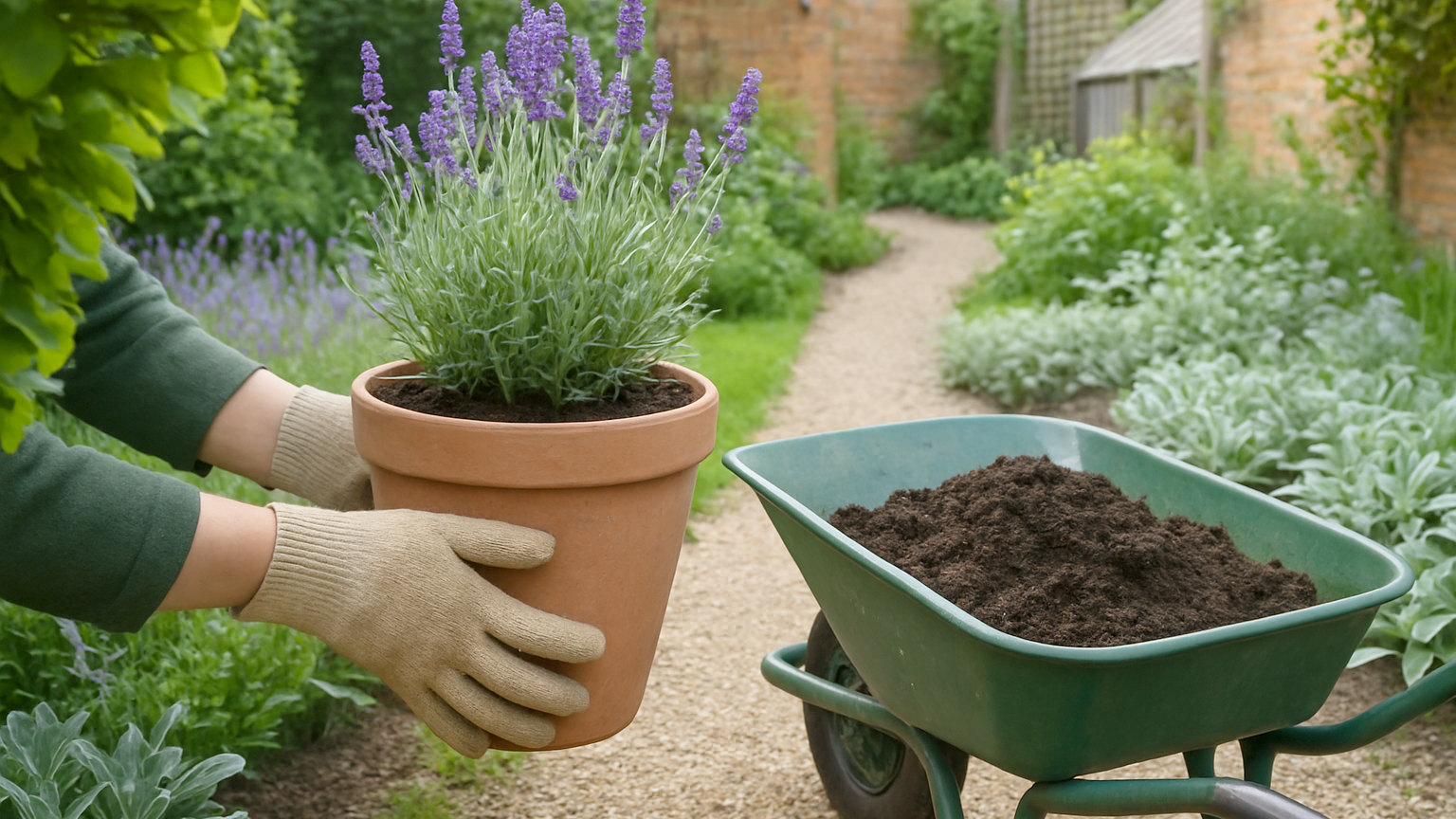
A collection of small pots reads as clutter and dries out constantly. Three or five large containers look considered, hold more compost so they need less watering, and support substantial plants.
Repeating the same pot in the same material several times is more effective than a mixture, for the same reason as limiting the plant palette.
Keep the boundaries dark
Painting fences a dark colour, charcoal, deep green or near-black, makes them recede visually and throws the planting forward. It is counterintuitive and it works far better than the pale orange fence stain that most gardens have.
Dark backgrounds also make foliage read more clearly, which matters in a space where every plant is seen close up.
Multi-purpose everything
Built-in seating with storage underneath, a table that folds against a wall, a bench doubling as a raised bed edge. In a small garden, anything doing one job only is expensive in space.
Scale the furniture down too. Full-size garden furniture overwhelms a courtyard and stops it being used.
On mirrors
Mirrors are frequently recommended and are worth a caution. They can work, particularly set behind an arch or a gate frame so the reflection reads as a continuation.
Birds fly into them, sometimes fatally, so break the reflection with planting in front, use them where they reflect foliage rather than open sky, and avoid large unobstructed panels. Use exterior-grade acrylic or proper outdoor mirror rather than an indoor one, which will delaminate.
Lighting extends it
A few well-placed low-level lights make a small garden usable after dark and, seen from indoors on a winter evening, turn a black window into a view. Uplighting a single tree or washing a textured wall does more than a string of bright lights, which simply reflects off the glass and shows you your own reflection.
Keep the floor simple
One paving material used throughout, laid diagonally, makes a small space feel larger than two or three materials in patches. The same applies to gravel or decking: continuity reads as size, and change reads as division.


