
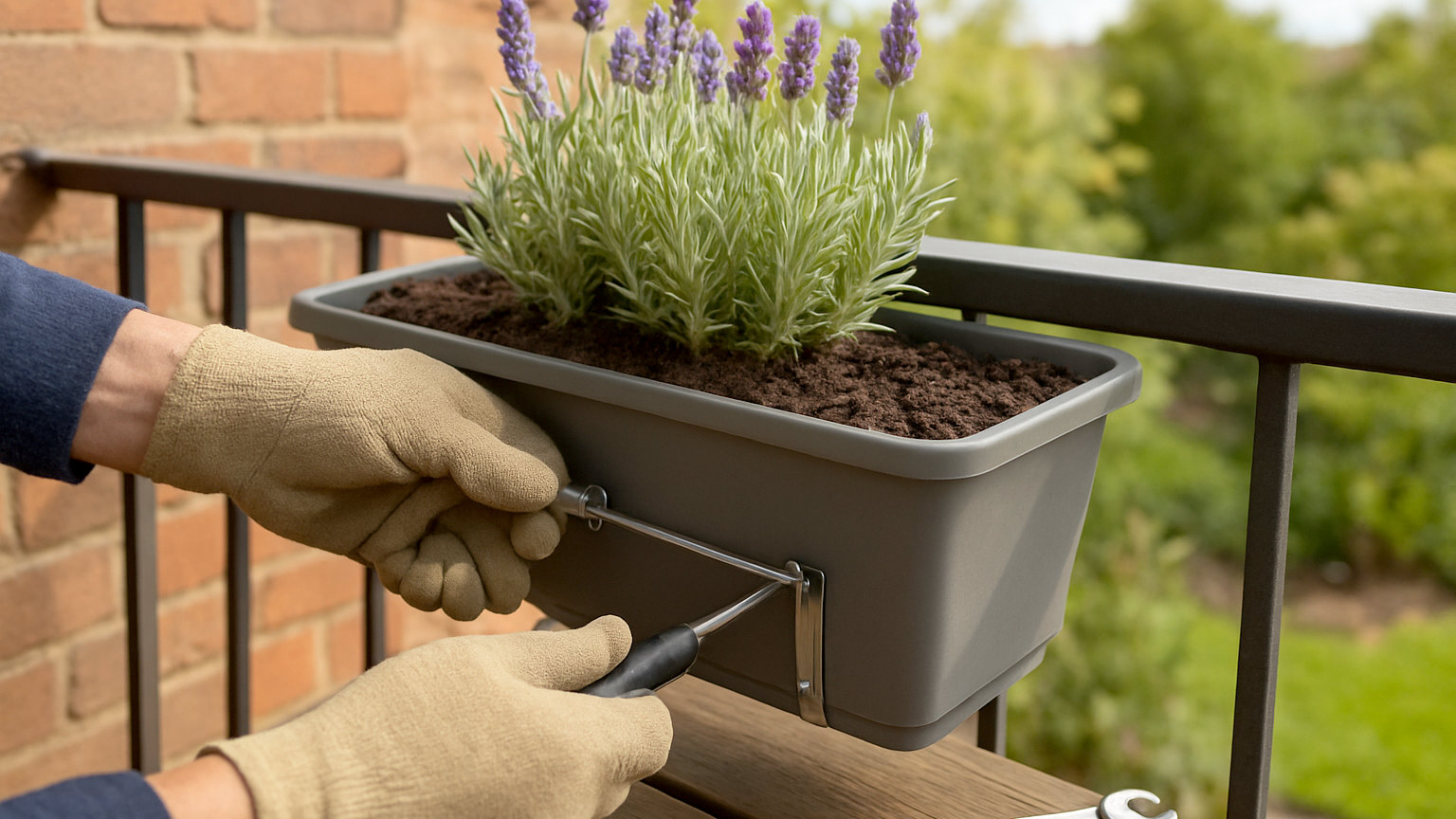
A balcony can be a genuinely productive garden, and the constraints are different from those at ground level. Three things need checking before you buy anything: what the structure will carry, how much wind it gets, and what your lease or landlord permits.
Weight, which is the serious one
Wet compost is far heavier than people expect. A large container filled with soaked compost can weigh over a hundred kilograms, and several of them along one edge represent a substantial load.
Balconies have design load limits, and older ones especially may not tolerate a heavy garden. If you are planning anything substantial, check with the building manager, the freeholder or a structural engineer.
Reduce weight where you can. Use lightweight peat-free compost rather than soil-based mixes, choose fibreglass, plastic or resin containers rather than terracotta and stone, and fill the bottom third of deep pots with a lightweight void filler. Distribute weight around the edges near load-bearing walls rather than concentrating it in the centre.
Check the lease
Many leases and tenancy agreements restrict what may be placed on a balcony, particularly anything hung on the outside of railings, anything fixed to the building, and sometimes anything visible above the balustrade.
Fire regulations increasingly restrict what can be kept on balconies in blocks of flats, including combustible materials and barbecues. Check the building's own rules, which may be stricter than the lease.
This is worth five minutes before spending anything, and it prevents being asked to remove it all later.
Wind
Wind is stronger and more turbulent several floors up than at ground level, and it is the main reason balcony plants fail. It dries compost extremely fast, shreds large leaves and blows containers over.
Filter it rather than blocking it. Slatted screens, trellis with a climber, or open mesh panels reduce wind speed without creating the turbulence a solid barrier produces on its leeward side.
Choose wind-tolerant plants with small, tough or narrow leaves: ornamental grasses, rosemary, lavender, thyme, hebe, pine and euonymus all cope. Avoid large soft foliage such as hostas and anything tall and top-heavy.
Secure everything. Anything that can fall from a balcony is dangerous to people below, so tie tall plants to a rail, weight the bases of containers, and never balance a pot on the balustrade.
Sun and shade
Balconies are often extreme in one direction or the other. A south or west-facing balcony can be exceptionally hot, with heat reflecting off walls and glass, while a north-facing one may get no direct sun at all.
Match plants to what you have rather than fighting it. Mediterranean herbs, pelargoniums and succulents thrive in the hot version; ferns, hostas where wind allows, ivy and heuchera cope with the shaded one.
Watering
Containers in wind and sun dry out remarkably fast, and daily watering in summer is normal. Twice daily is not unusual on an exposed south-facing balcony in a heatwave.
Self-watering containers with a reservoir are worth the money here more than anywhere. Water-retaining granules mixed into the compost help, as does grouping pots together so they shade one another.
Think about drainage before watering. Water running off a balcony onto the flat below or down a wall causes complaints and can cause damage. Use saucers, and empty them rather than leaving pots standing in water.
What grows well
Herbs are the obvious success, since most want the sun and sharp drainage a balcony provides. Salad leaves crop quickly in shallow containers. Chillies, tomatoes and dwarf French beans all work in a sunny sheltered spot.
Strawberries in hanging containers, dwarf fruit trees on very dwarfing rootstocks, and compact perennials all suit the space. Climbers on a trellis add height and privacy without taking floor area.
Compost and feeding
Use a good peat-free multipurpose compost and refresh the top few centimetres each spring, replacing it entirely every two or three years. Container compost is exhausted within about six weeks of planting, so feed weekly through the growing season with a balanced liquid feed, switching to a high-potassium one for anything fruiting.
A small wormery or bokashi bin deals with kitchen waste and produces feed, and both work in a space too small for a compost heap.
Wildlife still finds you
Bees and butterflies reach balconies several floors up readily. Single-flowered plants with open centres, herbs allowed to flower, and lavender all attract them, and a shallow dish of water with pebbles in it gives insects somewhere to drink.


