
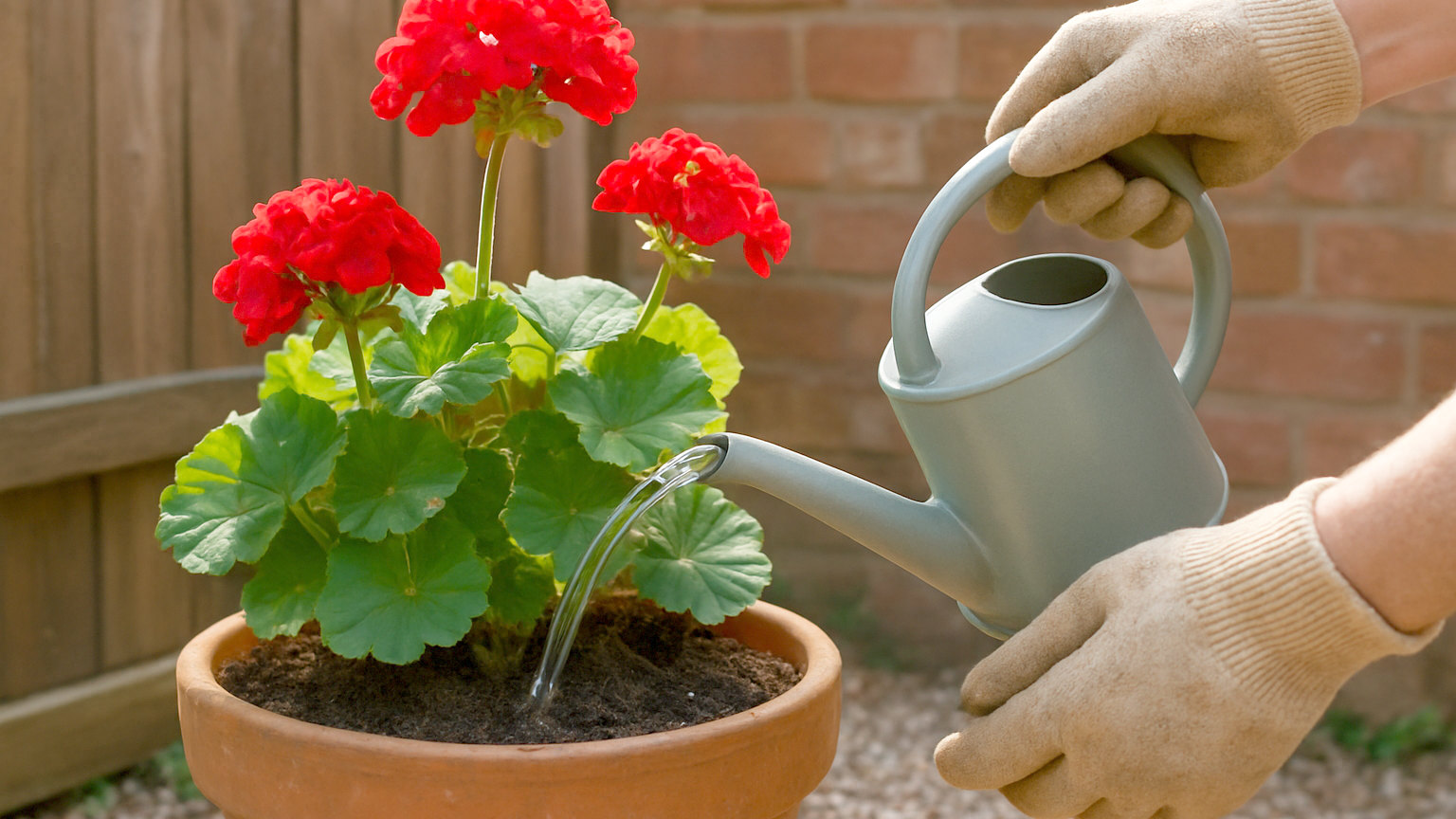
A plant in the ground can send roots out to find what it needs. A plant in a container has only what you give it, and fresh compost runs out sooner than most people expect.
When to start
Most composts contain enough nutrient for around six weeks of growth.
After that the plant depends entirely on feeding, and the signs of shortage are pale leaves, poor growth, small flowers and early leaf drop.
Start feeding about six weeks after potting, or six weeks after growth begins in spring for established containers.
Feed during active growth only, roughly March to September. Feeding a dormant plant in winter does nothing useful and can encourage soft growth that is damaged by frost.
Liquid feeds
The usual method, applied with the watering can, typically weekly or fortnightly in the growing season.
They act quickly and wash through, so they need repeating.
Apply to compost that is already moist. Feeding a dry rootball risks scorching roots.
Follow the dilution on the label. Doubling the strength does not double the growth and can damage the plant.
Slow-release granules
Mixed into the compost at planting or scratched into the surface, releasing nutrients over several months as temperature and moisture allow.
One application in spring covers most of the season, which suits anyone who will not remember to feed weekly.
They are less responsive than liquid feeds and are the practical choice for permanent planting and for large numbers of pots.
Matching the feed
Fertilisers quote three figures for nitrogen, phosphorus and potassium.
High nitrogen promotes leafy growth. Use it for foliage plants, leafy vegetables and to get young plants growing.
High potash promotes flowering and fruiting. Tomato feed is the cheap and widely available high-potash option, and it works just as well on flowering container plants, roses, dahlias and fruit as it does on tomatoes.
Balanced general feeds suit most plants most of the time.
A common approach is a balanced feed early in the season to build growth, switching to a high-potash feed from midsummer for flowers and fruit.
Ericaceous feeds are needed for camellias, rhododendrons and blueberries, which cannot take up iron in alkaline conditions and show yellowing between the leaf veins when they are struggling.
Topdressing and repotting
Permanent plants in large containers cannot be repotted indefinitely.
Topdress each spring: scrape off the top five centimetres of old compost and replace it with fresh, mixing in slow-release fertiliser.
This refreshes the nutrient supply and removes accumulated salts and moss from the surface.
Repot properly every two or three years for anything growing actively, moving up one pot size and teasing out circling roots.
Where a plant has reached its final pot, root prune instead: remove it, cut back the outer roots by a few centimetres, and replant in fresh compost.
Signs of trouble
Pale yellowing leaves overall, with weak growth, usually indicates nitrogen shortage.
Yellowing between the veins while veins stay green suggests iron or magnesium, common in lime-hating plants and hard-water areas.
Plenty of leaf and no flowers frequently means too much nitrogen and not enough potash.
A white crust on the compost surface or the pot is usually salts from hard water and fertiliser, which topdressing removes.
Organic options
Seaweed extract, comfrey liquid, worm-cast liquid and pelleted poultry manure all work.
Comfrey liquid is high in potash, costs nothing if you grow comfrey, and smells thoroughly unpleasant.
Do not overfeed
Excess fertiliser produces soft sappy growth that attracts aphids and is damaged by frost, and it can scorch roots.
More is not better, and a plant that looks unwell is more often short of water than short of food.
A simple routine
Mix slow-release granules into the compost when planting in spring, topdress permanent containers at the same time, and add a weekly high-potash liquid feed from midsummer for anything flowering or fruiting.
Stop feeding at the end of September and start again the following spring, once growth is under way.
That covers almost every container plant in an ordinary garden, and takes a few minutes a week through the season.
Vegetables and fruit
Heavier feeders than ornamentals, and containers exhaust quickly under a crop.
Tomatoes, peppers, aubergines and strawberries all want a weekly high-potash feed once fruit begins to set.


