
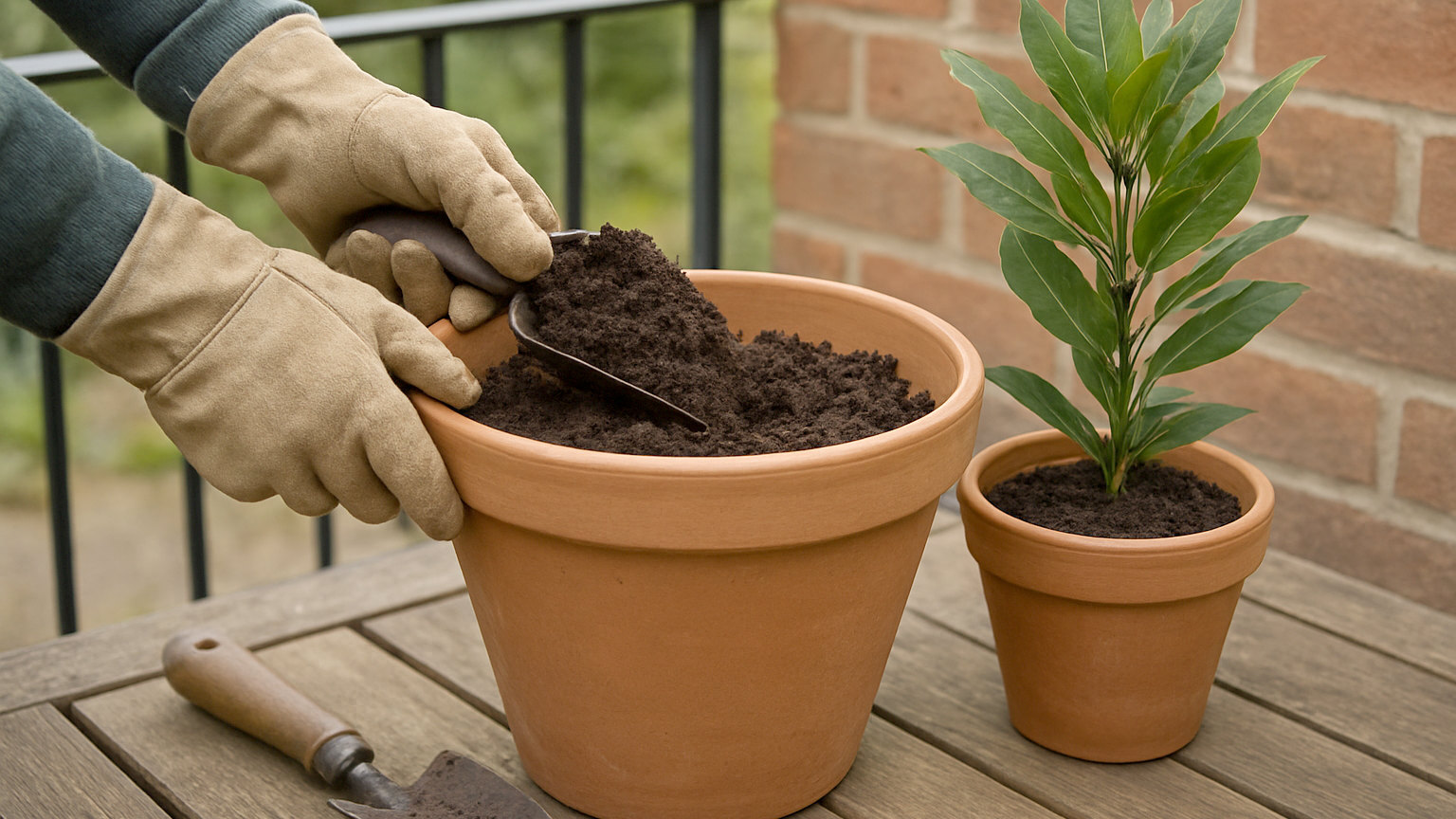
Container growing is entirely artificial: the plant depends on you for everything. The two decisions that matter most are the size of the pot and what goes in it.
Bigger is better
A large container is easier to look after than a small one in every respect.
It holds more compost, so it dries out far more slowly, which is the single commonest cause of container failure.
It holds more nutrient, insulates roots better against both heat and frost, and is more stable in wind.
Small pots in full sun can need watering twice a day in July. The same plant in a large container may need it every three days.
Where space is limited, three generous pots work better than nine small ones and look considerably better too.
Drainage
Every container needs drainage holes, and plenty of them.
Do not put a layer of crocks or gravel in the bottom. The old advice has been tested repeatedly and it does not improve drainage; it raises the saturated zone within the pot and reduces the volume of compost.
Cover the holes with a piece of mesh or a single crock to stop compost washing out, and leave it at that.
Raise pots on feet so water can escape freely, particularly in winter, when a pot standing in a saucer of water is the usual way container plants are killed.
Remove saucers over winter.
Materials
Terracotta is attractive, heavy and stable, and porous, so it dries out faster and needs more watering. Check it is frost proof rather than merely frost resistant, since saturated compost freezing inside a porous pot cracks it.
Glazed ceramic retains moisture better than unglazed and is still heavy and breakable.
Plastic is light, cheap, retains moisture well, and degrades in ultraviolet over some years. Good for the pots you do not see.
Fibreglass and composite look like stone or metal at a fraction of the weight, which matters on a balcony or roof.
Metal heats up considerably in sun, which cooks roots on a south-facing wall. Line it if you use it.
Timber is a good insulator and rots eventually; line the inside, leaving the drainage holes clear.
Compost
Garden soil is not suitable. It compacts in a container, drains poorly and brings weeds and disease.
Loam-based composts, sold as John Innes formulations, suit permanent planting. They contain real loam, so they hold nutrients well, do not shrink and dry out irreversibly, and their weight keeps a tall pot stable.
John Innes No. 2 suits general planting, No. 3 suits shrubs, trees and long-term subjects, and seed compost is for sowing.
Peat-free multipurpose suits seasonal planting, bedding and vegetables. Peat extraction damages habitats that store enormous quantities of carbon, and peat sales to amateur gardeners are being phased out.
Peat-free composts behave differently: they often look dry on the surface while still moist below, and they can be harder to rewet once genuinely dry. Check by weight and by pushing a finger in rather than by appearance.
Ericaceous compost is needed for camellias, rhododendrons, blueberries and other lime-hating plants.
Mixing for the job
A blend of loam-based and multipurpose compost gives weight and moisture retention together, and suits most permanent container plants.
Add horticultural grit for anything wanting sharp drainage, such as Mediterranean plants, alpines and bulbs.
Add water-retaining granules or extra organic matter for thirsty summer displays.
Weight
A large container of saturated loam-based compost is extremely heavy.
Position it before filling, and use a plant caddy on castors if it may need moving.
On a balcony or a roof terrace, weight is a structural matter and lighter composts and fibreglass pots are the sensible choice.
Grouping pots
Odd numbers, varied heights and a limited range of materials look considerably better than an assortment collected over years.
Grouping also raises humidity, shades the pots, and makes watering quicker, so it is practical as well as visual.
How long compost lasts
Seasonal displays get fresh compost each year. Permanent plants are topdressed annually and repotted every two or three years, since the compost structure breaks down and the nutrients are exhausted.
Old compost is not waste. Spread it on borders as a soil improver or add it to the compost heap.


